

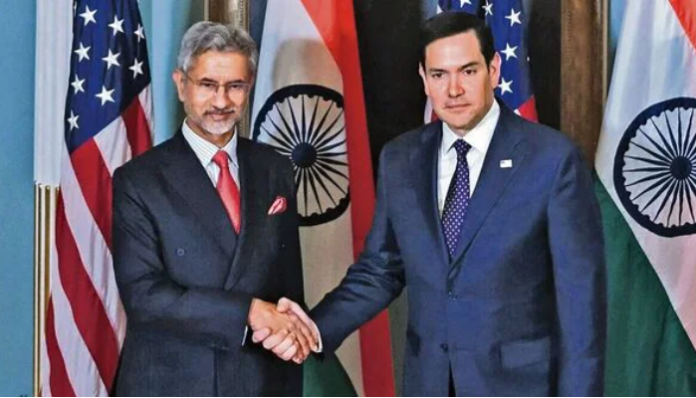
On 13th January (Tuesday), External Affairs Minister Dr S Jaishankar and the United States (US) Secretary of State and National Security Advisor Marco Rubio had a “good” phone conversation. In a social media post, EAM said they “Agreed to remain in touch on these and other issues.”
Just concluded a good conversation with @SecRubio.
— Dr. S. Jaishankar (@DrSJaishankar) January 13, 2026
Discussed trade, critical minerals, nuclear cooperation, defence and energy.
Agreed to remain in touch on these and other issues.
🇮🇳 🇺🇸
The development transpired the day after Sergio Gor, the US ambassador, struck a conciliatory note in an effort to ease tensions between the world’s two largest democracies.
The two leaders talked about energy, nuclear cooperation, military, vital minerals, bilateral trade talks and a potential meeting that could tak place in February. The call was described as “positive” by Gor on social media. “Rubio and Jaishankar discussed next steps regarding our bilateral trade negotiations, critical minerals, and a possible meeting next month,” he added.
A quick update: @SecRubio Just concluded a positive call with @DrSJaishankar. They discussed next steps regarding our bilateral trade negotiations, critical minerals and a possible meeting next month. pic.twitter.com/wg3qlF8AuC
— Ambassador Sergio Gor (@USAmbIndia) January 13, 2026
The two leaders wished each other a happy New Year, and Rubio complimented him on passing the Sustainable Harnessing and Advancement of Nuclear Energy for Transforming India bill. The secretary “expressed interest in capitalising on this important development to enhance U.S.-India civil nuclear cooperation, expand opportunities for American companies, advance shared energy security goals, and secure critical mineral supply chains,” according to the official release.
They also “discussed ongoing bilateral trade agreement negotiations and their shared interest in strengthening economic cooperation. They also exchanged perspectives on regional developments, reaffirming the United States’ and India’s commitment to a free and open Indo-Pacific”, the release noted.
