

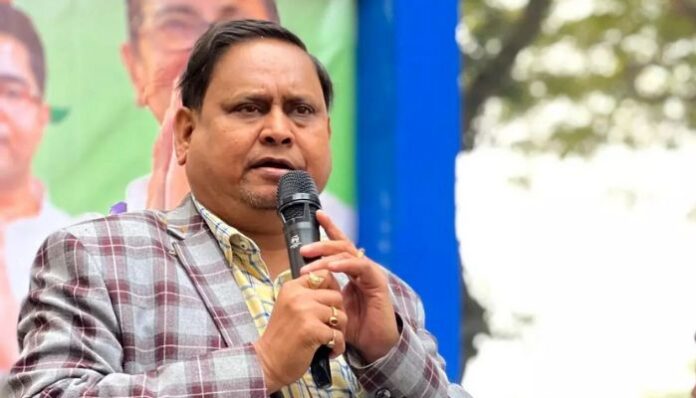
The Calcutta High Court has permitted suspended Trinamool Congress (TMC) MLA Humayun Kabir to approach the Union Ministry of Home Affairs (MHA) on Saturday, 23rd January, seeking enhanced Z+ category security. The court, however, made it clear that if central forces are provided, Kabir will have to bear the entire cost of his personal security.
The order was passed by a single-judge bench of Justice Suvra Ghosh while disposing of Kabir’s petition. Without going into the merits of the case, the High Court granted him liberty to submit a representation before the Union Home Ministry within two weeks. The court directed the Centre to consider his request as per the law.
Humayun Kabir, the MLA from Bharatpur in Murshidabad district, had moved the High Court claiming that his life and property were under serious threat after he broke away from the ruling TMC and floated a new political platform called the Janata Unnayan Party (JUP).
MLA seeks central protection, cites lack of trust in state police
In his petition, Kabir argued that he no longer had confidence in the security provided by the West Bengal Police, which functions under the Mamata Banerjee-led state government. He told the court that, given the political hostility he now faces, only central forces such as the Central Armed Police Force (CAPF) could ensure his safety.
Kabir specifically requested either Z or Z+ category security cover, citing repeated threat calls from unknown numbers. According to him, the threats have been mounting ever since he floated his new political party and laid the foundation stone of the Babri’ masjid in Beldanga in Murshidabad.
These developments have sparked a fresh round of political tension in the state, particularly with the West Bengal Assembly polls due in April-May.
Political flashpoints and growing hostility
The situation around Kabir worsened after the recent unrest in Beldanga. On 16th January, violence broke out when protesters blocked railway tracks and National Highway-12 while protesting the murder of Alauddin Sheikh, a migrant worker from the area who was killed in Jharkhand.
Kabir went to Beldanga to assess the situation. He saw locals reacting badly towards him and was forced to leave. This further substantiated his claim that he is being targeted because of his political views and activism.
Similarly, earlier too, there were protests in Kolkata when Kabir visited the Brigade Parade Ground. Some agitators, affiliated with the ruling party, started protests against him, and this once again puts a question mark over his safety.
Court recognises threat concerns, sticks to procedure
Taking note of Kabir’s apprehensions, the Calcutta High Court chose not to directly order central security. Instead, it followed constitutional procedure by allowing him to formally approach the Union Home Ministry, which has the authority to decide on the deployment of central security forces.
Justice Suvra Ghosh made it clear that the court was only granting liberty to apply and not issuing any direction on providing Z+ security. The judge also stated that Kabir would have to bear the full expenses if central forces are deployed for his protection.
The order highlights the delicate balance between state and central powers when it comes to political security, particularly in cases involving dissenting leaders and intra-party conflicts.
