

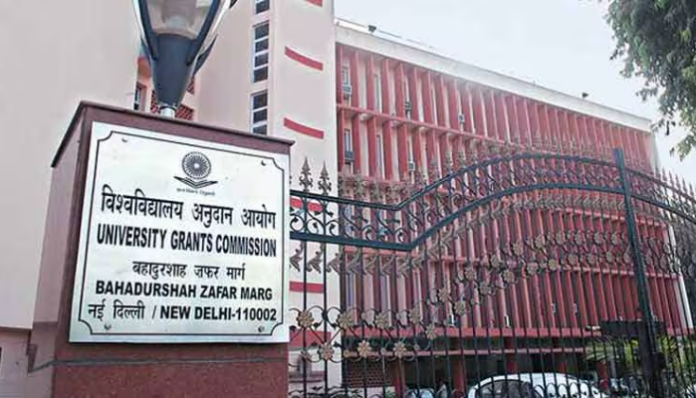
The contention over the University Grants Commission (Promotion of Equity in Higher Education Institutions) Regulations 2026 does not seem to fade away anytime soon. A demonstration is scheduled to be organised by students from upper-caste communities, further escalating the issue. The protest is going to take place outside the UGC headquarters on 27th January (Tuesday). Student organisations urged their peers to come together in big numbers to voice their objection to the new regulations.
The students warned that the new rules would cause turmoil on campuses. The organisers of the protest call requested the student community to unite, saying “No to UGC discrimination.” The development transpired amid a growing national discussion about the fresh UGC regulations announced on 13th January.
The organisers of the protest mentioned that the agitation would comprise a peaceful gherao of the UGC headquarters. “It’s now or never, unity is strength,” the protest poster read. Social media posts encouraged students to band together and show their support for defending student rights as authorities tightened security near the UGC headquarters in anticipation of the event.
STORY | Students call for protest outside UGC office in Delhi as 'new regulations would create chaos on campuses'
— Press Trust of India (@PTI_News) January 27, 2026
Students from upper caste communities called for a protest outside the University Grants Commission headquarters in Delhi on Tuesday, saying that the new regulations… https://t.co/m7HcHcefB3
According to Delhi University PhD candidate Alokit Tripathi, the new regulations will fundamentally upend colleges because the burden of proof will now be entirely on the accused, and there are no protections for students who have been falsely charged. “The new regulations are draconian in nature. The definition of victim is already predetermined. A victim can be anyone on campus. With the proposed Equity squads, it will be akin to living under constant surveillance inside the campus,” he complained.
Likewise, there have been reports of several agitations in recent days from student dormitories and university campuses in different parts of India. Meanwhile, Mrityunjay Tiwari, a post-doctoral researcher at Banaras Hindu University in Uttar Pradesh, has submitted a writ petition in the Supreme Court contesting the regulations.
On the other hand, a city magistrate in Bareilly resigned earlier this week in protest of the new policies, citing social concerns. A leader of the Bharatiya Janata Yuva Morcha also resigned, arguing that the rules were causing divisiveness rather than reform, and concerns of teachers along with students were being disregarded. Vice President of the Bharatiya Janata Party (BJP) Kisan Morcha for Rae Bareli’s Salon constituency, Shyam Sundar Tripathi, also resigned due to discontent with the new UGC rules.
Uttar Pradesh | Shyam Sundar Tripathi, Vice President of the BJP Kisan Morcha from the Salon constituency in Rae Bareli, has resigned from his post, citing dissatisfaction over new UGC policies.
— ANI (@ANI) January 27, 2026
The UGC directed that institutions establish specific committees, helplines, and monitoring teams to address complaints, particularly from SC, ST, and OBC students, in accordance with the new laws which were reportedly implemented to end caste-based discrimination in colleges and universities. The regulations were formed in response to directives from the Supreme Court to allegedly support underprivileged groups in universities and colleges, as well as provide a structured framework for grievance redress. The mothers of Payal Tadvi and Rohith Vemula had filed the petition.
However, critics contend that the regulations could widen socioeconomic divides and present new difficulties on campuses despite the government’s description of them as a step towards enhancing justice and accountability in higher education.
