

As Iran continues to attack ships transiting through the Strait of Hormuz, the US military has announced plans to attack Iranian ports in the region. The U.S. Central Command (CENTCOM) issued a stark warning on Wednesday to civilians in Iran, urging them to steer clear of port facilities along the Strait of Hormuz where Iranian naval forces are allegedly conducting military operations.
In a statement released via an official X post, the CENTCOM accuses the Iranian regime of endangering innocent lives by militarising civilian infrastructure, which could strip these sites of their protected status under international law and render them legitimate military targets.
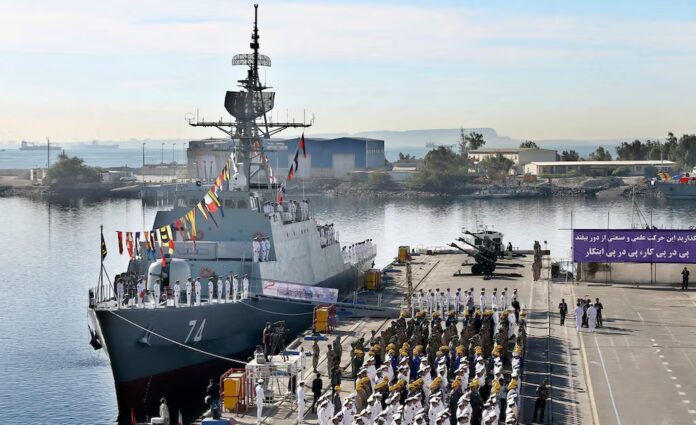
In the announcement, CENTCOM said that Iranian naval forces have positioned military vessels and equipment within civilian ports serving commercial maritime traffic. “This dangerous action risks the lives of innocent people,” the statement read, emphasising that while U.S. forces cannot guarantee civilian safety near such facilities, they will take “every feasible precaution” to minimise harm.
The warning specifically advises Iranian dockworkers, administrative personnel, and commercial vessel crews to avoid naval vessels and military equipment immediately.
— U.S. Central Command (@CENTCOM) March 11, 2026
This latest advisory comes amid the ongoing conflict in the Middle East that has intensified since late February 2026, following U.S. and Israeli strikes on Iranian targets including command centres, missile sites, and naval assets. Just days earlier, on March 8, CENTCOM had issued a similar safety alert, cautioning civilians in densely populated areas like Dezful, Isfahan, and Shiraz, where Iran is accused of launching drones and missiles, to shelter in place.
U.S. forces have reported destroying multiple Iranian naval vessels, including 16 minelayers near the Strait of Hormuz, in response to intelligence indicating Iran has begun laying mines in the waterway.
The Strait of Hormuz, a critical chokepoint through which about 20% of the world’s oil transits, has seen maritime traffic plummet to near-zero levels since early March due to Iranian threats and attacks.
At least three ships were struck by unknown projectiles near the strait on Wednesday, with Iran’s Revolutionary Guard claiming one vessel, the Thai-flagged Mayuree Naree, ignored warnings before being targeted. Three crew members remain unaccounted for following the incident, according to the UK’s maritime agency.
Iranian officials have vehemently rejected the U.S. accusations and escalated their rhetoric in response. A spokesperson for Iran’s Khatam al-Anbiya military command headquarters declared that any vessels linked to the U.S., Israel, or their allies would be considered “legitimate targets,” vowing not to allow “a single litre of oil” through the strait to reach them.
Tehran has dismissed U.S. threats as “hollow” and warned of retaliatory strikes on regional economic centres, including banks, urging civilians to stay at least one kilometre away from such sites.
