

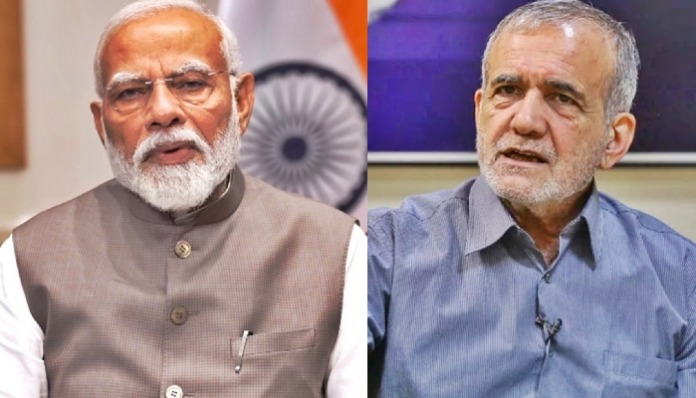
On 12th March (Thursday), Prime Minister Narendra Modi had a telephonic conversation with Iranian President Masoud Pezeshkian during the persistently rising tensions in West Asia. The two discussed “the serious situation in the region,” and PM Modi emphasised that the protection of Indian lives, along with the uninterrupted flow of goods and energy through the Persian Gulf, are matters of greatest importance for New Delhi.
He took to social media to inform about the development and wrote, “Expressed deep concern over the escalation of tensions and the loss of civilian lives as well as damage to civilian infrastructure. The safety and security of Indian nationals, along with the need for unhindered transit of goods and energy, remain India’s top priorities.”
Notably, attacks on commercial ships in the Persian Gulf claimed the lives of at least three Indian mariners. He added, “Reiterated India’s commitment to peace and stability and urged for dialogue and diplomacy.”
Had a conversation with Iranian President, Dr. Masoud Pezeshkian, to discuss the serious situation in the region.
— Narendra Modi (@narendramodi) March 12, 2026
Expressed deep concern over the escalation of tensions and the loss of civilian lives as well as damage to civilian infrastructure.
The safety and security of…
India and Iran have been communicating since the start of the conflict, especially concerning ship movement via the blocked Strait of Hormuz, which has disrupted the global energy supply chain. However, this was Modi and Pezeshkian’s first conversation since Israel and the United States attacked Iran on 28th February, killing its Supreme Leader Ayatollah Ali Khamenei.
با رئیسجمهور ایران، دکتر مسعود پزشکیان، گفتوگو کردم تا وضعیت جدی در منطقه را مورد بحث قرار دهم.
— Narendra Modi (@narendramodi) March 12, 2026
نگرانی عمیق خود را نسبت به تشدید تنشها، از دست رفتن جان غیرنظامیان و همچنین آسیب به زیرساختهای غیرنظامی ابراز کردم.
ایمنی و امنیت شهروندان هندی، همراه با ضرورت تداوم بدون مانعِ…
On the other hand, PM Modi spoke with the leaders of Qatar, Saudi Arabia, Kuwait, Jordan, Oman and the United Arab Emirates, all of which had been hit by Iran’s counteroffensive. He has also talked to Benjamin Netanyahu, the prime minister of Israel.
One of the few leaders who can speak to all sides
In the current conflict environment, very few global leaders maintain open channels with all sides. The Prime Minister is among the rare leaders who can speak directly with both parties involved in the conflict as well as key regional stakeholders. This makes India an important voice for de-escalation and dialogue.
India is seen as a credible interlocutor
India has deep relations across West Asia – with Iran, Israel, the Gulf countries and the wider region. India’s engagement is seen as credible by all actors because it does not approach the region through a bloc or alliance framework.
India’s voice carries weight in the region
India’s growing economic and strategic role in West Asia means regional leaders increasingly see India as a stabilising power. The Prime Minister’s outreach is therefore viewed as a responsible global voice encouraging restraint and dialogue.
India’s consistent message: dialogue over escalation
In conversations with leaders across the region, the Prime Minister has been consistent in urging de-escalation, diplomacy, and avoidance of further escalation. India’s approach is focused on stability, humanitarian considerations, and preventing a wider regional conflict.
