

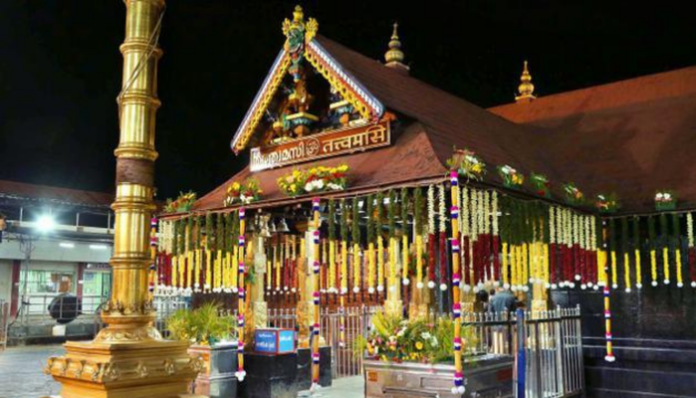
In a major U-turn from its previous stance, the Left Democratic Front (LDF) government in Kerala, on Saturday (14th March, 2026), urged the Supreme Court to consult religious scholars before deciding the Sabarimala temple review. The government made the request in its written submissions filed before a 9-judge bench of the Supreme Court, which will begin the hearing of the case next month on 7th April, 2026.
The Kerala government said that any changes in the religious practices of the Sabarimala temple, followed over the years, should be made after consultations with religious scholars. “Any judicial review into any religious practice followed for so many years connected with the belief and values accepted by the people must be after wide consultation with and after soliciting views of eminent religious scholars and reputed social reformers of that religion,” the Kerala government stated in its submissions.
Notably, the Kerala government had, earlier, supported the decision of the Constitution Bench of the Supreme Court delivered on 28th September, 2018. The decision allowed the entry of all women, irrespective of their age, into the temple. The Constitution Bench held that preventing women between the ages of 10 and 50 from entering the temple was exclusionary and violated the right of Hindu women to freely practice their religion.
“Previous experience in the matter of Sabarimala shrine and the response of devotees, including women devotees, would support the above submission,” the state government said, explaining the change of stance.
“…is of the considered opinion that what is to be considered by the Court, in the matter of a judicial review with regard to Article 25, should not be as to whether a particular religious practice or belief appeals to reason or sentiment, but should be as to whether the belief is genuinely and conscientiously held as part of the profession or practice of religion,” the state government added.
Background of the case
The 2018 decision of the Constitutionw as delivered in response to the original writ petition filed before the Supreme Court in 2006, seeking directions to allow women aged between 10 and 50 to enter the Sabarimala temple and to declare Rule 3(b) of the Kerala Hindu Places of Public Worship (Authorisation of Entry) Rules, 1965 unconstitutional for allegedly violating Articles 14, 15 and 25 of the Constitution.
In September 2018, a Constitution Bench, by a 4:1 majority, ruled in favour of the entry of women between 10 and 50 into the Sabarimala temple. Justice Indu Malhotra was the lone dissenting voice, who upheld the temple tradition prohibiting the entry of women of menstruating age into the temple.
The Supreme Court decision received huge backlash from Lord Ayyappa devotees, including women. Subsequently, review petitions were filed against the judgment. In November 2019, a five-judge Bench, by a 3:2 majority, observed that the judgment may impinge on the affairs of other religions too, and therefore, a detailed examination would be required. It referred the broader questions relating to the scope of religious freedom and essential religious practices to a nine-judge bench.
