

The Union Cabinet, chaired by Prime Minister Narendra Modi, gave its approval to two significant infrastructure projects in Rajasthan, aimed at enhancing energy security, industrial growth, and urban mobility in the state.
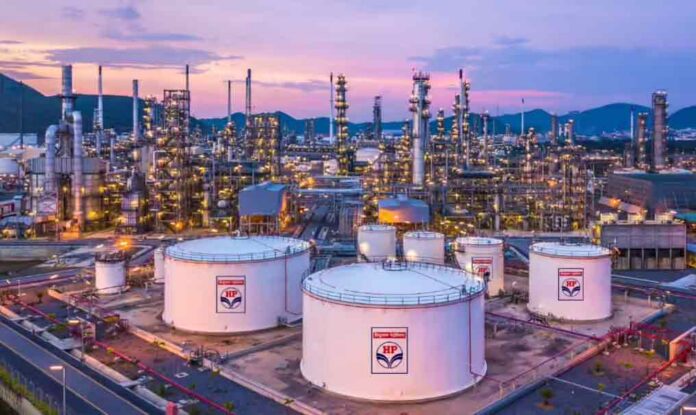
In the first decision, the Cabinet Committee on Economic Affairs (CCEA) approved a substantial revision in the project cost and additional equity investment for the HPCL Rajasthan Refinery Limited (HRRL), a greenfield 9 million metric tonnes per annum (MMTPA) refinery-cum-petrochemical complex at Pachpadra in Balotra district.
The project cost has been revised upwards from ₹43,129 crore to ₹79,459 crore. Hindustan Petroleum Corporation Limited (HPCL), which holds a 74 per cent stake in the joint venture with the Government of Rajasthan (26 per cent), will make an additional equity investment of ₹8,962 crore. This will bring HPCL’s total equity commitment to ₹19,600 crore.
The highly complex refinery features a strong petrochemical focus, with more than 26 per cent of its output dedicated to petrochemical products. It includes a 2.4 MMTPA petrochemical production capacity and is designed to produce key products such as 1 MMTPA of petrol, 4 MMTPA of diesel, 1 MMTPA of polypropylene, 0.5 MMTPA each of linear low-density polyethylene (LLDPE) and high-density polyethylene (HDPE), and approximately 0.4 MMTPA of benzene, toluene, and butadiene. These outputs will support critical sectors including transportation, pharmaceuticals, paints, and packaging.
The refinery will utilise locally available Mangala crude and is scheduled to commence commercial operations on 1 July 2026. Once operational, it is expected to reduce India’s dependence on imported petrochemicals, promote energy independence, save foreign exchange, and position the country as a stronger refining hub. The project has already generated significant employment, with around 25,000 workmen engaged during the construction phase, and will drive industrialisation in a relatively backward region of Rajasthan.
Jaipur Metro Rail Project Phase-2
In another decision, the Cabinet approved Jaipur Metro Rail Project Phase-2, a 41-kilometre North–South corridor stretching from Prahladpura to Todi Mod and featuring 36 stations. The total project cost is estimated at ₹13,037.66 crore. The project will be implemented by the Rajasthan Metro Rail Corporation Limited (RMRCL), a 50:50 joint venture between the Government of India and the Government of Rajasthan.
Phase-2 will provide seamless connectivity to major economic and activity hubs, including the Sitapura Industrial Area, VKIA, Jaipur Airport (with underground stations in the airport vicinity), Tonk Road, SMS Hospital and Stadium, Ambabari, and Vidhyadhar Nagar. It will integrate with the existing operational Phase-1, the East–West corridor from Mansarovar to Badi Chaupar, covering 11.64 km with 11 stations, which currently serves around 60,000 passengers daily.
The new corridor is expected to significantly boost overall metro ridership, increase the share of public transport in Jaipur, reduce traffic congestion and vehicular emissions, and improve mobility for residents, workers, and tourists. The project has undergone detailed appraisal, including assessment by the Public Investment Board, and demonstrates a strong Economic Internal Rate of Return (EIRR) exceeding 14 per cent, confirming its socio-economic viability. Funding will involve equity from both central and state governments, subordinate debt, and multilateral financing, in line with the Metro Rail Policy, 2017.
Phase-2 is targeted for completion by September 2031 and aligns with broader goals of sustainable urban transport, Transit-Oriented Development (TOD) under the Rajasthan TOD Policy-2025, and the vision of a developed Rajasthan and Viksit Bharat.
