

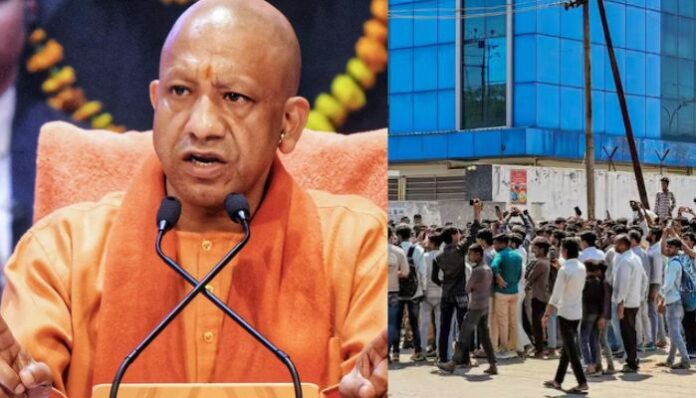
The Uttar Pradesh government has increased minimum wages by around 21% for workers across different categories after recent protests in Noida. Officials said the revised wages will be applied from 1st April, even though the decision was taken later.
Gautam Buddh Nagar District Magistrate Medha Roopam confirmed the development on Tuesday, 14th April, and said the decision was taken after proper discussions. “The wage increase has been done by the high-powered committee,” she said, adding, “The decision was approved by CM UP late last night.”
According to the newly announced wages, there would be a substantial hike for workers in Gautam Buddh Nagar and Ghaziabad. The unskilled worker’s minimum wage would increase to ₹13,690 from ₹11,313, semi-skilled workers would receive ₹15,059, and skilled workers would get ₹16,868.
#BREAKING: Following a workers’ movement, the Uttar Pradesh government has revised minimum wages across the state. In Noida and Ghaziabad, the monthly wages for unskilled workers have been increased from ₹11,313 to ₹13,690, effective April 1, along with corresponding hikes for… pic.twitter.com/WXgK9yOQF2
— IANS (@ians_india) April 14, 2026
For workers in other municipal corporation areas, the new wages have been fixed at ₹13,006 for unskilled workers, ₹14,306 for semi-skilled workers, and ₹16,025 for skilled workers.
However, in the other districts of the state, unskilled workers will earn a minimum of ₹12,356, while semi-skilled and skilled workers will receive ₹13,591 and ₹15,224, respectively, every month.
The government informed that this announcement came after consultations with the employer’s association and labour organisations. Officials added that all suggestions and objections were carefully looked at to ensure a “balanced and practical” outcome.
The decision came a day after violent protests in Noida
This move comes just a day after large-scale protests by factory workers in Noida on Monday, 13th April, where thousands took to the streets demanding better wages and improved working conditions. The protests turned violent in some areas, following which the government stepped in and formed a committee to handle the situation and hold discussions with all sides.
Workers in areas like Phase 2 and Sector 60 were involved in stone pelting, arson, and vandalism. Several vehicles were set on fire, and industrial units were damaged. By evening, over 300 protesters were arrested under preventive provisions for arson and vandalism, while more than 100 were detained for questioning.
