

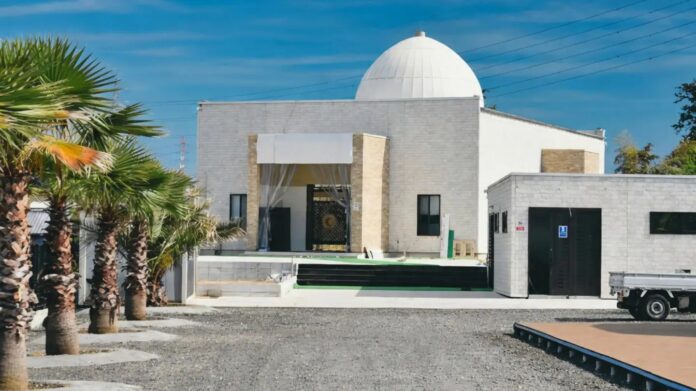
Japanese authorities have directed the demolition of an illegally constructed mosque in Kawagoe City, Saitama Prefecture, built without the necessary permits in a strictly regulated zone. The structure, known as Japan Jaame Masjid Ramzan, was inaugurated in April 2026 in the presence of Pakistan’s Ambassador to Japan.
The mosque stands on a 4,500-square-metre plot in Shimo-Akasaka, a rural area surrounded by vegetable fields and residential neighbourhoods, approximately five kilometres south of central Kawagoe. The land falls under an “urbanisation control zone” (mountain forest area) under Japan’s City Planning Act, where construction is generally prohibited without special permission from the municipal authorities. No application was filed for the mosque, and no permit was granted.
City officials first learned of the construction in October 2024 after receiving complaints from local residents. By then, the exterior of the steel-frame building was nearly complete. Inspectors issued multiple stop-work orders, but construction continued. Workers reportedly claimed they did not understand Japanese when officials visited the site.
The original landowner, a real estate company in neighbouring Fujimi City, denied involvement after selling the property. Ownership was transferred in March 2025 to a company headed by a Pakistani national, with its registered address at the mosque site. In the same month, the company submitted a remediation plan promising to demolish the structure within five years.
However, just weeks later, on 3 April 2026, the mosque held a grand opening ceremony attended by Pakistan’s Ambassador to Japan, Abdul Hameed, and members of the local Muslim community, including Pakistanis and worshippers from other countries.
Current Stance of Owners and Officials
The company has given conflicting statements. The representative claimed he bought the land without knowing about building restrictions, while his father, who is often present at the site, told media that the building “was already there” before they purchased the property. The father acknowledged discussions about demolition but cited high costs as a challenge.
Kawagoe City officials have emphasised that the order is not targeted at the religious nature of the building but strictly concerns violation of building regulations. “This structure was built without the city’s permission, and we are continuing guidance with the ultimate goal of its removal,” a city statement said. The authorities are monitoring the site, restricting large gatherings, and allowing only smaller prayers for the time being. The company has been instructed to restore the land to its original state.
Pakistan Embassy’s Response
The Pakistan Embassy in Tokyo has distanced itself from the project after the controversy about the mosque emerged, clarifying that it has no connection with developments that violate Japanese laws. The embassy stated that Ambassador Abdul Hameed attended the mosque’s inauguration on April 3 after being informed that all necessary approvals required under Japanese law had been obtained.
The Pakistan embassy also urged members of the Pakistani community in Japan to fully comply with Japanese regulations, particularly when constructing places of worship.
This incident comes amid a steady increase in the number of mosques in Japan, which rose to around 160-164 nationwide by mid-2025, with at least 17 in Saitama Prefecture. While many Muslim communities have successfully integrated by consulting local authorities and residents, the Kawagoe case has drawn attention due to the blatant disregard for zoning laws.
