

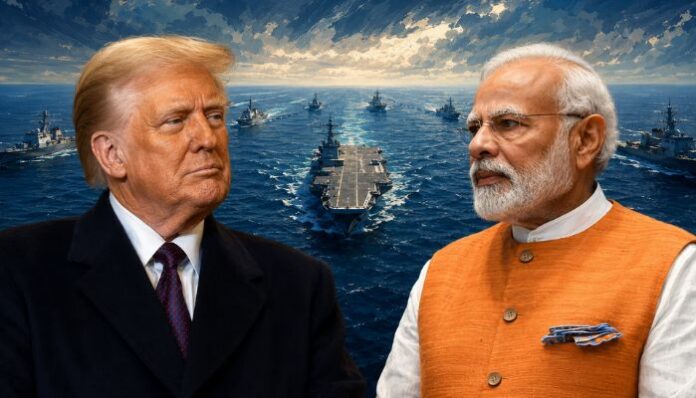
On 16 June, local time, the US Department of War announced that its largest military command, the US Indo-Pacific Command, will revert to its original name, US Pacific Command. With the announcement, the US has effectively removed the reference to the Indian Ocean from its title, which was added in 2018 during US President Donald Trump’s first term in office.
In a statement, the department stated that the change is limited to the name of the command and would not affect the nature of its operations or its area of responsibility. The command has its headquarters in Hawaii and works closely with the Indian armed forces.
Name changed after eight years
In 2018, the then-Trump administration had changed the name amid the growing strategic importance of India and the increasing connectivity between the Indian and Pacific Oceans. At the time of the name change, then-US Defence Secretary James Mattis had said that the command stretches from “Bollywood to Hollywood”.
Department of War Restores U.S. Pacific Command Designation.
— U.S. Pacific Command (@INDOPACOM) June 16, 2026
CAMP H.M. SMITH, Hawaii — The Department of War announced today that the U.S. Indo-Pacific Command (USINDOPACOM) will officially restore its name to the U.S. Pacific Command (USPACOM).
Originally established on… pic.twitter.com/ZL0EL3q6Ph
The command’s area of responsibility spans from the waters off the West Coast of the United States to the western border of India.
Mission to remain unchanged
US Pacom stated that its area of responsibility would remain the same and the change in the name would not have any effect on it. It added that the command’s mission and commitment to maintaining a “free and open theatre” with regional allies and partners remain unchanged.
Justifying the restoration of the name, US Pacom stated that it has been done to honour the command’s historical roots and decades of military heritage. The command was originally established on 1 January 1947 by then-President Harry S Truman after World War II.
The renaming comes at a time when India-US ties have witnessed friction over several issues, including trade. Since the ceasefire during Operation Sindoor in May 2025, US President Donald Trump has repeatedly claimed that he played a key role in “stopping the war” between India and Pakistan.
India, however, has firmly rejected any suggestion of third-party mediation, maintaining that the cessation of hostilities was worked out directly between the two militaries. Furthermore, there have been tariff-related tensions between New Delhi and Washington, with the US taking a tougher position on Indian imports in recent months.
