

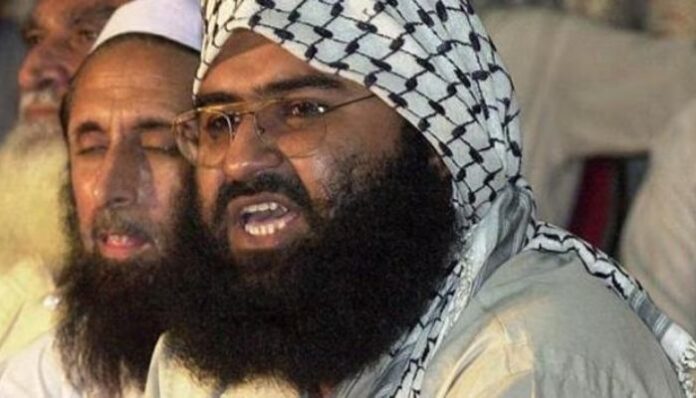
Internal letters written by Jaish-e-Mohammed (JeM) chief Masood Azhar after India’s Operation Sindoor reveal exactly how a terrorist organisation spins crippling operational blows into recruitment tools.
Following the Indian military strikes on 7th May, 2025, Azhar fired off a series of communications over several days, accessed by The Sunday Guardian. While the letters framed them around his “personal grief,” a closer look reveals a highly calculated propaganda strategy. Instead of admitting that JeM took a massive hit, Azhar weaponised the deaths of his own family members to construct a narrative of victimhood, glorify martyrdom, and push Pakistan into a military escalation against India.
Over the course of the letters, Azhar’s tone shifts seamlessly from staging personal heartbreak to aggressive warmongering, culminating in the celebration of Pakistan’s retaliatory strikes.
Invoking family deaths to build a victimhood narrative
In his earliest messages after the strikes, Azhar immediately brought forward his own family to maximise emotional impact. He claimed that 14 people close to him were killed, consisting of 10 relatives and four longtime terror associates.
Among the dead, he listed:
- His elder sister, her husband, and their children.
- His nephew and niece.
- Five young children from the extended family.
- His close associate Huzaifa, along with Huzaifa’s mother.
Azhar dedicated an entire letter to his elder sister, whom he referred to as “Baji Jan.” Rather than a simple tribute, the letter served an ideological purpose: he portrayed her as the ideal believer within the JeM ecosystem. He highlighted that she regularly read his radical writings and ensured her six children received strict Islamic religious schooling, claiming five of them had memorised the Quran.
By painting his sister as a devout, humble woman who always “prayed for martyrdom,” Azhar sought to present his family as model believers whose deaths were a divine reward, trying to inspire his followers to seek the same fate.
Using the deaths of children to romanticise jihad
The most calculated and emotionally manipulative parts of Azhar’s propaganda centred around the minors killed in the strikes. Throughout his correspondence, the terror chief repeatedly used soft, poetic religious imagery, calling the deceased children “flowers of Paradise” and “birds of Paradise.”
In one note, he claimed that a single family lost four children between the ages of three and seven. He also asserted that two of the women killed were pregnant, arguing that under Islamic teachings, their unborn children must also be counted as martyrs.
Azhar went so far as to include self-serving personal anecdotes, claiming that children had always been his “greatest weakness” and that he became “like one of them” in their company. He even mentioned keeping a specific religious book on how to handle the loss of a child to show his readiness for divine testing.
By inserting these personal details, Azhar wasn’t just mourning; he was attempting to build a soft, compassionate persona for himself while using the tragic deaths of minors to fuel intense anti-India sentiment and justify his group’s violent campaign.
Sanitising JeM networks and manufacturing “Honesty”
Azhar also used the communications to clean up the image of people associated with his terror network. A prime example is his description of his deceased brother-in-law, Hafiz Muhammad Jamil.
Instead of identifying Jamil through his institutional role, handling the financial records for JeM-linked mosques, Azhar tried to normalise him as an ordinary civilian who worked as an accountant in a Bahawalpur grain market.
To drive home this image of a modest, honest man, Azhar shared an anecdote about a remaining ₹63,000 wedding loan Jamil owed. According to Azhar’s account, Jamil’s employer broke down in tears after his death and refused to take the money back out of sheer respect for his integrity. By sharing these unverified stories of personal honesty, Azhar actively tried to obscure the financial infrastructure supporting JeM and present its terrorists as simple, hardworking citizens.
Turning defeat into an ideological win
As the correspondence progressed, Azhar moved away from family narratives to focus entirely on mobilisation. He expanded the total casualty figure to 36, but firmly ordered his followers not to view this as a defeat.
Instead, he reframed the heavy operational losses at the Jamia Masjid Subhan Allah in Bahawalpur as a massive ideological victory. He claimed that the “five innocent birds of Paradise” (the children killed at the mosque) had spread the message of faith and jihad in just two days faster than JeM’s network could have achieved in forty years.
To keep morale high, he claimed that angels filled the mosque on the night of the strike and that “miraculous events” saved intended high-value targets. He urged his followers to view the destruction not as a setback, but as a divine test meant to strengthen their resolve.
Pressuring Pakistan for war and celebrating violence
The final phase of Azhar’s letters turned into open warmongering. Roughly 36 hours after the Indian strikes, he began putting intense political pressure on Islamabad, demanding immediate military retaliation.
Azhar argued that failing to hit back at India would bring both political humiliation and divine anger. He explicitly rejected any diplomatic options, declaring that “forgiveness” was wrong and that “a ceasefire is a crime.”
When Pakistan eventually launched its counter-operation, Operation Bunyan-un-Marsoos, Azhar’s tone shifted to celebration. He labelled the military response a “blessed jihadi attack” and claimed it signalled the beginning of India’s failure.
In a disturbing final symbolic note, Azhar brought the imagery of the dead children back into his propaganda. He wrote that the deceased minors were happily “looking at missiles bearing their names” from heaven, treating the weapons like “new toys.” He concluded his propaganda drive with a direct threat of future violence, warning: “Much more is yet to come.”
