

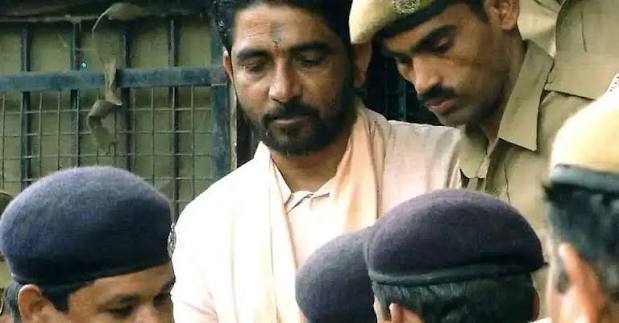
The Supreme Court on Tuesday directed the Odisha government to take a final decision on the remission plea of Dara Singh, the convict serving a life sentence for the 1999 murder of Australian missionary Graham Staines and his two young sons, by August 15. During the hearing, the bench remarked, “Let him also celebrate Independence Day by then.”
The observation has led to reports claiming that the apex court ordered Dara Singh’s release before Independence Day. However, as of now, the detailed court order has not been made public, and the court’s direction appears to be for the Odisha government’s Sentence Review Committee to decide his premature release plea within the stipulated time.
Advocate A.P. Singh, appearing for Dara Singh, told reporters that the Supreme Court had directed the Odisha government to release his client on or before August 15. The official order, however, is awaited.
Supreme Court seeks expeditious decision
A bench comprising Justices Manoj Misra and Vijay Bishnoi was informed by Odisha government counsel P.V. Yogeswaran that the Sentence Review Committee was awaiting certain documents from the district court before taking a final decision on Singh’s application for premature release.
Recording the state’s submission, the bench adjourned the matter to August 19 and observed that it expected the committee to decide the remission plea in the meantime.
“You decide by August 15. Let him also celebrate Independence Day by then,” the court remarked while fixing the next date of hearing.
The committee had met earlier this month and sought additional records relating to the convict but has not yet concluded.
Five previous remission pleas rejected
Dara Singh, whose real name is Rabindra Kumar Pal, approached the Supreme Court in 2024 seeking premature release under Odisha’s remission policy dated April 19, 2022.
In his plea, Singh stated that he has spent more than 26 years in prison, maintained good conduct throughout his incarceration, and had never been granted parole. He argued that he fulfilled the eligibility criteria for premature release, having completed well beyond the mandatory 14 years of actual imprisonment required under the state’s remission policy.
He also contended that similarly placed life convicts had been granted remission, alleging that the state’s repeated refusal in his case violated his right to equality and personal liberty under Article 21 of the Constitution.
However, five separate Sentence Review Committees have examined his case over the years and rejected his request for remission, with the most recent rejection coming in February 2024.
Claimed remorse in petition
In his petition before the apex court, Singh claimed he had “deeply regretted” his actions and had reflected upon them during his lengthy incarceration.
He described the murders as an act committed in the “fervour of youth” and claimed he had no personal enmity with missionary Graham Staines or his two sons. According to the petition, his actions stemmed from what he described as emotional reactions to India’s historical experiences under Mughal and British rule, which he claimed temporarily clouded his judgment.
Singh further submitted that he now wished to spend the remainder of his life serving society if granted premature release.
The 1999 Graham Staines murders
The case remains one of independent India’s most widely discussed convictions.
On the night of January 21, 1999, Australian missionary Graham Staines and his sons, Philip (10) and Timothy (6), were sleeping inside their station wagon in Manoharpur village of Odisha’s Keonjhar district after attending a Christian gathering.
A mob allegedly led by Dara Singh surrounded the vehicle, set it ablaze, and prevented the occupants from escaping. Staines and both his children were burnt alive.
The killings sparked nationwide outrage and attracted international condemnation.
Following the trial, Dara Singh was convicted as the principal conspirator. A trial court initially sentenced him to death, but the Orissa High Court commuted the punishment to life imprisonment in 2005. The Supreme Court upheld the life sentence in 2011 while affirming his conviction.
