

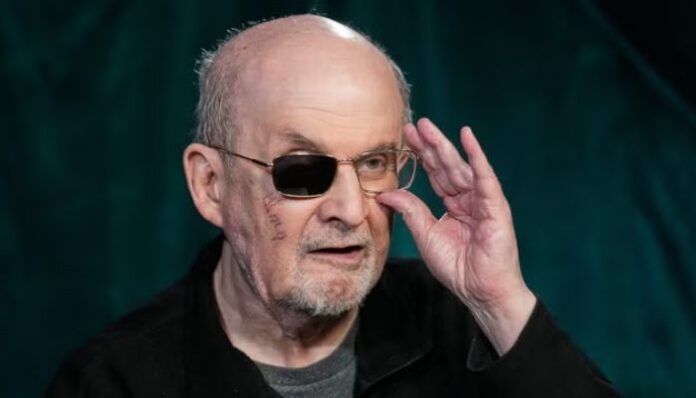
The federal terrorism trial of Hadi Matar, the man already convicted in New York state court for attacking author Salman Rushdie, began on Wednesday, 22nd July, in Buffalo, New York. Unlike the earlier attempted murder trial, this case focuses on why Matar carried out the 2022 knife attack.
Matar has pleaded not guilty to federal charges, including engaging in an act of transnational terrorism. He is already serving a 25-year state prison sentence and could face life in prison if convicted in the federal case.
Prosecutors say attack was planned for years
Federal prosecutors told jurors that Matar spent nearly two years gathering information about Rushdie before the attack. They said he searched for the writer’s home, office, favourite sports teams and even where he watched games. Notes recovered during the investigation reportedly included messages such as, “We need to kill him ASAP,” and references to carrying out a jihad.
According to prosecutors, Matar wanted to carry out the 1989 fatwa issued by Iran’s late Supreme Leader Ayatollah Ruhollah Khomeini after the publication of Rushdie’s 1988 novel The Satanic Verses. Assistant U.S. Attorney Timothy Lynch told the court that Matar’s goal was to “fulfil the fatwa.”
Defence lawyer Nathaniel Barone argued that prosecutors cannot prove what Matar was thinking at the time of the attack. He urged jurors to focus on Matar’s actual intent rather than assumptions about his state of mind.
Attack shocked the audience
The stabbing happened at the Chautauqua Institution in New York, where Rushdie was preparing to speak about writer safety. Jurors watched video footage showing a masked Matar rushing onto the stage and repeatedly stabbing the author before audience members tackled him and held him until a state trooper arrived.
Rushdie, now 79, survived the attack but lost sight in one eye. He is expected to testify later this week. Speaking to the Associated Press in 2024, he said the experience of coming so close to death continues to stay with him.
Links to Hezbollah and the fatwa
Prosecutors said evidence collected from Matar’s home included pictures of Ayatollah Khomeini, Iran’s current Supreme Leader Ayatollah Ali Khamenei and Hezbollah figures. His computer also contained a video about the fatwa and a photograph of him wearing a Hezbollah-related T-shirt. They also said he carried a fake driver’s licence bearing the name of a Hezbollah figure on the day of the attack.
Born in the United States to Lebanese immigrant parents, Matar is a citizen of both countries. His mother has said he became withdrawn after visiting Lebanon in 2018. Prosecutors also pointed to a 2006 speech by late Hezbollah leader Hassan Nasrallah, who said the controversy over cartoons of Prophet Muhammad would not have happened if Khomeini’s fatwa against Rushdie had been carried out.
Rushdie, born in India and later knighted in Britain, became the target of the fatwa after publishing The Satanic Verses. Although the order was later withdrawn and Iran denied involvement in the 2022 attack, the book continued to attract controversy. Since the stabbing, Rushdie has published his memoir Knife and returned to fiction with The Eleventh Hour, while also receiving the Dayton Literary Peace Prize Lifetime Achievement Award.
