

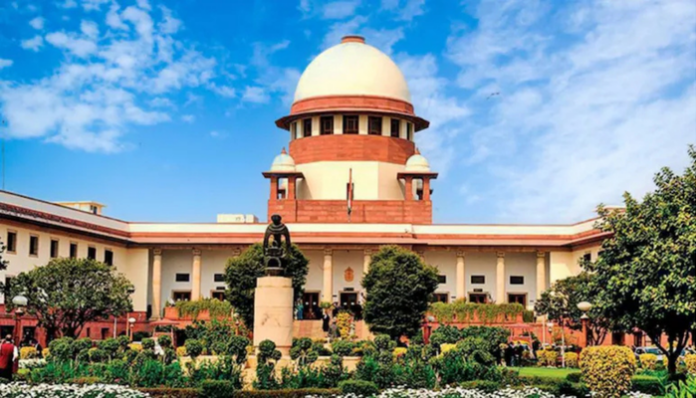
The Supreme Court has dismissed a review petition challenging its March 2026 judgment, which held that a person loses Scheduled Caste (SC) status upon converting to Christianity or any religion other than Hinduism, Sikhism or Buddhism. With the review plea being rejected, the Court’s earlier ruling continues to remain in force.
A Bench of Justices Prashant Kumar Mishra and Manmohan said it found no reason to revisit its earlier decision. “We have gone through the Review Petition and perused the judgment dated 24.03.2026 which has been sought to be reviewed. There is no error apparent on the record,” the Bench observed. The Court also rejected the petitioner’s request for an oral hearing.
Court says SC status can be restored only after fulfilling three conditions
In its March 2026 judgment, the Supreme Court had clarified that a person born into a Scheduled Caste immediately loses that status after converting to Christianity or any religion other than Hinduism, Sikhism or Buddhism. However, the Court also made it clear that such a person can regain Scheduled Caste status if they later reconvert to Hinduism, Sikhism or Buddhism. For that to happen, the person must satisfy three conditions laid down by the Court.
First, they must prove that they were originally born into a caste recognised as a Scheduled Caste.
Second, they must establish that they have genuinely reconverted to Hinduism, Sikhism or Buddhism and have completely given up the religion they had earlier adopted.
Third, they must show that members of their original caste community have accepted them back. The Court had made it clear that if even one of these conditions is not fulfilled, the claim for restoration of Scheduled Caste status cannot succeed.
Case arose from SC/ST Act complaint in Andhra Pradesh
The case began after a man from Andhra Pradesh, who was born into a Scheduled Caste but later converted to Christianity and worked as a pastor, filed an FIR under the Scheduled Castes and Scheduled Tribes (Prevention of Atrocities) Act. He alleged that he had been abused using his caste name and threatened.
The accused challenged the FIR before the Andhra Pradesh High Court, arguing that the complainant was no longer entitled to Scheduled Caste status after converting to Christianity. The High Court accepted the argument and quashed the FIR.
The complainant then approached the Supreme Court. In its March 2026 judgment, the apex court upheld the High Court’s decision, holding that a person professing Christianity cannot claim the legal protections available under the SC/ST Act because Scheduled Caste status is recognised only for persons professing Hinduism, Sikhism or Buddhism.
With the Supreme Court now dismissing the review petition, that ruling remains unchanged and continues to be the governing legal position.
