

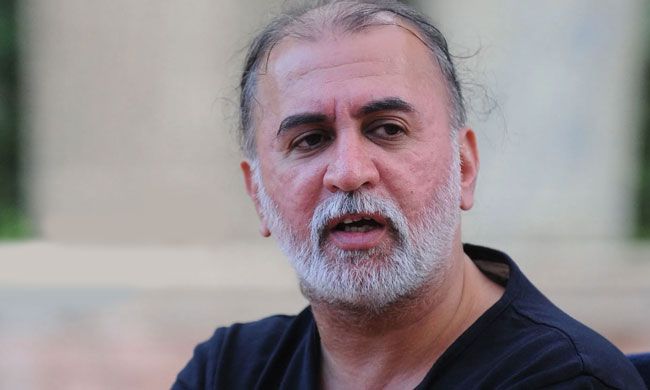
Former Tehelka editor-in-chief Tarun Tejpal was on Thursday sentenced to 10 years’ rigorous imprisonment by the Bombay High Court in the 2013 sexual assault case, bringing a dramatic end to a legal battle that saw his 2021 acquittal reversed on appeal.
The judgment came after the Goa bench of the Bombay High Court, comprising Justices Neela Gokhale and Amit Jamsandekar, allowed the Goa government’s appeal against the trial court verdict that had acquitted Tejpal of all charges. Although the High Court initially directed him to surrender within two weeks, it later granted him four weeks to do so after a request from his counsel.
Tejpal, who was present in court when the judgment was pronounced, has been convicted under Sections 376(2)(f), 354(a) and 354(b) of the Indian Penal Code. The provisions relate to rape by a person in a position of trust or authority, sexual harassment, and use of criminal force with the intent to disrobe a woman.
The case stems from allegations made by a former junior colleague, who accused Tejpal of sexually assaulting her inside a hotel elevator during the ThinkFest event in Goa in November 2013. The allegations had triggered nationwide outrage and became one of India’s most high-profile workplace sexual assault cases.
High Court overturns trial court’s acquittal
A sessions court in Goa had acquitted Tejpal of all charges in May 2021, citing several inconsistencies in the prosecution’s case. The Goa government challenged that verdict before the Bombay High Court, arguing that the trial court had adopted an erroneous approach while evaluating the survivor’s testimony.
During the appeal, Solicitor General Tushar Mehta, appearing for the Goa government, argued that the sessions court had relied on outdated assumptions about how a victim of sexual assault ought to behave. He submitted that there is no fixed pattern of conduct expected from survivors, as responses vary depending on an individual’s circumstances, personality, education and social background.
Mehta further contended that the trial court had focused excessively on minor discrepancies in the complainant’s statements instead of examining whether her central allegations remained consistent throughout the investigation and trial.
A key plank of the prosecution’s case was a series of emails sent by Tejpal to the complainant after the alleged incident. According to the Goa government, those emails contained an apology for a “lapse of judgment”, expressions of shame and statements indicating that Tejpal believed the encounter had been consensual. The prosecution argued that these amounted to an admission that a physical encounter had taken place.
Defence disputes prosecution’s interpretation
Appearing for Tejpal, senior advocate Abad Ponda urged the court to impose the minimum sentence, while also disputing the prosecution’s interpretation of the apology emails.
The defence argued that the emails did not acknowledge any physical or sexual encounter. Instead, it maintained that they referred only to a consensual verbal conversation of a sexual nature and could not be treated as evidence of the offences alleged.
Ponda also questioned the complainant’s credibility, arguing that her conduct before and after the alleged incident, along with emails, WhatsApp messages and documentary evidence, contradicted the prosecution’s version.
The defence further submitted that the complainant’s account of being confined inside a moving elevator was inconsistent with CCTV footage and expert evidence presented during the trial.
Plea for leniency rejected
At the sentencing stage, Tejpal pleaded for leniency, describing himself as a “political victim” and pointing out that he is the father of two daughters.
The Goa government, however, sought the maximum punishment. Solicitor General Mehta argued that a strong sentence was necessary to reinforce the principle that “no means no” and to send an unequivocal message in cases involving sexual offences.
The High Court ultimately sentenced Tejpal to 10 years’ imprisonment, overturning the acquittal that had stood for more than five years and significantly altering the outcome of one of India’s most closely watched sexual assault prosecutions.
