

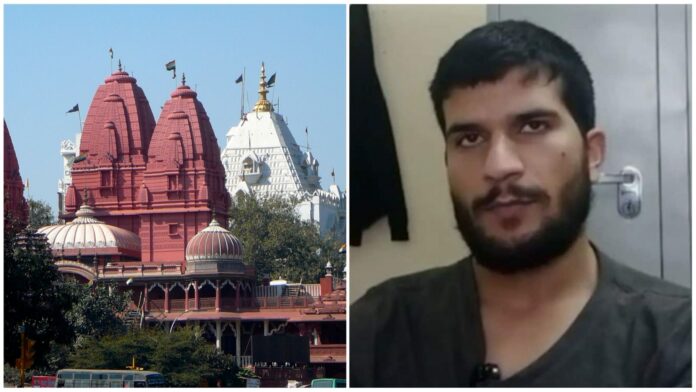
The Red Fort may not have been the original target of the November 2025 terror attack that killed 11 people. According to the National Investigation Agency (NIA), suicide bomber Umar Un Nabi first attempted to position his explosives-laden car near Lal Mandir, a Jain temple in central Delhi, before traffic and police presence forced him to abandon the plan and move towards the Red Fort.
The revelation has emerged from the NIA’s chargesheet, which reconstructs Nabi’s movements in the final minutes before the blast. Investigators believe the terrorist walked out of the Sunhari Masjid parking area at around 6:37 pm, drove towards Lal Mandir and attempted to park his Hyundai i20 near the temple.
However, the plan apparently ran into an unexpected obstacle.
According to the chargesheet, traffic congestion and the presence of police personnel prevented Nabi from parking the vehicle at the intended location. He made a U-turn and drove towards the Red Fort instead.
Around 13 minutes later, at approximately 6:50 pm, the explosives-laden car exploded near the Red Fort, killing 11 people and injuring dozens.
The sequence has given investigators a crucial insight into the attack plan: Lal Mandir appears to have been the primary target, while the Red Fort became a fallback option after the first plan could not be executed.
A planned attack that went off course
The NIA has been mapping Nabi’s movements and activities to establish how the conspiracy unfolded. Investigators believe his repeated visits to the Red Fort were not simply tourist trips.
According to the agency, Nabi visited the monument 12 times between 2023 and 2025, with his last visit taking place on May 1, around six months before the blast. The NIA suspects these visits were reconnaissance missions connected to the planning of the attack.
The agency has also said that Nabi and his associates switched off their mobile phones during some such visits, apparently to prevent their movements from leaving a digital trail.
But the circumstances immediately before the blast suggest that the final target may have been determined only after Nabi encountered difficulties near Lal Mandir.
NIA alleges explosives were prepared in Nuh
The chargesheet also details the preparations for the attack.
Nabi, a doctor, reportedly stayed in a rented room in Nuh for around 11 days before the blast. Investigators have collected witness statements and forensic evidence concerning his movements, mobile-phone usage and preparation of explosive material during this period.
The NIA has said that documents recovered from pen drives belonging to Nabi and another accused, Shaheen Saeed, contained references to urea nitrate and methods associated with its preparation.
The agency has cited a witness who reportedly noticed a polythene bag containing urine in Nabi’s room because of its strong smell. Investigators are examining this evidence in connection with their allegation that Nabi explored a method of obtaining urea from urine.
Purchases and movements under investigation
The NIA has also documented Nabi’s activities during his stay in Nuh, including a shopping trip with a relative of his associate Shoaib.
He reportedly purchased a T-shirt, a white shirt and cargo trousers, paying in cash. These purchases have been included among the pieces of evidence gathered by investigators as they attempt to reconstruct his preparations before the attack.
Taken together, the chargesheet describes what the agency believes was a carefully planned terror conspiracy involving reconnaissance, efforts to conceal digital movements and preparations for an explosive attack.
But in the final moments, the alleged plan appears to have encountered an unforeseen problem.
The terrorist first moved towards Lal Mandir. Traffic and police presence prevented him from carrying out the attack there. He then turned towards the Red Fort, where the explosives-laden vehicle detonated minutes later.
The NIA’s reconstruction thus suggests that the Red Fort attack may have been the execution of Plan B, after the original target at Lal Mandir became difficult to reach.
