

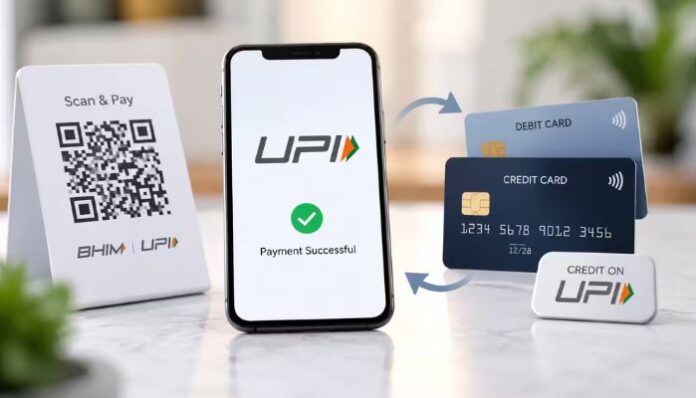
The Central government on Wednesday, 16th September, rejected claims that foreign pressure influenced the revision of the Unified Payments Interface (UPI) merchant transaction framework, calling the allegations an “external pressure” myth. The Ministry of Finance said the changes were driven by domestic priorities and aimed at making India’s digital payments ecosystem financially sustainable while keeping UPI affordable for consumers and small merchants.
“Debunking the ‘External Pressure’ Myth: Some claims suggest the change is due to foreign influence. This is false. India’s UPI policy decisions are made independently, with the clear goal of building a self-sustaining, inclusive, and affordable digital payments ecosystem,” the Finance Ministry said in a post on X.
🔰 UPI Remains Free for Consumers
— Ministry of Finance (@FinMinIndia) September 16, 2026
UPI continues to be free for customers. Sending money to friends, paying at shops, or scanning a QR code — all remain without charges.
Key Facts:
✅ No charges on P2P: Person-to-Person transfers are always free, regardless of amount.
✅ Small… pic.twitter.com/PyQ7hotNMN
The clarification came a day after the National Payments Corporation of India (NPCI) announced a new merchant pricing framework. Under the framework, a 0.4% MDR will apply to specified person-to-merchant (P2M) UPI transactions above ₹2,000 from 15th October, 2026. The charge will be borne by merchants and capped at ₹300 per transaction. Person-to-person transfers will continue to remain free.
Congress alleges US pressure behind UPI MDR
The Centre’s clarification came after the Congress accused the government of yielding to US pressure by ending the zero-MDR regime for certain high-value merchant UPI payments.
Congress general secretary in charge of communications Jairam Ramesh questioned whether the 0.4% MDR was linked to demands from American payment networks that have historically competed with UPI. He argued that the change could give international card companies greater room to compete with India’s digital payments system.
“Here, the Modi government has given in to a US demand to get rid of zero MDR and charge for UPI. The U.S. Trade Representative earlier this year criticised UPI for being free and having driven out Visa and Mastercard,” Ramesh said.
Tomorrow, the US House of Representatives votes on a Bill that introduces 100% tariffs on India. The US Senate has already approved this draconian law.
— Jairam Ramesh (@Jairam_Ramesh) September 16, 2026
Meanwhile, the Trump regime has been cracking down on Indian immigrants and making tougher laws against them. H-1B visa costs…
“Why 0.4% MDR? Is it because debit card MDR is also 0.4%? Is this being done to enable US card companies to compete with UPI?” he asked.
Ramesh also linked the issue to broader tensions between India and the United States, including proposed US measures concerning countries that continue significant trade in Russian energy and changes affecting Indian nationals travelling or working in the US.
The Congress later repeated the allegation on social media, saying the government had weakened UPI “under pressure from his friend Donald Trump” and had opened the way for American companies to earn from digital payments.
Rahul Gandhi calls it ‘UPI tax’
Leader of Opposition in the Lok Sabha Rahul Gandhi also attacked the new framework, despite the Centre’s clarification that the MDR is not a tax and that customers would not directly bear the charge.
Gandhi demanded an immediate rollback of what he described as a “UPI tax”. In a video posted on X, he accused Prime Minister Narendra Modi of yielding to US President Donald Trump and invoked former Prime Minister Indira Gandhi while attacking the government over the decision.
“Modiji has a completely different concept. He is neither left nor right. He has decided to lie down straight and prostrate himself in front of Donald Trump,” Rahul Gandhi said.
Modi ji, roll back the UPI tax. Now. pic.twitter.com/IIt46zMgCG
— Rahul Gandhi (@RahulGandhi) September 16, 2026
He then alleged that the new framework would effectively put a burden on Indians while benefiting US companies.
“He has put a tax on every single Indian person by taxing UPI and giving a huge amount of money to the United States. Modiji, please stop lying down in front of the United States. Have a spine. Stand up and roll back the UPI tax,” Gandhi said.
Some other Congress leaders have also argued that even if merchants are formally responsible for paying MDR, they could eventually recover the cost from customers by increasing prices.
The Modi government has quietly opened the door to fees on UPI.
— Rajani Patil (@rajanipatil_in) September 16, 2026
MDR can now be levied on merchant UPI transactions above ₹2,000. These are only 5% of volume but nearly 65% of UPI’s total value.
They say customers won’t be charged. Then who pays the shopkeeper’s fee? It will be… pic.twitter.com/TGx6ZXYYh7
The government, however, has said banks have been instructed to prevent merchants from passing the MDR cost on to consumers.
Centre rejects ‘US pressure’ narrative
The Finance Ministry has now sought to draw a clear distinction between the new pricing framework and the political claims surrounding it. According to the government, the decision was taken as part of efforts to make UPI financially sustainable after years of rapid expansion rather than in response to demands from foreign governments or payment companies.
The scale of UPI has grown dramatically since its launch in 2016. The platform processed 24.5 billion transactions in August 2026 alone, highlighting the growing infrastructure, cybersecurity and operational requirements involved in running the system.
The Ministry said a limited MDR on specified high-value merchant transactions would help fund infrastructure and cybersecurity, support smaller merchants in Tier III to Tier VI towns and rural areas, and encourage further expansion of digital payments.
“To keep this system self-sustainable, secure and innovative, a small fee on high-value merchant transactions helps fund: better infrastructure and cybersecurity, support for small merchants in Tier III–VI towns and rural areas, and awareness and incentives to expand UPI adoption,” the Ministry said.
The government further maintained that the framework is designed to ensure that revenue generated from larger commercial transactions is reinvested into strengthening the wider digital payments ecosystem.
“The new framework ensures resources from higher-value merchant transactions are reinvested to support small businesses and strengthen digital payments across the country,” the Finance Ministry said.
While the Congress has linked the decision to alleged US pressure and possible benefits for American payment companies, the Centre has rubbish the claims that the opposition and its ecosystem want to peddle and maintained that the framework was formulated independently to address the domestic sustainability and expansion of UPI.
