

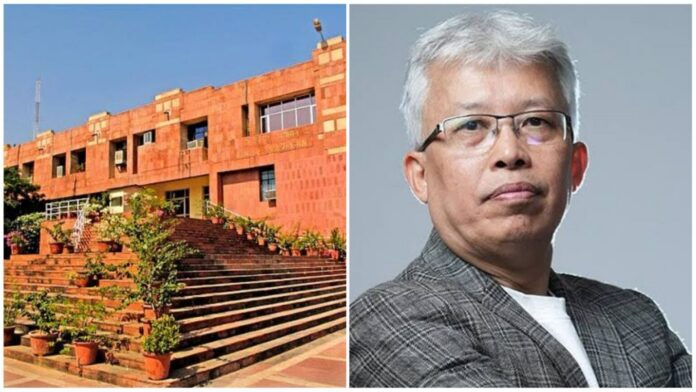
Fresh screenshots purportedly showing conversations among Jawaharlal Nehru University (JNU) students have added a new dimension to the sexual harassment allegations against Congress MP and JNU professor Angomcha Bimol Akoijam.
The screenshots, accessed by OpIndia, appear to show students discussing alleged incidents involving “Bimol sir” during viva examinations. OpIndia has not independently verified the authenticity of the screenshots, the identity of the participants, or the claims made in the conversation.
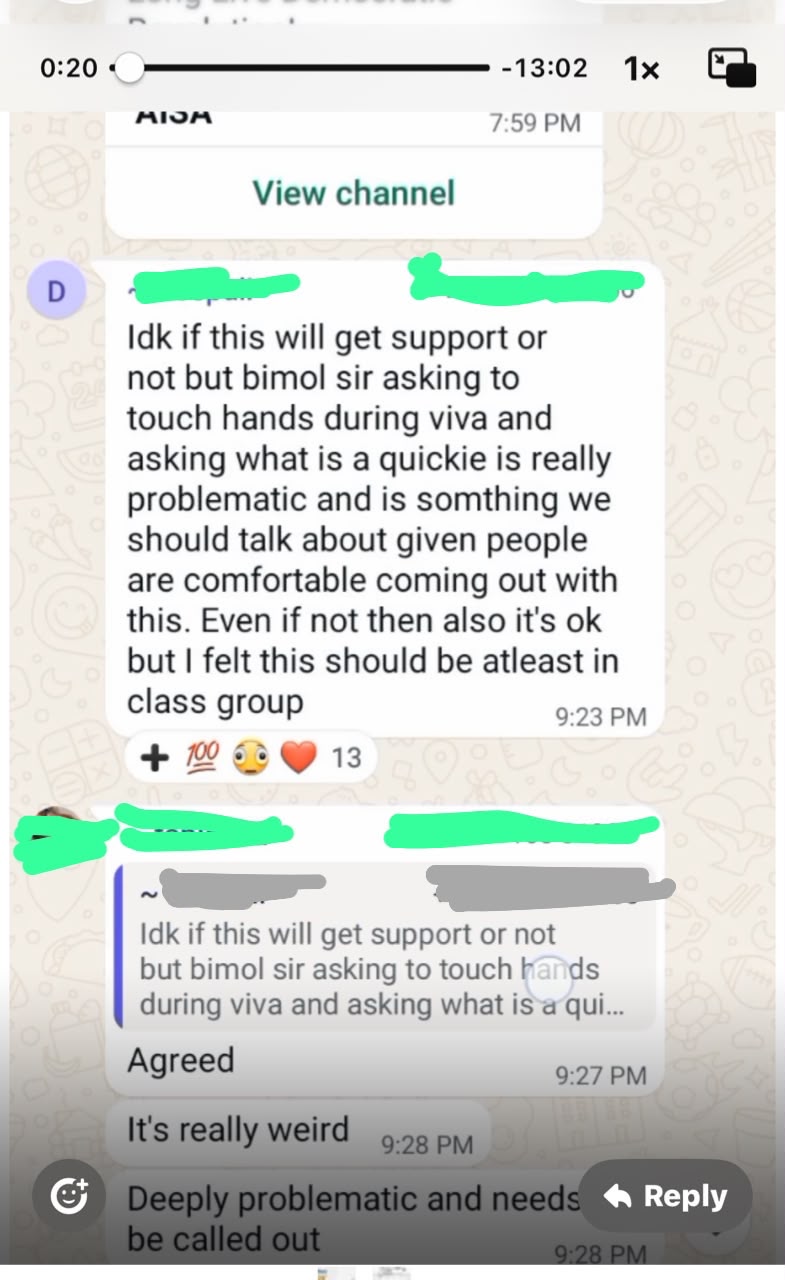
The controversy concerns allegations made by 11 JNU students against Akoijam, who is a professor at the university’s Centre for the Study of Social Systems in the School of Social Sciences. JNU’s official faculty directory currently lists him as a professor.
According to reports, the complaints were submitted to JNU’s Internal Complaints Committee (ICC) in May 2026 after a student shared her account of alleged inappropriate behaviour following viva examinations. Other students subsequently came forward with similar allegations, prompting the ICC to begin proceedings and call complainants to record their statements.
Students allegedly discussed inappropriate questions, physical contact
The newly surfaced screenshots appear to show a conversation in which one student says that “Bimol sir” allegedly asked students to touch his hands during a viva and allegedly asked them “what is a quickie”.
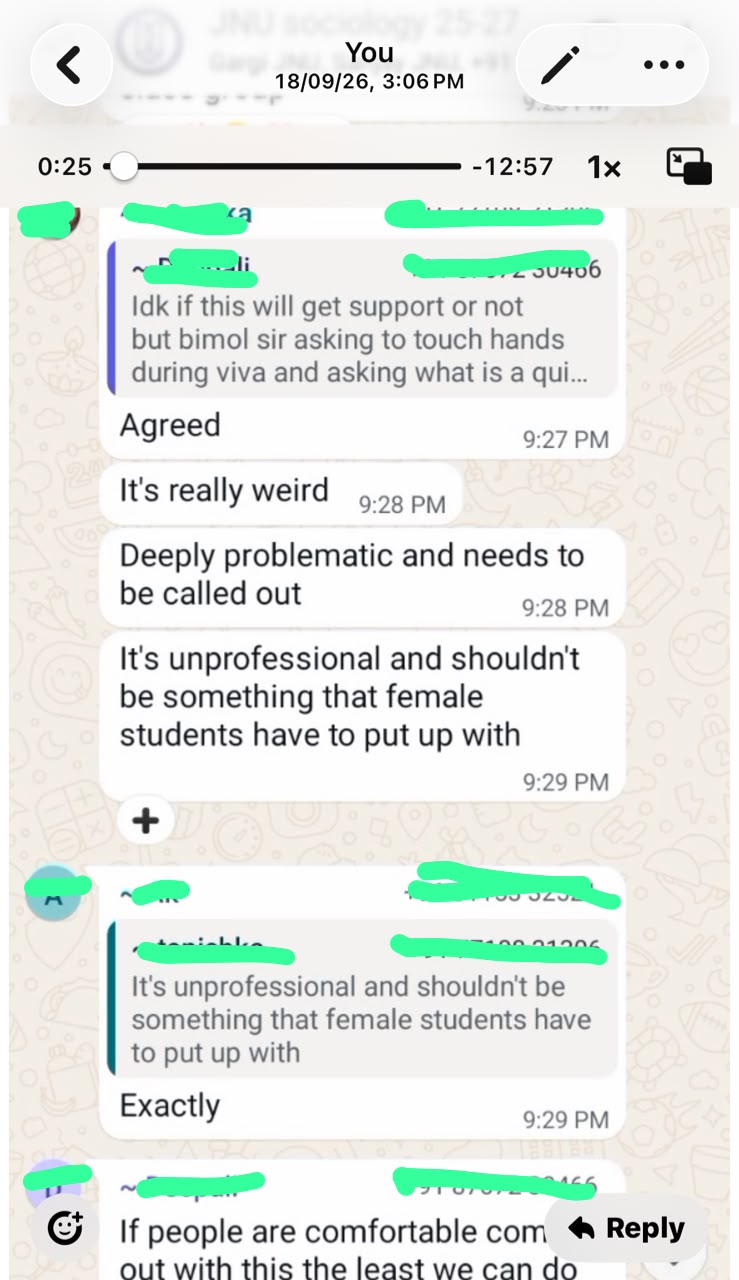
Another participant responds, “Agreed”, followed by messages describing the alleged conduct as “really weird”, “deeply problematic” and “unprofessional”.
One student says that such behaviour should not be something female students “have to put up with”. Another message refers to the power imbalance between a teacher and a student, arguing that a student appearing for a viva and being evaluated may find it difficult to openly express discomfort.
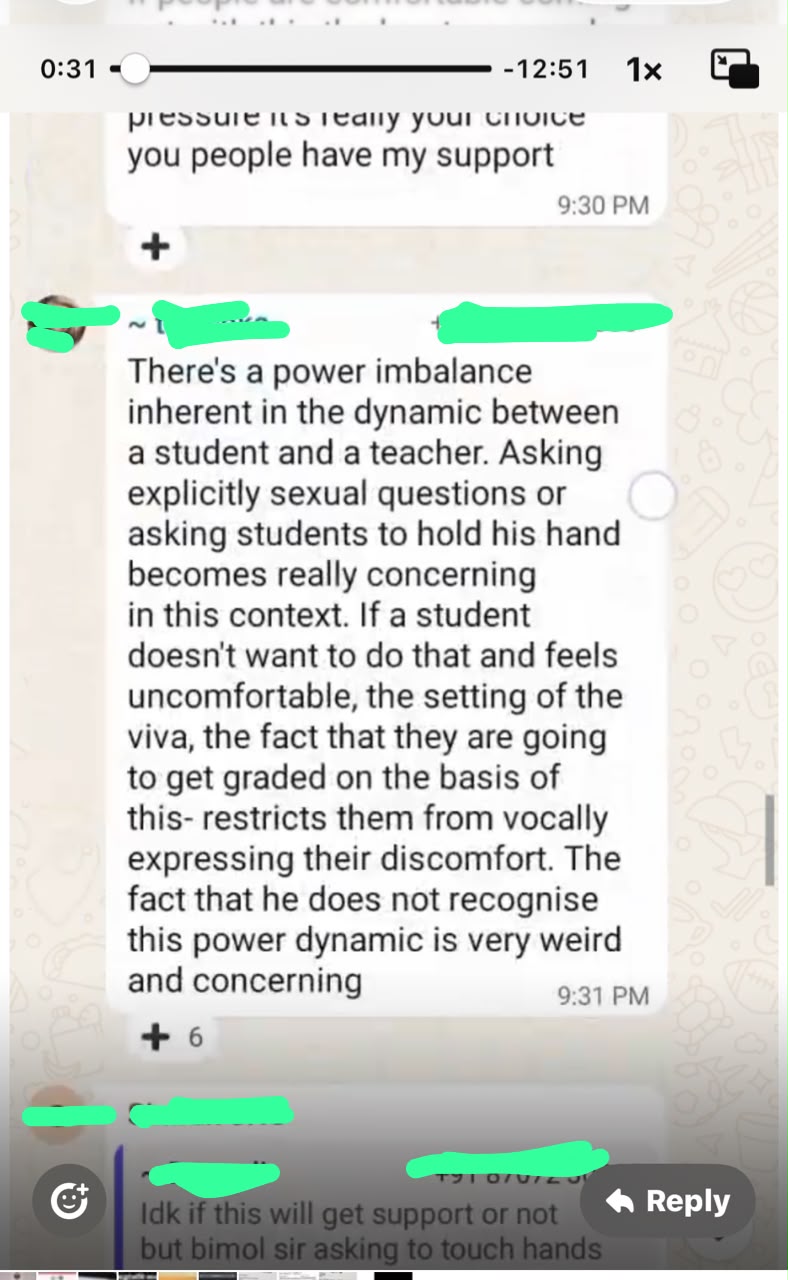
The conversation also contains a message stating that students who are comfortable speaking about their experiences should be supported, while those who do not wish to come forward should not be pressured.
These screenshots are significant because they appear to capture contemporaneous discussion among students, rather than being a statement released after the allegations became a public controversy. However, their provenance and authenticity remain independently unverified by OpIndia.
Allegations extend beyond viva examinations
The allegations previously reported in the media go beyond the purported comments during viva examinations.
According to reports, students have alleged that the professor made sexually suggestive remarks and, in one allegation, linked higher marks to sexual favours. Some students have also reportedly alleged inappropriate behaviour during classes and interactions at his residence on the JNU campus.
The ICC has been investigating the complaints. JNU has an established Internal Committee for dealing with sexual-harassment complaints, and its official website says complaints are to be handled under the applicable statutory framework. A March 2025 JNU circular specifically directed that sexual-harassment complaints received by centres or schools be immediately forwarded to the Internal Committee and warned against resolving such complaints informally outside the prescribed mechanism.
Questions over the timeline
The complaints were reportedly filed in May, after which the ICC began proceedings. JNU subsequently went through a roughly 45-day semester break, with the issue resurfacing after classes resumed in July.
JNU’s published ICC rules provide for a time-bound inquiry. The applicable UGC regulations state that an inquiry is to be completed within 90 days of receipt of the complaint, with the report submitted within 10 days of completion.
The passage of several months has consequently led to questions from student groups, including the ABVP, which protested at JNU in September and demanded a fair and time-bound inquiry. The organisation’s allegations and demands are separate from the determination of the complaints themselves.
The Delhi Commission for Women has also taken suo motu cognisance of the allegations and sought a report from JNU concerning the complaints, the action taken and the measures adopted for students’ safety.
Akoijam is not only a JNU professor but also a sitting Congress MP from Inner Manipur. He was elected to the Lok Sabha in 2024 and remains a faculty member at JNU, according to the university’s current records.
