

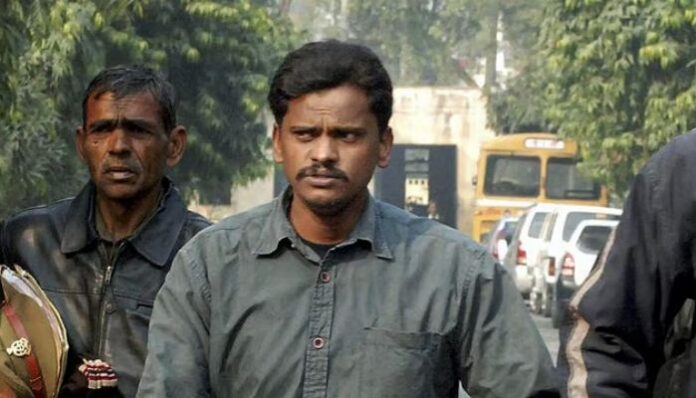
On Friday 18th September, Surendra Koli committed suicide by hanging from his tea shop in Haridwar city, Uttarakhand. Koli, 53, was found dead inside the small shop he had rented in Bhupatwala, opposite Lal Mata Temple in the Sapt Sarovar area. Police and forensic teams examined the spot, and a post-mortem was conducted at Haridwar District Hospital.
Koli’s searched for work and accommodation after release
Koli walked out of prison on 12th November, 2025, after spending nearly two decades behind bars in connection with the Nithari killings. During the next 10 months, he moved between Delhi and Uttarakhand while trying to find work and a place to stay.
After returning to Delhi in June, Koli stayed with his elder brother Chandan, his family and his 20-year-old son Shivam. Chandan said Koli was looking for a job but feared that people would recognise him because of the Nithari serial killing case.
In June, Koli also travelled with his family to their ancestral village, Mangru Kal in Almora. Their old house had remained vacant after their mother died in 2022. The family returned to Delhi on 18th June.
Koli then moved to Roshanabad in Haridwar district in July. He initially struggled to find accommodation because he could not provide an Aadhaar card needed for police verification. He later worked as a security guard at a factory and then at an apartment through a private security firm. He left both jobs.
In Roshanabad, Koli met 28-year-old Jai Kashyap, who helped him find work and accommodation. Koli introduced himself as “Sada Ram” from Almora.
About one-and-a-half months before his death, Koli shifted to Haridwar. Around three days before he died, he rented a small tea stall in Bhupatwala using the identity documents of an acquaintance, Dharmender Kaushik. He brought his belongings from Roshanabad and started staying inside the stall. He had been running the tea shop for only two or three days.
Police found a diary containing what appeared to be daily expenses and work-related accounts inside the shop.
Narayan Singh Rawat, an Almora resident who had known Koli for about 15 years, said Koli had sought financial help after his release. Rawat met him in Haridwar on 7th September. A day before Koli’s death, Kaushik told Rawat that Koli did not have enough money to buy supplies for the tea stall.
On Thursday night, Kaushik called Rawat around 11.30 pm and again around midnight, saying Koli was upset. Rawat said Koli had apparently tried to contact him but could not make calls because his phone did not have enough balance. Rawat did not answer the calls. The following morning, Koli was found dead inside the tea stall.
However, Koli’s elder brother Chandan Koli has raised doubts over the circumstances of his death and said the family suspects foul play. Police have said the exact cause of death will be established through the post-mortem report, and the circumstances are being investigated.
On Saturday, 19th September, Koli’s family performed his last rites at Karkari Ghat on the banks of the Ganga in Haridwar.
Background of the Nithari serial killings case
The Nithari serial killings came to light in Noida in 2006 after several children and young women went missing from the area. In May 2006, a man complained about his missing daughter, who was last seen near D-5, the house of businessman Moninder Singh Pandher. Koli worked there as a domestic help.
In December 2006, human remains were found near Pandher’s property. More remains were recovered later, and a total of 19 FIRs were registered against Koli and Pandher. The case was transferred to the Central Bureau of Investigation (CBI) after widespread public outrage.
Koli and Pandher were arrested and later convicted by a special CBI court in cases linked to the killings. Both were sentenced to death.
The case went through several appeals. In October 2023, the Allahabad High Court acquitted Koli and Pandher in the cases before it, pointing to serious problems in the prosecution evidence and investigation. The court also noted that the case against Koli relied heavily on his confession, which was recorded after he had been kept in police custody without proper authorisation.
The CBI and Uttar Pradesh government challenged the acquittals before the Supreme Court. In 2025, the Supreme Court cleared Koli in the final case against him. The court said a criminal conviction cannot be based on suspicion or a hunch and that guilt has to be established through admissible and reliable evidence. Koli was released from prison on 12th November, 2025.
His death in Haridwar has now brought the brutal Nithari serial killing case back into public attention, while police continue to examine the circumstances surrounding his death.
