

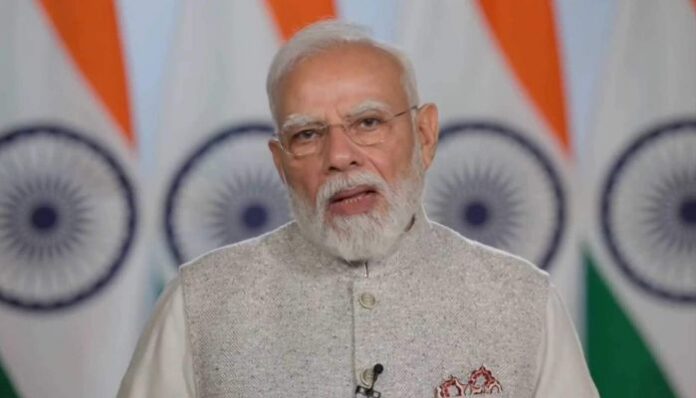
It was 4th November, 2019. Prime Minister Narendra Modi announced at the ASEAN summit in Bangkok that India would withdraw from the free trade agreement of the Regional Comprehensive Economic Partnership (RCEP).
During the event, he stated that the RCEP Agreement “does not fully reflect the basic spirit and the agreed guiding principles” or India’s concerns.
PM Modi further added, “When I measure the RCEP Agreement with respect to the interests of all Indians such as farmers, traders, professionals and industries, workers and consumers, I do not get a positive answer. It also does not address satisfactorily India’s outstanding issues and my own conscience permits me to join the RCEP.”
Almost 7 years later, Union Minister Piyush Goyal acknowledged that the RCEP agreement would have been a death knell for the Indian manufacturing industry.
The RCEP: A tragedy that the Modi government averted. https://t.co/gZQHEvJYqS
— Piyush Goyal (@PiyushGoyal) October 29, 2026
“India was not in the picture at all when RCEP was launched. I failed to understand the compulsion of the previous government. We already had a free trade agreement with ASEAN; we already had a free trade agreement with Japan and Korea. We were at an active stage of negotiation with Australia and could have finished it easily; it was not a difficult agreement,” he emphasised.
Goyal pointed out, “We had hardly any business at that time with New Zealand; our total bilateral trade was 350 million dollars. Only one country was left out— China. I still don’t understand what the compulsion was at the government level…chaired by the then Prime Minister Dr. Manmohan Singh and they decided that we should join the RCEP negotiation. (This) effectively offered India and India’s market to a free trade agreement and opened up almost all our sectors with no duty protection to China, given that the rest were either already under an FTA.”
The Union Minister pointed out that he was shocked after learning about the negotiations of the Congress-led UPA government with the RCEP after taking charge as the Commerce Minister.
While hailing PM Modi for his decision to withdraw from the free trade agreement of the RCEP, Piyush Goyal stated, “It is not easy standing in front of the world in a way, after years of negotiation, trying our best to safeguard India’s interest. You need the courage of conviction to be able to say that we refuse to join RCEP, it does not meet the guiding principles on which India decided to join the negotiations. One single act on 4th of November, 2019 in Bangkok is the reason that today we are discussing manufacturing and India’s industry. Otherwise, we would have been a nation of salesmen and sales girls, marketing Chinese goods in India.”
Why India exited RCEP
One of the biggest reasons for India’s exit from RCEP was the fear that the country would be flooded with cheap dairy and agricultural products from New Zealand and Australia, which would harm our farmers. At that time, India had a trade deficit of $53 billion with China. Since the free trade agreement lacked safeguards, subsidised Chinese goods could have destroyed Indian IT and pharmaceutical industries.
It must be remembered that the agreement did not have provisions for reciprocal market access, which was further complicated by favouring trade in goods and not in services. India holds a competitive edge in the service sector and mobility of professionals.
In 2019, India’s economy was experiencing a growth slowdown, and domestic industries also voiced support for withdrawal from RCEP.
The Modi government demanded stricter Product-Specific Rules (PSRs) and verification standards such as high Regional Value Content (RVC) percentages and strict Change in Tariff Classification (CTC) to prevent back-door dumping. Other nations demanded more relaxed rules.
India proposed an auto-trigger safeguard mechanism. If imports of a specific tariff line from a member country exceeded a predetermined volume threshold, import duties would automatically reset back to the standard Most Favoured Nation (MFN) rate. RCEP members rejected the clause.
Positive impact of the decision
The decision by the Modi government helped safeguard the domestic economy of the country and look for safer trade alternatives and strategies. Millions of small farmers and dairy producers were protected alongside micro, small, and medium enterprises. In the last 7 years, the Make in India initiative also gained huge momentum. Trade deficits with countries such as China would have worsened with the RCEP agreement.
India was able to deploy import duties, anti-dumping measures, and auto-trigger safeguards against sudden import surges. The Modi government maintained and developed existing bilateral ties with most member nations.
The withdrawal from RCEP saw the strengthening of domestic supply chains, Production-Linked Incentive (PLI) schemes, and bolstering competitiveness.
In November 2019, Union Home Minister Amit Shah had noted in his blog, “By rejecting RCEP, India has firmly protected its industries from any adverse effects that Chinese interests could have caused. For us, India remains first, and foremost.”
