

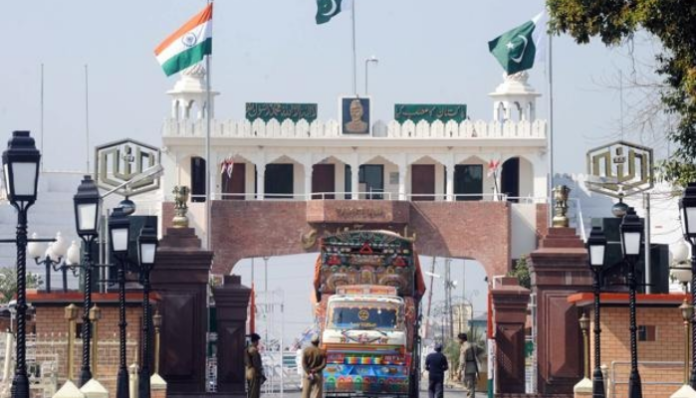
Pakistan has suffered an estimated USD 40 billion in economic losses since the trade freeze with India in 2019, following the Pulwama terror attack and subsequent tensions, the Press Trust of India reported, citing the head of a business advocacy group.
According to Pak-India Business Council Chairman (PIBC) Noor Muhammad Qasuri, the two countries should restore commercial ties, and it will benefit businesses on both sides and create opportunities for investment, tourism and regional cooperation.
He further said that the suspension forced Pakistani businesses to import essential raw materials and goods from distant markets, driving up transportation and freight costs as well as delivery times.
According to PTI, Imports from India can save Pakistan’s pharmaceutical industry between USD 2 billion and USD 3 billion annually because of its dependence on raw materials available in India.
STORY | Pakistan suffered USD 40 bn in economic losses due to suspension of trade with India: PIBC chief Pakistan has suffered an estimated USD 40 billion in economic losses since trade with India was suspended in 2019 following the Pulwama terror attack and subsequent escalations, the head of a business advocacy group said Monday. (Report by M Zulqernain/PTI) READ: https://t.co/M9riuoJIvJ
— Press Trust of India (@PTI_News) November 2, 2026
Qasuri stated that the textile industry incurred extra costs as domestic cotton output fell. Because mills had to source cotton from Brazil, Egypt, China, and the United States, they spent an estimated additional USD 5 billion.
Qasuri noted that resuming bilateral trade could lower transport costs and help ensure timely supplies. Because Indian oil refineries are geographically closer to Pakistan, petroleum imports could be cheaper and faster. He added that access to Indian agricultural and industrial products could also help Pakistani businesses reduce production costs.
Speaking about regional economic cooperation, he also pointed to India’s financial assistance to Sri Lanka during its economic crisis as an example of how neighbouring countries can support one another in difficult times.
The USD 40 billion figure is the PIBC’s latest estimate of the cumulative damage from more than six years of frozen commercial ties. It is significantly higher than earlier assessments by the same body.
In March 2025, Qasuri had put Pakistan’s losses at approximately USD 30 billion over the previous six years, while noting that the two countries have the potential for USD 20–25 billion in annual bilateral trade.
The PIBC’s latest assessment leaves little doubt about the asymmetry at the heart of South Asia’s frozen trade relationship: India, a roughly $4-trillion economy, towers over Pakistan’s $350-billion economy.
Now Pakistani business leaders appear to acknowledge that ignoring that reality has been costly. After years of lost trade, higher freight bills and missed opportunities, the message from Islamabad is that Pakistan has recognised India’s dominant economic weight and that a broke Pakistan can no longer afford to pretend the region’s largest market does not exist.
