

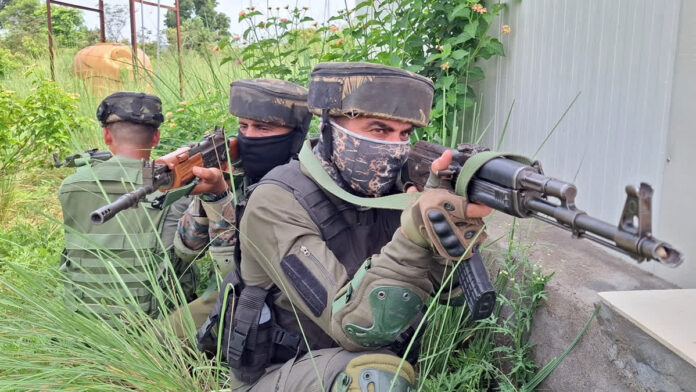
For the first time in 47 years, the Central Reserve Police Force (CRPF) has completed an entire year without losing a single personnel in an operational incident anywhere in the country. The milestone comes amid the Centre’s sustained crackdown on Left-Wing Extremism (LWE), which has significantly weakened the Maoist insurgency across India.
According to officials, the force has not suffered an operational fatality since October 30, 2025. In 2025, eight of the nine CRPF personnel who died were killed in action in Maoist-affected areas of Jharkhand, Chhattisgarh and Odisha. The ninth personnel died during field firing practice.
The previous year, 2024, saw 12 CRPF personnel lose their lives in operational incidents across Chhattisgarh, Jammu and Kashmir and Manipur.
CRPF Director General GP Singh described the achievement as a significant milestone, noting that the force had completed 12 consecutive months without an operational fatality. The previous comparable period of zero operational deaths dated back to January 1979.
In a post on X, Singh credited modern equipment, improved training, strategic planning and better post-incident medical response for the achievement. He particularly highlighted the rapid evacuation of injured personnel to secondary and tertiary healthcare facilities.
Singh also underlined that the milestone had been achieved despite the force continuing to remain deployed across major operational theatres in the country.
Maoist insurgency weakened after sustained crackdown
The absence of operational fatalities coincides with the Centre’s announcement that India had achieved its March 31, 2026 deadline for eliminating Left-Wing Extremism.
India was declared Maoist-free on March 30, 2026, following an extensive security crackdown that resulted in record surrenders, encounters and arrests. The country, which had more than 100 LWE-affected districts at the peak of the insurgency in the mid-2000s, no longer has any officially designated Maoist-affected district.
The last Maoist Central Committee member, Misir Besra, was arrested in Jharkhand on July 28, 2026, marking another significant setback for the insurgency.
The two most recent CRPF operational fatalities occurred in October 2025 in Jharkhand’s West Singhbhum district, then a Maoist-affected region. Inspector Kousal Kumar Mishra succumbed to injuries sustained in a blast during an area domination exercise. Head Constable Mahendra Lashkar was also killed in the same incident.
At the height of the Maoist insurgency, nearly 50,000 CRPF personnel were deployed in LWE-affected regions, including around 40,000 in Chhattisgarh’s Bastar division, considered the nerve centre of Maoist activity.
Manipur emerges as a new operational challenge
While Maoist activity has receded, the CRPF continues to face security challenges in other parts of the country, particularly Manipur, which has witnessed prolonged ethnic violence.
Several CRPF battalions have been redeployed from Bastar to the northeastern state. The Centre is also considering sending additional personnel amid escalating tensions involving Naga and Kuki groups.
An officer based in Manipur described the state as the force’s next major operational theatre, pointing to the growing security challenges.
He noted that while Maoist-affected regions now largely require monitoring, the situation in Manipur remains volatile. Three CRPF personnel were recently injured in Imphal after militants targeted them with a bomb.
The CRPF has also taken over camps previously occupied by cadres of Suspension of Operations (SoO) groups and replaced Assam Rifles personnel at several locations, adding to its responsibilities.
With the Maoist insurgency substantially dismantled, the CRPF’s operational priorities are evolving. Its first fatality-free year in nearly five decades marks a significant achievement, even as fresh security challenges emerge in the Northeast.
