

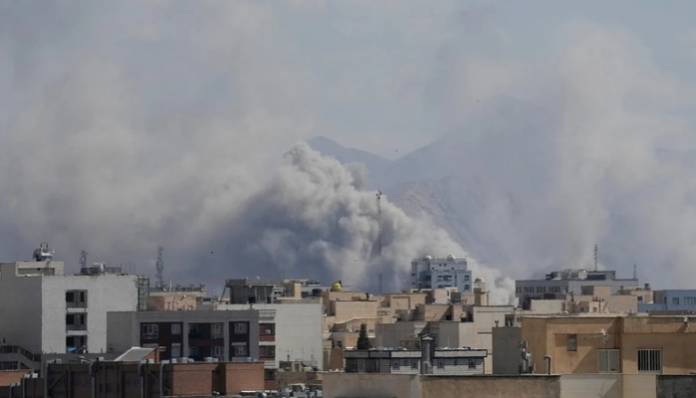
On Monday, 2 November, the United States carried out strikes on Iran’s Qeshm Island in the Strait of Hormuz. The US strikes on Qeshm Island came on the eve of midterm elections in America and hours after Vice President JD Vance expressed optimism about a possible diplomatic deal to end the war
The strikes were described as defensive and were not seen as a sign that full-scale hostilities would resume. But they took place just before pivotal midterm elections, in which voters were expected to punish Donald Trump’s Republican Party for the war’s cascading impact on the cost of living in the US.
According to the Iranian state media agency IRNA, five explosions were heard on Qeshm Island, with further blasts reported in Bandar Lengeh in southern Iran. Residents also reported seeing two aircraft flying over the island. The Wall Street Journal (WSJ) first reported the strikes, saying targeted surface-to-air missiles were used against US assets.
Iran’s Islamic Revolutionary Guard Corps (IRGC) offered a competing account, claiming its forces had brought down three U.S. drones near the Strait of Hormuz, including an MQ-9 Reaper, and had captured a fourth MQM-170 reconnaissance drone intact through electronic warfare. There was no immediate confirmation of casualties from the Qeshm explosions.
The strikes underscored the dual track the Trump administration appears to be pursuing. It is allowing diplomatic efforts to continue while keeping military options ready. On Monday, 2 November, Vance told reporters that he and President Donald Trump “both feel pretty good about the prospects for potentially coming to a negotiated settlement,” adding that “we’ve certainly made some progress”.
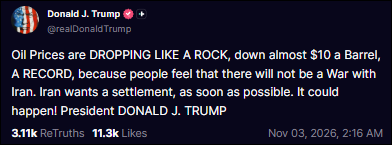
In a Truth Social post, Trump pointed to a nearly $10-per-barrel drop in oil prices as evidence that markets believed a war could be avoided, writing that “Iran wants a settlement as soon as possible. It could happen”
Speaking to Fox News, hours before polls opened in the US, Trump continued to downplay the conflict and its effects on the US economy.
“There’s no war raging. It could happen if they don’t make a deal, but they want to make a deal very badly, and there’s a very good chance we make a deal.”
The US has struck Qeshm Island repeatedly during the war. Situated at the mouth of the Strait of Hormuz, the island has previously been used to launch attacks on shipping in the waterway. Although attacks have stopped in recent weeks, Iran continues to enforce its closure of the strait by targeting oil tankers, container ships and other vessels attempting to pass through.
Iranian Foreign Minister Abbas Araghchi, however, maintained that Tehran was prepared for both diplomacy and military confrontation. He warned that any renewed military action against the country would invite a stronger response.
The latest reported strike occurred while Washington and Tehran remain at war, a conflict that started on 28 February, despite both sides suggesting that a negotiated settlement may still be achievable.
The developments are unfolding as Americans vote in the US midterm elections. All 435 seats in the House of Representatives, 35 Senate seats and 36 governorships are being contested. The outcome will determine whether the Republicans hold onto their congressional majority through the remaining two years of Trump’s term.
