Home Blog Page 6372

Cricket World Cup Preview – India v Australia: It will be a cracker of a game

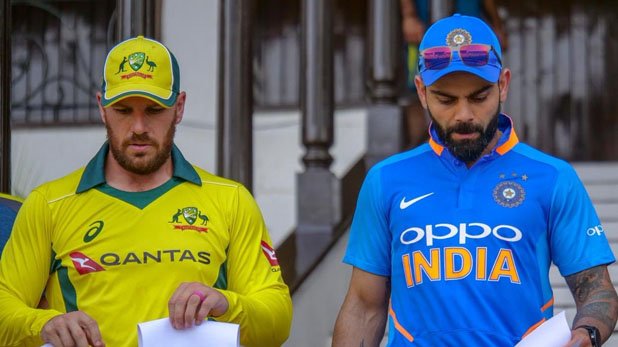
When India locks horns with Australia on Sunday, many people will lose their minds due to a nail-biting finish. Such is the excitement these two teams provide when they play against each other.

The record might tell you that Australia dominated India in World Cup games (winning 8 games out of 11), but most of the matches produced absolute rippers. There are only two world cup matches that were won by a margin of 1 run and both the times these two teams were involved.

India, one the most favourite to win the title, have started their campaign on a winning note. The team played as a unit, and the bowlers bowled according to plan and supported well by the fielders, followed by an excellent batting display by the batsmen.

But Australia is no South Africa, and they know how to make a comeback from a losing position. So Indian bowlers need to be on their toes throughout the match as they have seen what Australian lower order did against the West Indies.

Australia’s strength is in their never give up attitude. Despite this, their bowling could land them in trouble as only Starc seems to be in good form. So if the Indian batsmen see him off, there won’t be much issue in scoring runs against the rest of the bowlers.

Australia also has to watch out for Jasprit Bumhah, who is in great form. The Indian spin duo (Kuldeep & Chahal) had been tackled well by the Aussies in the bilateral series in India. But they picked six wickets against South Africa, so you can’t just write them off. Smith and Warner need to bat throughout the innings to get a good score for Australia.

Players to watch out

Bumrah is the trump card for India. The number one bowler got an orthodox bowling action which keeps the batsmen guessing what’s coming next. Most of his balls pitch on the middle stump and drift away from the batsman, which makes it hard to play.

Starc would love to continue his current form. He has an uncanny knack of dismissing the most dangerous batsman of the opposing team at the early stage of the innings. If he does well, India won’t be able to score as per their likings.

India v Australia in ODIs:

Overall: Matches 136, India Won 49, Australia Won 79, No Result 10

World Cup: Matches 3, India Won 3, Australia Won 8

Recent Form (most recent first): India W L L L W, Australia W W W W W

ICC Rankings: India (2), Australia (5)

Upcoming Records:

Virat Kohli needs 139 more runs to reach the 11,000 runs milestone, and he will be the 3rd Indian after Tendulkar and Ganguly to reach the milestone.

Kohli needs just one more half century to reach the record of 50 half century in ODIs.

Aaron Finch has 98 ODI sixes on his name, and he needs two more to reach 100 sixes in ODIs.

Hardik Pandya needs six wickets to reach 50 wickets milestone in ODIs while Coulter-Nile needs 2.

Squads:

India: Virat Kohli (capt), Jasprit Bumrah, Yuzvendra Chahal, Shikhar Dhawan, MS Dhoni (wk), Ravindra Jadeja, Kedar Jadhav, Dinesh Karthik (wk), Bhuvneshwar Kumar, Hardik Pandya, KL Rahul, Mohammed Shami, Vijay Shankar, Rohit Sharma, Kuldeep Yadav.

Australia: Aaron Finch (capt), Jason Behrendorff, Alex Carey (wk), Nathan Coulter-Nile, Pat Cummins, Usman Khawaja, Nathan Lyon, Shaun Marsh, Glenn Maxwell, Kane Richardson, Steve Smith, Mitchell Starc, Marcus Stoinis, David Warner, Adam Zampa.

Aligarh: Lawyers refuse to represent the accused men in the brutal murder of child, stand firmly with the victim’s family

The gut-wrenching murder of a 2.5-year-old girl in Aligarh sparked a massive outrage with many people across the country urging the judiciary to swiftly deliver justice by giving out harshest punishment for the culprits. Now, the General Secretary of the Aligarh Bar Association, Anoop Kaushik had declared that none of their lawyers will be defending the accused men in the court. He even asserted that they won’t allow any counsel from outside to fight the case on behalf of the accused men.


Tina (name changed), resident of Tappal, Aligarh district, Uttar Pradesh, was choked to death by Zahid and Aslam over an argument with her family regarding a small loan amount of Rs 10000. The principal accused, Zahid had brutally strangled Tina with a dupatta (scarf) and hid the body in his house in a straw bag. After three days when the corpse started emitting a foul odour, Zahid threw Tina’s body in a pile of trash. Tina’s body was completely decomposed with her eyes gouged out.

The post-mortem report said that vital parts of Tina’s body were missing and it couldn’t be determined with certainty whether she was subjected to sexual assault or not. Earlier, Tina’s mother had alleged that Aslam, another co-accused in the case had previously raped his own daughter after which his wife has taken their daughter away to her parent’s house.

Following the murder, the Uttar Pradesh has set up an SIT to investigate the case. As per the Police, the POCSO (Protection of Children from Sexual Offences) Act will also be applied to the case. According to DG (Law & Order) Anand Kumar, Aligarh SSP has set up an SIT to fast-track the case and ensure that the culprits are brought to justice. He added that investigation is proceeding on the basis of scientific evidence.

In addition, the police have made two more arrests in the case on Saturday, including the wife of Zahid and his younger brother. So far, 4 arrests have been made in the case. The Special Investigation Team (SIT) comprising of 6 members is to submit their probe report within 3 weeks.

West Bengal: BJP victory procession turns violent, workers say police were accompanied by TMC goons who triggered the attack

Though the Lok Sabha election 2019 is done and dusted, Mamata Banerjee led Trinamool Congress (TMC) in West Bengal is yet to recover from the jolt they faced at the hands of the Bharatiya Janata Party. The BJP workers have been on the receiving end since the time election preparations were in full swing and are still facing the ire.

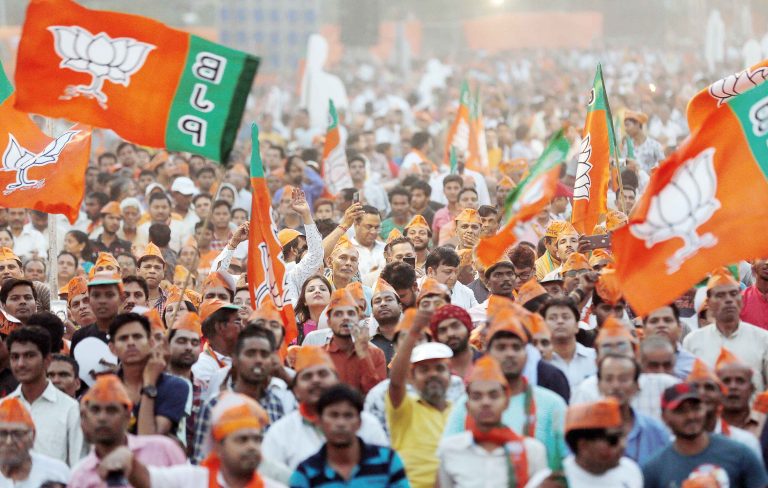
In the latest, clashes broke out at Buniyadpur and Gangarampur in Bengal’s South Dinajpur district on Saturday afternoon when the police authorities broke into two victory processions led by Bharatiya Janata Party state unit president and Midnapore MP Dilip Ghosh.

Dilip Ghosh, who was rushed to a safe place by BJP workers as tension rose and more police were deployed to tackle the situation, alleged that the police were accompanied by Trinamool Congress workers who triggered the clash by attacking his men first.

Several BJP workers were also injured in the baton charge by the police. Police also lobbed teargas shells to disperse the crowd. BJP workers also retaliated by showering brickbats on the police force and chasing the men in uniform with sticks.

Police vehicles were damaged while Sub-inspector Ribhu Bhattacharya sustained head injuries and a woman civic volunteer’s leg was broken in the onslaught.

The unrest prevailed for almost three hours. The situation came under control after 2 pm Around 20 BJP workers were rounded up.

The Bharatiya Janata Party had taken out the processions irrespective of the recent ban imposed by West Bengal CM and Trinamool Congress supremo Mamata Banerjee.

Earlier too a BJP victory procession was disrupted by TMC goons who hurled bombs at a ‘Vijay Rally’ of the BJP in Birbhum district on May 28.

Probably, unnerved by the BJP spell which was seen intensifying in these Lok Sabha elections in Mamata’s home turf, the West Bengal CM had recently announced the ban on victory processions of the BJP, claiming it would ‘trigger violence’ across Bengal.

Mamata Banerjee had issued a diktat to the police ordering them to take strong action against BJP leaders if they create any trouble by holding victory rallies in the state. Mamata Banerjee has dictated that there should not be any more victory march in the state as over 2 weeks have passed since the announcement of the Lok Sabha election results.

Meanwhile, Banerjee foreseeing what her future in stores, had turned hostile towards BJP much prior to the Lok Sabha elections. She had banned BJP’s Rath Yatra campaign last year, citing ‘law and order’ issues. Her government had also stopped many BJP leaders from holding rallies in the state by refusing permission for landing choppers. Innumerable BJP karyakarta’s were attacked in Bengal.

Amidst these acts of violence, Mamata Banerjee has also shown her opposition to Hindus raising religious slogans of “Jai Shri Ram”. Recently West Bengal Chief Minister Mamata Banerjee got irked by these slogans and was also seen lashing out at the people and threatening to take action against the people chanting Jai Shri Ram.

Later, she had also unleashed her state police force to arrest few people for chanting Jai Shri Ram slogans in the state.

Free metro rides for women is an ill thought-out move: Here are the DMRC numbers that nobody is talking about

The Delhi Government’s latest move to offer free rides to women commuters of the Delhi Metro showcases once again Mr Kejriwal’s old habit of offering populist subsidies just before elections. The current proposal has several financial, social, and logistical implications that have not been examined in depth and will be detrimental to the health of one of the best-run PSU’s so far.

The said proposal, which is estimated to benefit women commuters who supposedly comprise ‘30 to 33 percent’ of the riders, will be launched in 3 months and is likely to cost the Delhi government Rs 700 crore for this year. Mr Kejriwal has clarified that the entire cost will be borne by Delhi Govt and also specified that no permission from the Central government has to be taken for this move.

A careful examination of this announcement reveals several flaws which we believe have not been examined in depth. 

Firstly, there are several financial consequences of this move, both on the government as well as on the DMRC. There is no data-driven basis to the figure of 30%women ridership that has been used to justify this move. It has been assumed that women straight up comprise ⅓ rd of the total riders. This data does not seem to have been derived from either the census of Delhi or from DMRC’s own figures. Given that the DMRC itself does not segregate men and women in its own report of ridership details, the financial cost of 700 crores seems to have been arrived on this flawed assumption.

Secondly, the financial report of DMRC, which has been compiled and is available in the public domain, reveals disturbing trends. DMRC currently owes approximately 2915 crores to JICA and 5134 crores to DEAMPL, which is a subsidiary of Reliance Infra. DMRC has consistently focused on meeting its debt obligations during the loan repayment cycle along with profits before tax while meeting its mandate of providing quality public transport. The fares in 2017 were hiked to increase the revenue, keeping these financial concerns in mind. While this move undoubtedly caused a decline in ridership, it was necessary so that DMRC could continue to be an efficiently run enterprise.

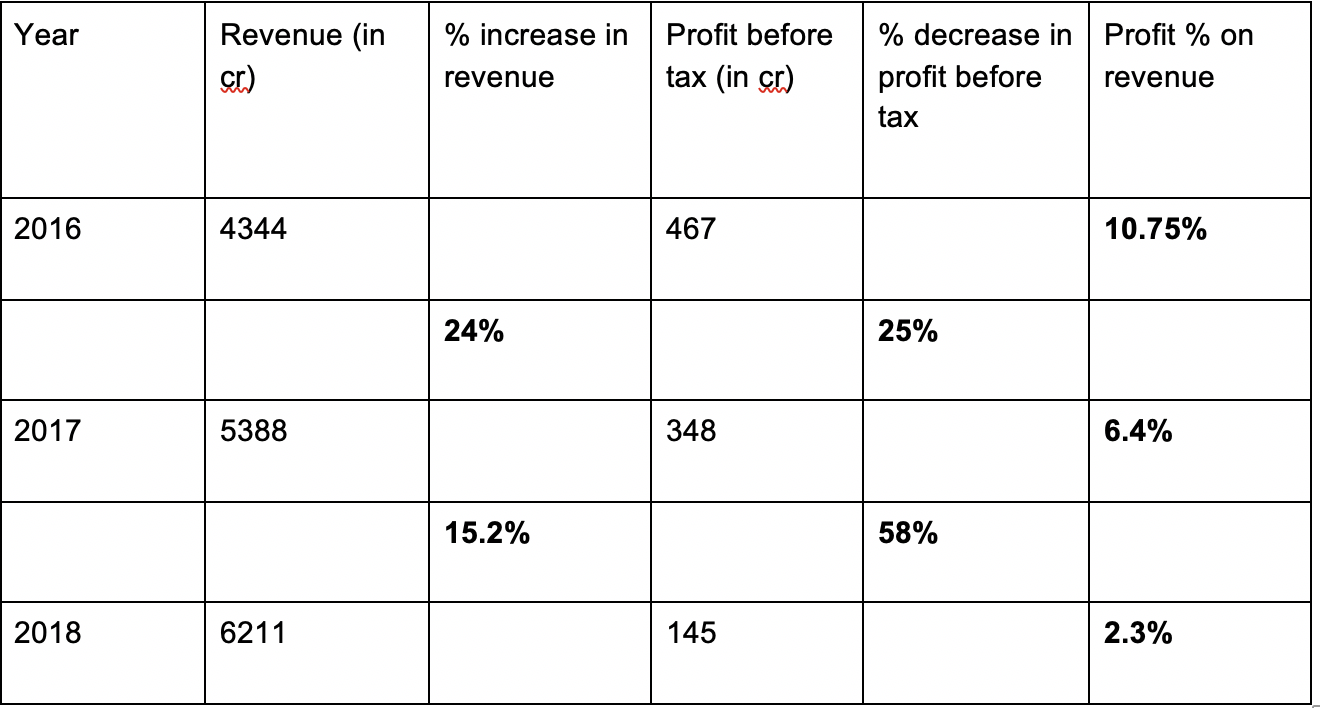
As India grows in stature and confidence, mismanaged and debt-ridden PSU’s depending on loans and external players seem out of place. Implementing this move will push DMRC towards indebtedness and be a blot on the civic pride of the capital. The official numbers in the following table also confirm this financial stress.

 As can be seen, since the last 4 years, DMRC has seen a fall in the rate of revenue growth. Not only has the profit percentage as a share of revenue fallen, but the profits themselves have plummeted. Extrapolating from this data, it is anticipated that at this current trend, DMRC will have revenue of Rs 6,500 crores and it will be a miracle if it breaks even in the future.   

Furthermore, as these extrapolated figures been arrived without including the free ride proposal, it will be unsurprising if Kejriwal’s latest move exacerbates the red figures on DMRC’s balance sheet. 

The Delhi Government’s proposal to bear the Rs 700 crore losses also hides another major issue- that no cognizance has been taken of the fact that the operational and other running expenses of DMRC are increasing annually and these will NOT be paid by the Delhi Government and which have been conveniently overlooked by the Delhi Government.

Besides financial concerns, there are other pressing issues such as logistical implementation and execution- implementation of this freebie. While vague proposals are in the horizon such as having a separate line for women or an Aadhaar linked metro card for women, there can be no denying that the general public will find a way of misusing these women friendly facility. As is the case, instances of the public flouting coach rules are rampant in Delhi. While an Aadhar linked metro card can be implemented, the question remains as to how can such abuse be prevented and how these expenses are to be met.

ID linked fund transfers, which have been implemented by the Central government over the last couple of years, could be one way forward. Women from lower socioeconomic strata and other vulnerable women groups such as elderly or handicapped ladies can benefit from such a linkage– this will not only save taxpayer money and benefit genuine recipients but also promote the stated goal of increasing access to digital banking as part of Digital India initiative without wasting taxpayers’ money on such unnecessary freebie.

In fact, one may argue as to why should Delhi taxpayers subsidize travel of women to areas such as Gurugram and Noida when their respective state governments aren’t even bothering to financially pitch in. Given that there are other more deserving sections of society, why should the savings in financial costs be passed to only women?

Critics can argue that this move will increase women’s participation in public spaces. However, Women’s safety is a systemic issue that needs to be addressed by multiple stakeholders- civic society, government, police and law enforcement. Hasty measures are NOT the solution. The Delhi Govt’s patchy execution of such freebies and increasing women empowerment means that this move perpetuates gender stereotypes of women requiring patriarchal intervention at every step of their lives – an idea at odds with the idea of a progressive India.

These questions must provoke a larger debate.

DMRC is currently the world’s 2nd most unaffordable metro and lacks a sufficient user base or a revenue stream to sustain its operations. Should this be the direction our PSU’s and infrastructure projects take?

Also, why is it that we as a country love freebies and why is it that the government panders to such needs despite their detriment to the country? Sadly, Mr Kejriwal is symptomatic of our own ineptness, selfishness, and a pervasive desire to enjoy unearned privileges. As citizens, we should not only oppose such moves but also use such occasions to introspect as a collective society. Only then, can democracy be truly implemented?

Sources for the financials of DMRC:

  1. Delhi Metro 2015-2016
  2. Delhi Metro 2016-2017
  3. Delhi Metro 2017-2018

Indian Railways to offer massage services for passengers in trains departing from Indore

Today the Indian Railways officially announced that they would soon be offering massage services for its passenger on board running trains.

The service could be availed in 39 trains departing from Indore. The idea was proposed by the Ratlam division of Western Railway zone.

The trains on which the service would be provided include Malwa Express, Indore-Lingampalli Humsafar Express, Avantika Express, Indore-Veraval Mahamana Express, Shipra Express, Narmada Express, Ahilya Nagari Express, Panchvally Express, Indore-Pune Express.

Rajesh Bajpai, director, media and communication, railway board said, “This is the first time in the history of railways that we will provide massaging service for passenger comfort on running trains. It will not only increase revenue but also add passengers. Railways to earn an additional revenue of Rs 20 lakh annually and an estimated increase of Rs 90 lakh per year through the additional sale of tickets from about 20,000 passengers who will be the service providers”.

The service would be offered at three prices each with for foot and head massage for 15 to 20 minutes. The Gold service is offered at Rs 100, Diamond service at Rs 200 and Platinum service at Rs 300.

Within 15-20 days the Indian Railways would commence the service and it would be available from 6 am to 10 pm. The train would have 3-5 massage providers and they would be provided with identity cards. The number of massage providers would be increased if required.

The Indian Railways had asked it’s zones and divisions to come out with new and innovative ideas to generate non-fare revenue, the message service would be the first idea want to be implemented after the suggestion of the Western Railway.

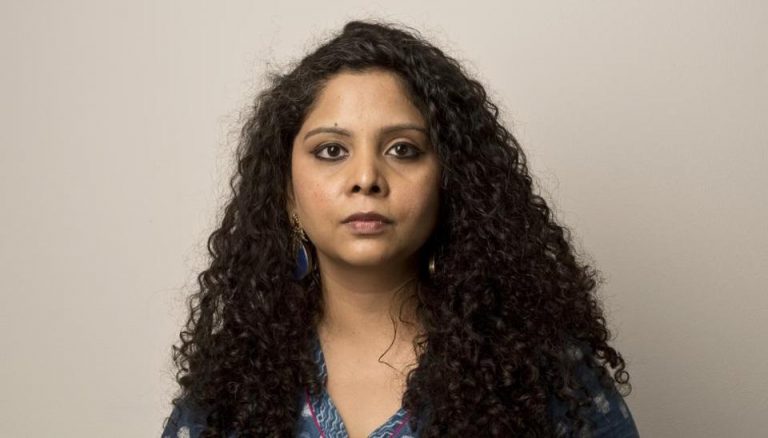
Rana Ayyub gets rattled and displays her hypocrisy after Bhupendra Chaubey refers to Aligarh murderers as ‘Muslim men’

Controversial journalist Rana Ayyub, who recently had a prolonged meltdown on Twitter after PM Modi-led National Democratic Alliance (NDA) registered an emphatic victory in the recently concluded Lok Sabha elections and after Amit Shah was appointed with the Home Ministry portfolio appeared visibly rattled as one of her fellow journalists invoked religion of the perpetrators of ghastly murder of a 2.5 year old Tina in the town of Aligarh.


A perturbed Rana called out the journalist for invoking the faith of the murder accused and slammed the journalist for peddling his agenda over brutal, heartwrenching murder of an innocent toddler.

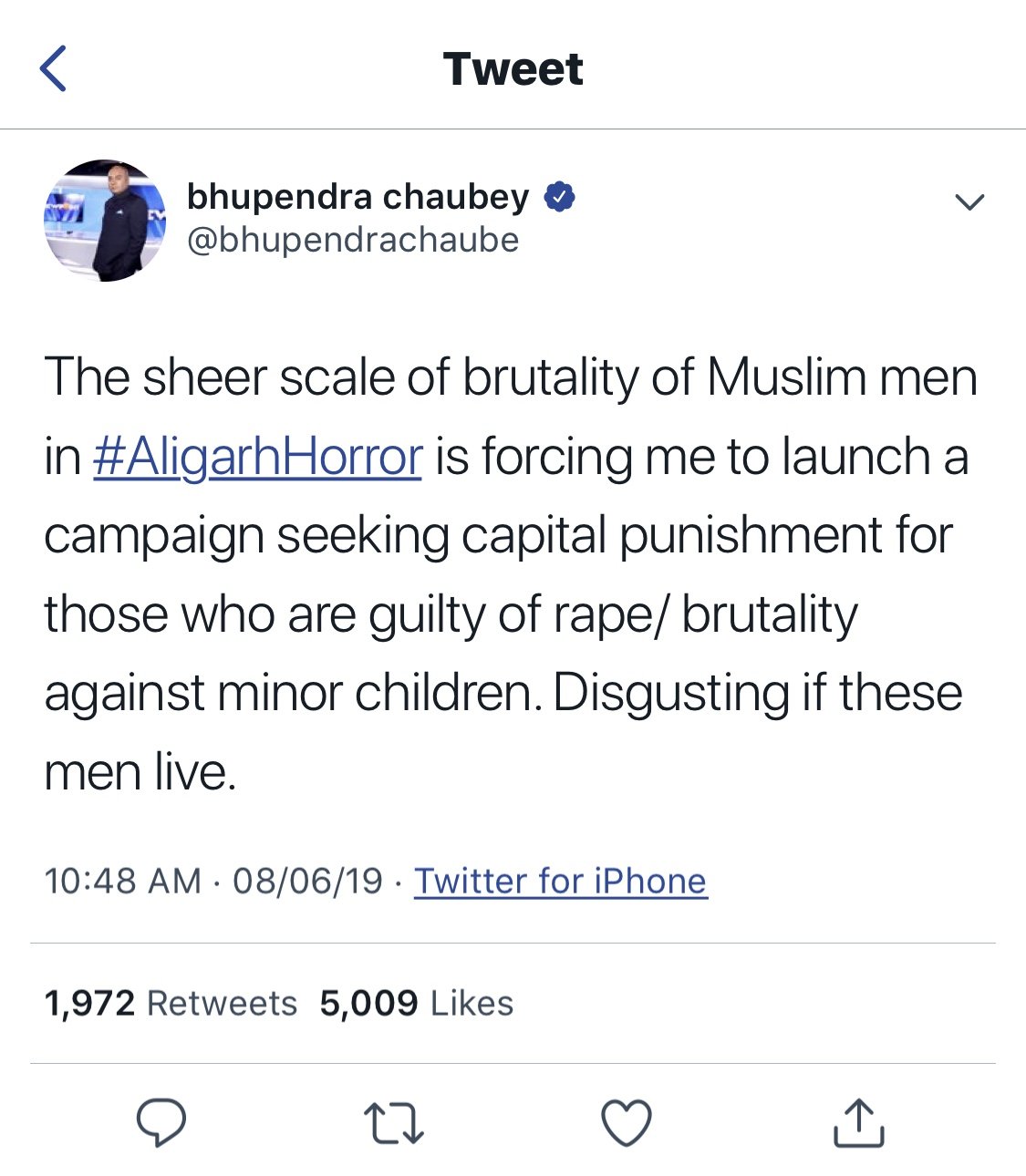
Journalist Bhupendra Chaubey had expressed shock over the brutality of ‘Muslim Men’ in the Aligarh incident which has shaken the entire country to its core. The tweet by Bhupendra has not been deleted.

Zahid, the principal accused along with Aslam had strangled Tina Sharma to death for a paltry loan of Rs 10,000. Her body was kept hidden in Zahid’s house for 3 days until the body started emitting odour, after which he dumped it in the trash of pile. When her body was recovered, her eyes were gouged out and arm amputated. The post-mortem report was inconclusive whether a sexual assault had happened on her or not.

However, Rana who pompously censured Chaubey for citing religious identity of the perpetrators had herself insinuated the assaulters who had raped a nun in Bengal of being supporters of RSS espousing the ideology of Hindutva. Rana had mentioned in her article how the RSS chief Mohan Bhagwat and Subramanian Swamy’s utterances have acted as a catalyst for their supporters to attack the minorities. Towards the end, Rana alludes that the attack on the nun was not by the infiltrating Bangladeshis but by the followers of the RSS.

It was later found out that the attack was indeed carried out by a Bangladeshi infiltrator and not by the ‘indoctrinated’ youths of the Hindutva fronts. There is a pattern in this. Many liberals, including Rana Ayyub, blame RSS and malign Hindus for any untoward incident that happens in the country. Even when journalist Gauri Lankesh was murdered, these liberals quickly sprung into action alleging that RSS supporters and Hindutva followers have committed her murder.

In another instance, when a minor girl was raped in Kathua, the same Rana Ayyub endorsed an article which equated plotters of Kathua rape case to millions of Hindus who want to see India as a Hindu Rashtra. Rana had no qualms then in sharing and endorsing an article that likened millions of Hindus to the Kathua rapists just because the victim was a minor Muslim girl.


According to the seemingly hypocritical standards exhibited by Rana Ayyub, citing religion of the assaulters is kosher if the victim belongs to the minority group. But, If the assaulters are from a minority community, their religious identities have no role to play in the depravity of the act committed by them.

The stark dichotomy displayed by Rana Ayyub in her duplicitous stand vis-a-vis victims’ religions. Hindus, RSS and Hindutva groups can be named and shamed, held responsible for any unfortunate incident that occurred against the minorities even before the police investigation commences but if the perpetrators belong to minority communities, mentioning their religion becomes akin to “peddling of agenda and exploiting the tragedy”.

Uttarakhand: Drone delivers blood samples from hospital within 18 minutes

On Friday, a novel experiment was conducted in the state of Uttarakhand where a drone was used to deliver blood samples from a hospital 36 kilometres away in just 18 minutes. The drone was sent from a district hospital in Nandgaon to another hospital in Tehri. The blood sample was delivered in a short span of time which would have otherwise taken 70-100 minutes to be delivered by road.


“It was a successful trial run. The hospital was 30 km away but blood was transported within 18 min. It’ll be helpful for patients in remote areas,” said a doctor at the Tehri hospital. He also added that the trial run was part of an ongoing tele-medicine project in Tehri Garhwal.

CDSpace Robotics Limited, a company owned by IIT Kanpur alumni Nikhil Upadhye, manufactured the drone. As per reports, the drone was capable of carrying emergency medicines as well as blood units with cooling kits. The drone can carry a weight of 500 gm of weight and can travel up to 50 km on a single charge. More trial runs would be carried out within a few weeks.

Dr Ashutosh Sayana, principal of Government Doon Medical College & Hospital while speaking to TOI said that most blood samples become unusable when it’s being transported from the distant hills to the labs in cities. The reduction in transportation time would be greatly beneficial to patients in remote areas. This method would also ensure that there is no scarcity of blood for accident victims.

In December 2018, a robotic arm was used to operate on a patient 35 km away. Dr Tejas Patel carried out the world’s first in-human telerobotic coronary intervention surgery.

Muslim mob vandalises petrol pump, beat up staffers because some were getting late for Namaz and didn’t want to wait in queue

An FIR has been lodged against a mob for ransacking a petrol pump in the Malad suburban area of Mumbai and mercilessly beating up the staffers there, says a Time of India report. The police have arrested five men, Zahid, Javed, Siraj, Firoz and Abdul in connection with the incident. The police are on a lookout for others accused of indulging in vandalism at the petrol pump. The incident happened on the Sachadeva HP petrol pump on the SV road in Malad.

An altercation broke out between petrol pump staffers in Malad with two bike-borne men when one of the staffers asked the two men to get in the queue after they had jumped the line to get the petrol filled. The two men then rallied a mob of approximately 20 people sometime later, who vandalised the petrol pump, thrashed the petrol pump staffers and looted Rs 35000 from the petrol pump.

The pump staffer Ashish Yadav had reportedly asked the bike-borne men who had flouted the queue to get back in the queue and wait for their turn. This didn’t sit well with the pillion rider leading to a row. The pillion rider slapped Yadav for the perceived affront. The other senior pump staffers Ravishankar Pandey and Shubham Singh proceeded to broker peace between the two parties but the pillion rider kicked Singh as well.

When OpIndia contacted Malad Police, they corroborated the TOI report and added that the two bike-borne men were getting late to offer their namaz. It is for this reason that they jumped the queue leading to a spat with the petrol pump staff. They subsequently summoned a group of 15-20 men and thrashed the petrol pump staffers there.

The FIR says that as the two bike riders were about to leave the pump premises after their scuffle with the staffers, the pillion rider made a phone call and said, “There’s a fight here at the petrol pump and we have been assaulted. You guys need to come here and teach these guys a lesson.”

As per the report, a mob of about 20 men allegedly descended at the petrol pump carrying lathis with them. As soon as they arrived, without uttering a single word, they started pummeling the pump staffers with their lathis. They shattered two POS(Point of Sale) devices and a fuel reading meter. One of the staffers, Shrikant Vishwakarma sustained arm and leg fractures. Ashish, Singh and other staffers suffered from multiple injuries to their back, head, arm, leg and face. Some of the accused had donned masks to conceal their identity.

Based on the eye witness account and CCTV footage, police have registered a case of assault and rioting against the 5 accused and other unknown men involved. When the petrol pump went through its cash counter, it realised Rs 35000 were missing. Then the police added the charge of dacoity as well in the FIR. The five arrested men were brought before the Borivali magistrate which has sent them to police remand till June 10. Police have said that they have retrieved the motorcycle and lathis used in the attack.

Infighting in The Hindu over Akshaya Patra article: Malini says shoddy journalism, N Ram stands by reportage

A controversy surrounding the Akshay Patra Foundation sparked when “Experts” wrote an open letter to the National Institute of Nutrition (NIN) demanding that they withdraw the compliance certificate that was awarded to the APF after their technical opinion on the matter was sought by the Karnataka government.

The foundation found itself under intense criticism after a report published in the Hindu by Archana Nathan argued that the children were not eating the food because it was too bland. The report was based on the findings of the Karnataka State Food Commission (KSFC) which asserted that the children weren’t eating as much as they should because they did not find the food delicious enough.

After the report was published, many assorted liberal journalists and freelance activists started raising questions about the quality of food provided by the foundation. The fact that Akshay Patra Foundation provided onion-garlic free meals further triggered an ensuing controversy with many critics urging the government to stop funding the NGO which doesn’t take into account culinary preferences of the children.

The supporters, on the other hand, asserted that the controversy is totally unwarranted as the APF has been involved in charity work, providing free hygienic meals to millions of children across 12000 schools in 15 states. The AFP advocates slammed the editorial policy of the Hindu for attacking a noble scheme of AFP that seeks to provide nutritious food to lakhs of children in the country.

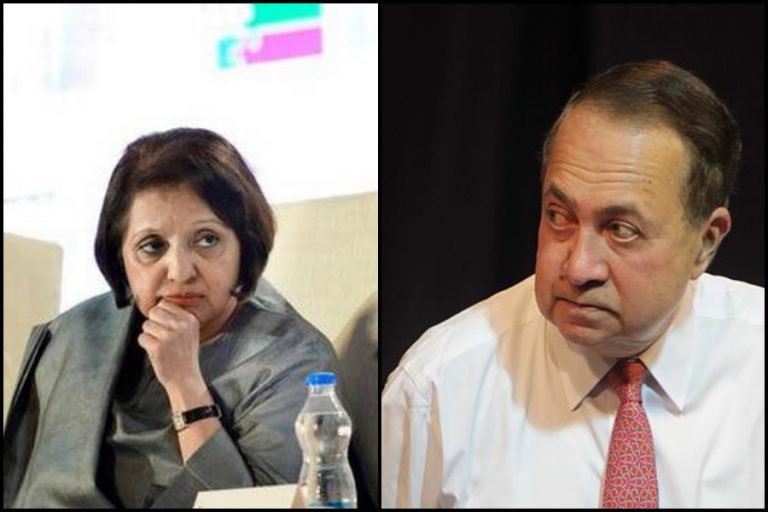
Sensing criticism from various quarters, Malini Parthasarathy, who heads the content and editorial strategy at the Hindu was quick to slam the raging controversy surrounding APF and passed the buck on Suresh Nambath, who according to her handles day to day news content on the Hindu. Parthasarathy admitted that the editorial line of attacking the Akshay Patra Foundation for its free meals by the Hindu was “unwarranted” and she ensured that she would take efforts to upgrade the quality of their approach to content.


However, this didn’t appear like an honest reflection as N Ram, another prominent member of the Kasturi family that manages the Hindu news daily had a contradictory view to that of Malini Parthasarathy.

In stark contrast to Malini’s stance, Ram tweeted that he found the article criticising the practices followed by APF well-informed, nuanced and well-substantiated. Far from pulling up the journalist who had written the article and the editor who gave his approval for taking the said editorial line, N Ram seemed to applaud them for their journalism.


This is a classic exhibition of carrot and stick approach. While Malini Parthasarathy offers a carrot to the critiques who have been slamming the Hindu for its gratuitous article against the APF by claiming that she’d improve their approach to content, N Ram, on the other hand, placates the critiques of the APF who have questioned the onion-garlic free Ayurveda system espoused by the APF by lauding and endorsing the article.

The passive aggressive stance taken by the two senior folks at the Hindu betrays the glaring duplicity in their conduct. This is essentially done to confound the people amidst an ensuing controversy, temporarily assuaging their feelings and salvaging the reputation of the daily which is grievously under attack after its reportage slamming the Akshay Patra Foundation.


If one is to believe what N Ram says, there is no remorse or regret among the editors of the Hindu for publishing a report assailing AFP for providing free meals to underprivileged and needy children. Far from being apologetic, N Ram gloats upon the Hindu’s ‘nuanced’ reportage and conflates “code of editorial values” and “professionalism” with the current controversy to stave off from the criticism directed towards him and his news daily.

Malini had then commented on N Ram’s tweet, stating that she reiterates her commitment as director, editorial strategy, at The Hindu, to promote fact-based, value-driven and agenda-free journalism. She asserted again that The Hindu’s article on Akshaya Patra was an example of ‘shoddy, one-sided journalism’.


It is notable here that earlier, Malini Parthasarathy was blocked by NDTV’s Prannoy Roy for writing an op-ed criticising Prannoy Roy’s attempts to hide behind the shields of press freedom in the wake of charges of financial wrongdoing.

It is a profound irony that N Ram, who is claiming exclusive rights to lofty ideals of professional journalism and rigorous implementation of ‘code of editorial values’ was the one who had shared cropped and incomplete pictures of documents in the Hindu to allege government wrongdoing in the Rafale deal. It is a bit rich coming from people who have been accused of slanting the facts to buttress a predisposed point of view, to pontificate about his organisation’s avowed policy of practising ethical and professional journalism.

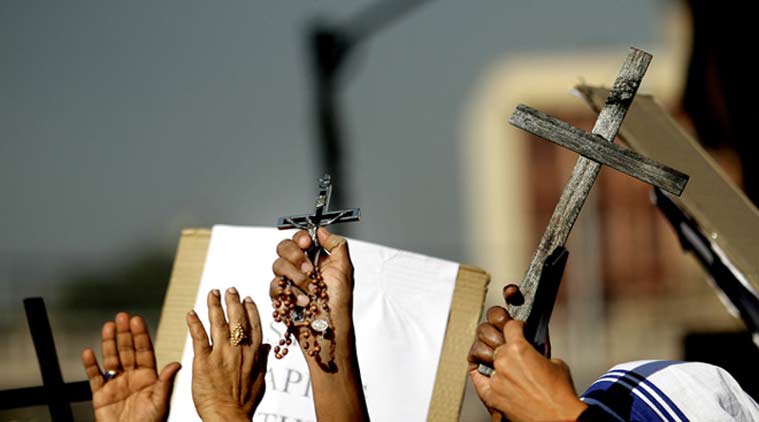
Church Bombings in the year 2000: How Christian priests blamed Hindu groups for attacks committed by Islamic terrorists

The year 2000 was marked by a series of tragedies that have largely been forgotten by the ordinary citizen. It has been 19 years after all and incidents which do not fit into a certain narrative often has a weird way of being discarded by public memory.

During the rule of the Atal Bihari Vajpayee government, there was a series of bombings in Churches in Andhra Pradesh, Karnataka and Goa. Along expected lines, Christian priests blamed Hindu right-wing groups for it but the reality could not have been more different.

Gulbarga, Hubli and Bangalore in Karnataka, in Ongole town and Tadepalliguddem of Andhra Pradesh, Vasco in Goa were cites of a series of bombings that targeted Churches in the states. There were numerous other attacks in various other places in the states as well. While the Central government suspected Islamic terrorists with ties with Pakistan’s ISI to be behind the attacks, Christian priests appeared convinced that Hindus were to blame for the attacks. Sajan George, national convenor of the Global Council of Indian Christians, opined that radical Hindus tend to go unpunished by the regime for crimes committed against marginalized groups.

“It becomes clear from these attacks that whether it is Christians, Muslims, or Dalits, the attacks never end; they are part of the continuing spiral built into the sectarian ideology, out to justify acts of blatant violence and denial of fundamental rights to life, equality before the law, freedom of religion, and freedom of expression,” George said after the Hubli church bombing.

Numerous other Christian padres were of the same opinion. Reverend Vijay Kumar, president of the Hyderabad Baptist Churches Association, shared similar sentiments. He too suspected Hindus to be behind the serial bombings. Bishop D’Silva said that the blast in his diocese could be the result of the national agenda of some militant Hindu groups. In Goa, Church officials suspected that the blast was part of an upcoming industrial firm’s retaliation to a Church-backed protest. Leonardo Lobo, general secretary of the Vasco Citizens Association, said that the blasts were an attempt to instil a sense of fear among the country’s minorities, including Muslims.

Consequently, a narrative was carefully concocted that the attacks were linked to the campaign of Hindu groups against Christian missionaries. An impression was created that the attacks were somehow linked to the campaign of Hindus against the demographic subversion by evangelicals. By creating such a narrative, one can safely speculate that the greater agenda was to blackmail the government and invite international pressure to initiate a crackdown on Hindu organizations working to prevent conversions. Truly, it is a perversion that only Christian missionaries could be capable of.

It ought to be remembered that the Christian religious leaders were demonizing an entire community before any investigation was even completed. Their first instinct was to play politics over the heinous attacks instead of comforting the attendees of their Churches and safeguard their evangelical interests. As time would go on to prove, they were all horribly wrong.

On the 9th of July, the same year, after the spate of serial bombings, bombs in the vehicle of the perpetrators exploded while they were returning after churches in Jagajeevanramnagar. Two of them died on the spot while third sustained injuries. And as their names indicated, they certainly weren’t Hindus. Zakir and Siddiqi died instantly while S.M. Ibrahim suffered injuries. Soon after, the Police raided Ibrahim’s residence and seized documents and a hard disk that led to the arrests of several others across the three states.

In November 2008, 23 people were convicted by a special court for the heinous terror attacks and not a single one of them was a Hindu. All of them belonged to an Islamic terrorist organization called the Deendar Anjuman, an unknown entity at the time. The names of the convicted persons are Hasnuzama, Shamshuzama, Sayed Abdul Khader Zilani (all brothers), Mohammed Ibrahim, Shaikh Hasham Ali, Mohammed Farook Ali, Abdul Rehman Saith, Mohammed Siddiqi, Abdul Habeeb, Shaikh Fardin Vali, Amanath Husain Mulla, Mohammed Giyasuddin, Mohammed Sharfuddin, Meerasab Koujalagi, Sayed Muneeruddin Mulla, Rishi Hiremath, Mohammed Akhil Ahmed, Basheer Ahmed, Mohammed Husain, Ijahar Baigh, Sayed Abbas Ali, Mohammed Khalid Choudhary and Sangli Basha.

Of the 23 convicted, 11 were given death sentences while 12 were given the life sentence. The court had convicted them on charges of waging a war against the State (Section 121 of Indian Penal Code), conspiracy to wage a war (Section 121A of IPC) and sedition (Section 124A of IPC). Some were found guilty under the provisions of the Explosives Act.

The terrorists believed that the spate of serial bombings would cause a civil war in the country between Hindus and Christians. Ultimately, a religious leader from Afghanistan would invade India which would then be turned into an Islamic country. Deluded fantasies, yes, but delusions form the entire basis of Global Jihad.

It is worthy to note that Christian Padres were playing right into the hands of the terrorists. They behaved in a manner as exactly predicted by the terrorists themselves. They demonized an entire community, they put immense pressure on the NDA government which they believed was a manifestation of radical Hindutva and they were using the attacks to further their own political agenda. Due to the great work by the investigative agencies and the utter stupidity of the Jihadis, the perpetrators were soon caught and the Christians could no longer blame Hindus for it.

If one believed that Christian padres would have learnt from their previous follies, they are obviously quite wrong. In 2015, after the heinous rape of an elderly nun in Ranaghat, Maria Fernandez, vice chairperson of the state minority commission, said, “I will not be surprised if investigations reveal that the motive of ‘ghar wapsi’ was behind it.” Propaganda also ensued that sought to politicize the entire issue and give it a communal colour. In the end, Bangladeshis were found guilty of the crime and were convicted for it in 2017.

Islamic attack on Christians is a pretty routine affair. However, whenever such an incident happens in India, the first instinct of Christians is to blame Hindus even before any investigation has been concluded. It’s not a surprise that the narrative around the 2000 Church Bombings has been buried six feet under. It shows how Christian Padres chose to play petty politics in the aftermath of terror attacks in Churches. It was buried so that they can do so again when a similar incident happens the next time. Like previous occasions, it is extremely likely that they will be proven wrong again. But that won’t stop them from playing the same card again in the future.