

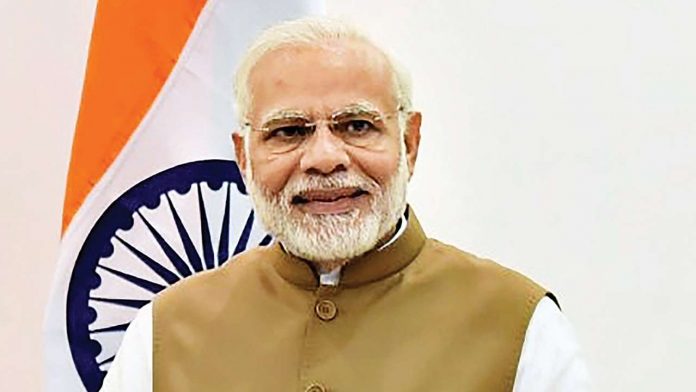
Air Vice Marshal (retd) Aditya Vikram Pethiya, the 1971 war veteran has come out in support of Prime Minister Narendra Modi’s ‘the clouds could help Indian jets escape radar’ statement. AVM (retd) Pethiya’s remark comes days after PM Modi faced severe criticism and ridicule from the opposition over his comment during a recent TV interview.
While addressing a gathering in Indore, Priyanka Gandhi took a jibe at PM Narendra Modi by referring to his cloud-radar statement.#PriyankaGandhi #NarendraModi #Congress #BJP #Balakot #IAF pic.twitter.com/cU0yydBWQq
— ABP News (@abpnewstv) May 14, 2019
As per the report published in News18, AVM (retd) Pethiya, who fought the 1971 war as a fighter pilot, has justified the PM’s statement. He said rain and clouds have always been challenging to fly planes. PM had earlier said that clouds could have played advantage to the Indian Air Force during Balakot air strikes in February. The air strikes were conducted in retaliation to avenge the deadly Pulwama terror attack.

He further added while small clouds don’t make much of a difference but dense clouds potentially affect the capability to detect the exact details of the fighter jets. In this context, it would be fair to say that the clouds impact the radar capability just as the way clouds, storm and rain disturb television signals.
AVM (retd) Pethiya was present during the air strikes at the Indo-Pak border in Bikaner. He was in fact, taken in as a prisoner of war (PoW) by Pakistan. He was in the enemy custody for 5 months 3 days and 8 hours till he was handed back to India. Post his release, he was awarded the Vir Chakra in 1973 by the then President V.V. Giri.
Earlier, senior BJP leader and National Vice President Bijayant Panda had also supported the PM’s statement. Panda who is a graduate from Michigan Technological University was working in the corporate sector before venturing into politics, and he is a trained pilot and regularly flies helicopters. He has previously worked with Biju Patnaik and present Chief Minister of Odisha Naveen Patnaik. In fact, Panda had also shared a link that explained the science behind radar systems.
During an interview, PM Modi had said that cloud cover “helped” IAF planes evade Pakistani radars during the Balakot strikes. “Main din bhar vyast rehta hun. Raat 9 baje review kiya, phit 12 baje review kiya. (I am busy the whole day. I reviewed it at 9 pm then at 12 am). Humare saamne samasya thi ki us samay mausam achanak kharab ho gaya. Bahut baarish hui. (There was a problem that weather had turned bad. It was raining) Visheshagy tareekh badalna chahte the , par maine kaha ki itne badal hain, baarish ho rahi hai toh ek fayada hai ki hum (Pakistan) radar se back sakte hain. Sab uljhan mein the ki kya karein. Phir maine kaha ki badal hain jaiye aur wo chal pade. (Specialists wanted to change the date but I suggested that the rain would give us an advantage and it would help us evade Pakistan radars. Everyone was in a dilemma. Then I asked them to leave and they did)
PM’s remarks have since created controversy and Twitterati has engaged in a heated debate with each other. While some are vehemently against it, the others have poured their views in support of the PM.
Modi is right over radar logic.
Radar efficiency reduces under rain/cloud conditions..#HarGharModi#everyvoteformodihttps://t.co/hofh0C3YZG pic.twitter.com/2nM3fZNSQm— Vish (@vishy_g) May 14, 2019
Since yest I am watching jokers make tweets on Modi’s radar remarks. we had email, radar’s and clouds have a relation and Modi wasted liberandus time n mind space.
Lets have a national rule. There should be an entrance exam for journalism. Low gradehttps://t.co/yiKlwJvxGc pic.twitter.com/my2d9KtKQX
— Chowkidar Ashu (@muglikar_) May 13, 2019
While netizens engaged in a war of words over the PM’s remark, a report by Firstpost has tried to decipher the logic in a simple explanatory way. Earlier today, we had also published a report about how the PM has ruffled many a feather with his comment on radar technology.


