Home Blog Page 6386

I am more concerned for Hindus than Modi is. Modi kills Muslims: Arvind Kejriwal loses all sense of morality

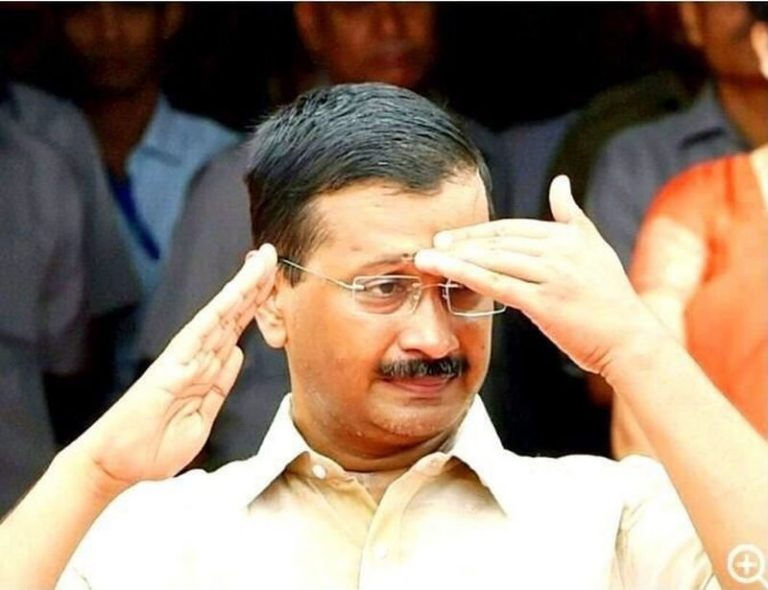
As Delhi gears up to vote in the ongoing general elections, Aam Aadmi Party chief Arvind Kejriwal seems to have lost all his sense of morality and lowered the bar of public decency. During an interview with journalist Barkha Dutt on Kapil Sibal backed channel, Kejriwal said that Modi doesn’t love Hindus, but actually hates Muslims and gets them killed

In the above video, from 34:51 onward, Kejriwal could be heard saying, “I want to ask if you are a party of Hindus, what have you done for Hindus? Have BJP people arranged for school admission of even one Hindu child? Have BJP people even provided employment to one Hindu youth in these years? Did BJP people get even one Hindu child admitted in a hospital for treatment? Kejriwal did it. Aam Aadmi Party even admitted Hindu students in schools. AAP even provided employment to Hindu youth. AAP even helped in the medical treatment of Hindu kids. I am more concerned for Hindus than Modi is. Modi does not think about Hindus.”

He further said, “What does Modi do? Modi kills Muslims. And after killing Muslims he says I care for Hindus. You hate Muslims, you don’t love Hindus. We love Hindus, Muslims, Sikhs, Jains.” He even drew parallels between Modi and Hitler and said, “I have said it many times. The way Hitler, within months of becoming the chancellor, changed the constitution that there will be no elections, they (Modi and Shah) will also do that.”

Expressing displeasure at Congress’ refusal to form an alliance with AAP, he said that during Hitler’s time also, if opposition parties had come together, they would have been able to defeat Hitler. He even accused Congress, which has refused to form an alliance with AAP of ‘cutting votes’.

Kejriwal’s statement comes ten days before the state votes for 7 Lok Sabha seats on May 12. In the same interview, he even said that the most important thing in this election is to ensure that Modi and Shah lose.

Lanco debacle : A perfect example of the banking sector mess Congress created

Public Sector Banks’ (PSBs) Non-Performing Assets (NPAs) – this is one of the biggest frauds in recent Indian economic history whose effects have been endlessly discussed but whose roots have gone virtually unnoticed. “Phone banking”, banking frauds, corruption in contract awards, cheating with the public, investors, insurance companies – the NPAs involved a lot.

A few months back, the National Company Law Tribunal (NCLT) passed liquidation orders in case of Lanco Infratech, which had a huge debt of over ₹50,000 crore but which found no genuine takers during the bankruptcy proceedings.

It’s a perfect case study on:

  • How the banking system during the Manmohan Singh government was corrupt
  • How Congress ruined the banking sector by reckless phone-banking based lending in the 2006-14 period
  • Why Indian banks piled up huge NPAs

The company and its founder

Lanco was a small company and an unknown name until 2004. As per its FY 2004 standalone financials, its net worth and debt were below ₹100 crore and it earned a profit of meagre ₹4.2 crore.

Lanco’s founder Mr L Rajagopal, son-in-law of veteran Congress leader P. Upendra, was known to be close to Sonia Gandhi. In 2004 elections, he won Lok Sabha elections on a Congress ticket and became an MP in 14th Lok Sabha, continuing in the 15th Lok Sabha as well.

Starting 2005-06, despite the limited capital in its balance sheet, Lanco started bidding for huge infrastructure projects. From 2005-13, Lanco exponentially grew into EPC (Engineering, Procurement & Construction), Power, Roads, Solar, Wind, Real Estate and Mining. As will be clear to any industry observer, most of these businesses need political influence.

Lanco’s debt increased to a whopping ₹40,000 crore in a matter of few years during UPA. How and why were these loans made? What business vetting was done? These answers will never be clear.

Dubious dealings

One of the notable bid wins was in 2006-07 for ₹20,000 crore Sasan Ultra mega power project (quoting very low tariffs, which raised eyebrows even then). Lanco won this bid citing collaboration with Singapore firm Globeleq (possibly to meet the bid criteria). Interestingly, a few months later, Lanco acquired Globeleq Singapore. It was argued to be a possible case of fraud, and as a result, other competing bidders made a lot of noise, after which the bid was cancelled.

In several other situations, Lanco would obtain substantial reappraisals after winning a contract at low prices. In most cases, it was successful in retaining the project despite seeking reappraisals.

Lanco’s modus operadi was sophisticated. Lanco group companies used to bid for large infrastructure projects outbidding competitors by wide margins in many cases (in some cases taking help of shady global shell companies to meet bid criteria). It would then obtain loan sanctions from the PSBs for the project on the debt-equity ratio of 4:1 when the prevalent norm was 2.33:1. It used to award the EPC contract for the project to its group companies which used to charge ~10-15% margins on the total cost of the project. Also, as per media reports, Lanco used to do gold plating, meaning inflating the cost of projects, while the actual costs were lower.

Understanding the dealings

To illustrate with an example, let’s take a project whose real cost of execution is ₹90 at the time of bidding. Now, what Lanco, as per media reports, would inflate the cost to ₹125 and take the project proposal to banks. Many bank officials were also potentially part of the fraud and therefore despite aggressive bidding and gold plating, projects used to get sanctions without much scrutiny. In fact, it used to get sanctions at 4:1 debt-equity, meaning ₹100 to be funded by banks as loan and ₹25 to be contributed by Lanco from its own funds.

Lanco used to award contracts to its own companies for ₹125. A 15% margins would have meant profits from EPC contract almost equal to its required equity contribution in the project. So on paper, ₹20 used to be paid by Lanco Infratech to its EPC company as margins, which in turn used to invest back this money into Lanco Infratech as equity contribution for the project to satisfy loan disbursal conditions. In reality, ₹100 loan itself was enough to – a) execute the project, and b) bribe the politicians, bankers and also make profits for promoters.

Afterwards, most of its project used to have huge cost overruns. So on paper, the final costs were reported to be ₹130-140 or higher. This money also used to get additionally funded by PSBs. This could not have happened without political backing and meddling. Lanco started making money during the construction phase of infrastructure projects, leaving to the banks to run the project profitably because promoters didn’t have real invested capital. In fact, in Lanco’s case, before 2006, there was very limited capital available.

Rise and fall of Lanco

In 2006, in the midst of large project biddings and capital market boom, Lanco came out with its IPO to increase its equity capital. At one point of time before 2011, Lanco’s market value reached near ₹19,000 crore.

There was a misrepresentation, resulting in investors, including small ones, losing their fortune in Lanco. Now the stock has been delisted and the last market value before delisting was near ₹100 crore (probably not a coincidence, that it was similar to its capital in 2004).

During the UPA years, several frauds were allegedly committed by the company. Apart from contract related frauds in the banking system, some of other corruption cases or frauds got widely reported in the media:

  • 2007 – The managing director (who was accompanying Lanco’s founder and Congress MP) was caught in March 2007 at Hyderabad airport with about ₹34 lakhs in allegedly unaccounted cash for a contract kickback.
  • 2012 – In a major scam, seven associates of the Lanco Group, were granted commissioning certificates in by a Rajasthan government body for seven 5 MW solar power plants in Jaisalmer, even though the projects were nowhere near completion.
  • In 2007, it was revealed that the company had been beneficiary of an insurance scam which involved government-owned insurance companies. There were also charges of forgery against Lanco when New India Assurance claimed that the policy submitted to the housing ministry, had not been issued by it.
  • Repeatedly tarnished by charges of corrupt practices and contract irregularities, Lanco Infratech Ltd ran into financial trouble and filed for Corporate Debt Restructuring (CDR) in July 2013.

As it stands today, Lanco has been ordered by the NCLT to go into liquidation. This process begun only after PSBs tried to find takers for the company and there were no genuine takers at any value. A company with hard infrastructure assets, finding no takers at any value, only means that its assets are of poor quality despite higher spends) and/or its contracts involve corrupt practices and can create future legal liabilities. It does not take much effort to guess what was the case with Lanco.

Modi inherited a mess from Manmohan

This is a perfect case study to observe how during the Manmohan Singh-led Congress government, bank loans and contracts were awarded to own people. These people then defrauded the bank depositors and small investors.

The contracting process often involved black money, kickbacks and favouritism. All this escaped scrutiny even after many individuals were caught on suspicion. The PSBs continued to hide NPAs under the garb of restructuring. The nation meanwhile got really poor infrastructure, making the promoters and the politicians richer. Since not a lot of this was public, it also created market bubbles. When the bubbles burst, the economy ground to a halt.

How did the Indian banking system become so poor so as to Morgan Stanley calling India a Fragile Five economy? The economist PM and his fancy degree holding lackeys presided over India’s NPA crisis, destroying India’s banking system and tarnishing India’s global reputation.

This is what the Narendra Modi led Bharatiya Janata Party/National Democratic Alliance government inherited. This is what the Modi government cleaned up, without degrees, without Delhi connections, and with all the chaiwala criticism. The economist committed sins – of omission or commission, the only history will fix the blame. The chaiwala brought back the country from the brink of disaster.

That Lanco is getting liquidated close to the Narendra Modi re-election bid is a delicious irony of sorts. The shining example of Congress misrule, corruption and pathetic governance is shutting shop right when India’s most loved man is mounting a strong bid for a second term in Delhi.

Rahul Gandhi addresses empty chairs in an election rally in Sitapur, Uttar Pradesh

Congress chief Rahul Gandhi has been attending many rallies and public meetings across the country as the Lok Sabha elections enter the fifth phase of polling. In one such rally in Uttar Pradesh’s Sitapur, Congress president was seen addressing empty chairs, as reported by Republic TV. Rahul Gandhi was invited as chief guest at the Gulzar Shah Malla ground in Sitapur, adjacent to Lucknow, but there was no one to hear him in the meeting. Most chairs were empty whereas a small number of people were seen at the venue.


In view of the rally, security arrangements were beefed up throughout the town. After his rally in Sitapur, the Congress President left for addressing a public meeting at Union Inter College ground in Barabanki at 12.30 pm. Later Rahul Gandhi will address a public meeting at RNA mass rally ground in Piparia, Hoshangabad district in Madhya Pradesh.

In an election rally in Patharia yesterday, Rahul Gandhi took a jibe at the BJP saying that they are approaching the Election Commission with the complaint that he is using the word ‘Chowkidar’ in his rallies. Rahul said that BJP shouldn’t use the word ‘Chowkidar’ because when they use it, they get a reply from the audience-“Chor Hai”. It is notable to mention that yesterday Rahul Gandhi was asked to tender an apology by the Supreme Court for falsely attributing the ‘Chowkidar’ jibe to the apex court. The Supreme Court had pulled up Rahul Gandhi for being disingenuous in the affidavit filed in the Court.

With people seeing through Rahul Gandhi’s poll rhetorics, it is no wonder why his rallies are being sparingly attended and are turning out to be a massive flop as the Congress chief finds increasingly fewer takers for his political blusters. Voting in Sitapur Lok Sabha constituency will take place on 6th May, on the 5th phase of the elections. Wich just a few days remaining for campaigning in the constituency, such low attendance in a rally by party president is definitely not good news for the Congress party.

Appeasement politics had endangered India’s cultural and spiritual glory, we got it admired at the global level: PM Modi in Ayodhya

PM Narendra Modi today addressed a rally in the Maya Bazaar area in Gosainganj, which is 27 km away from Ayodhya. This place is in Ayodhya district but votes for Ambedkar Nagar Lok Sabha seat which goes to vote in the 5th phase of the Lok Sabha elections scheduled on May 6th.

Narendra Modi started his power-packed speech, addressing a sea of people who gathered to get a glimpse of the Prime Minister, by hailing the land of Babasaheb Ambedkar and Dr. Rammanohar Lohia. Thanking people for turning out in such large numbers, Modi said that the people have blessed and honoured him.

Hailing Ayodhya as the land of Maryada Purshottam Sri Ram, PM Modi stated that the land of Ayodhya is the land of India’s pride.

Modi, in a veiled attack at SP-BSP, said “Behenji Mayawati has used the name of Babasaheb Ambedkar but she did everything just the opposite of his principles. SP used the name of Lohia ji but they destroyed the law & order situation in UP.


PM Modi, attacking the opposition, stated that the Congress has never bothered about the upliftment of the over 40 crore labourers and poor of the country. They have only been using this stratum of the society to fill their vote banks.

“No chaiwala wants his child to become a chaiwala. The poor want to grow and thrive,” the PM said at the rally, adding that the BJP has worked for the upliftment of the poor.

Talking about the pension schemes launched by his government, Modi made the spectators aware of the recently launched ‘PM Shram Yogi Mandhan’ pension scheme, which provides Rs 3000 monthly pension to labourers above the age of 60.

Apart from this, PM Modi spoke about the insurance schemes his government has launched, through which the poor citizens can avail insurance of Rs 2,00,000 by paying a nominal premium amount of Re 1 per month and another wherein the poor people by paying 90 paise per day can get another policy worth Rs 2,00,000. The PM also stated that under the pension schemes, the claim amount of Rs 3500 crores has been paid to poor families so far.

PM Modi, reiterating the Ayushman Bharat scheme initiated by his government, through which the poor can avail health benefits up to Rs 5,00,000 without spending a single penny, said, “I understand the pain of the poor people, I understand their illness. To fight this I have introduced the Ayushman Bharat Scheme.”

I am waging war against diseases that afflict the poor, said PM Modi talking about ‘Mission Indradhanush’, a health mission of the government of India, wherein the government seeks to drive towards 90% full immunization coverage of India and sustain the same by the year 2020.

Taking a dig at the previous government’s insensitivity towards the poor, PM Modi pointed out that earlier, a negligible sum of Rs 50- Rs 70 was provided as pension to the poor citizens of India, which his government after coming to power, has increased to a minimum amount of Rs 1000.


Proclaiming that the entire world now recognises India, PM Modi said, “Ayodhya mein deep toh hazaaron varsho se jalte aaye hain, lekin ab jo Deepawali manayi jaati hain woh vishva bhar mein charcha ka vishye hain”, roughly translated as, “Diyas have been lit in Ayodhya for ages, but nowadays, the Deepawali celebration in Ayodhya is noticed by the entire world”.


PM Modi also discussed how the Indian culture, Hindu traditions and philosophy are now being given importance and how it is being recognised worldwide. He also asserted that India’s rich traditions, cultural heritage, and spirituality has been endangered and maligned by people with a colonial mindset in the name of appeasement policies. But the NDA government had made sure that India’s cultural, religious and spiritual glory attains recognition at the global level.


PM Modi mentioned the introduction of International Yoga day, the grand festivities of the Kumbh Mela that became a global sensation, the celebration of different renditions of Ramayana by artists from ASEAN countries and the brilliant festivities of Diwali where the first lady of South Korea was invited. PM Modi also mentioned the cultural and infrastructural outreach to Nepal’s Janaki Temple and the introduction of Ramayana circuit, Krishna circuit and Buddhist circuit trains to propagate cultural tourism.

Criticising the Congress and SP-BSP for having a soft approach towards terrorism, PM Modi said that in the past our security forces used to apprehend terrorists, but for the sake of votes, they were set free by some sold-out politicians. “These ‘Mahamilawati’s’ are once again trying to form a weak government at the center, but National security is my priority”, said Modi.

Reminding the people gathered in Ayodhya, Modi said, India has witnessed several Sri Lanka style blasts before 2014. Speaking about the blasts in Ayodhya and Faizabad, Modi said in the last five years India has stopped bearing witness to such heinous crimes.

Moving on, the PM said, “We are on the path to creating new India. In this new India, we do not provoke anyone but we do not even spare those who unnecessarily provoke us.” Moreover, reiterating new India’s zero-tolerance policy, Modi said, now India will not spare its enemies, we will return a bullet for a bullet”.


PM Modi concluded his compelling speech with “Jai Shri Ram” chants with the entire mass harmonising in the same tone.

“If you press the lotus symbol when you go out to vote, you are ascertaining a better India, a better future for yourself. You are building dreams and making sure that those dreams are transformed into reality”, said the Prime Minister wrapping up his gripping speech.


India’s is moving towards the 5th phase of the Lok Sabha elections which will be concluded in 7 phases. The results will be declared on May 23.

Nehru at Kumbh, 1954: When Congress govt burnt bodies, lied about casualties and called a journalist collecting evidence ‘ba***rd’

Prime Minister Narendra Modi speaking at Ayodhya today spoke about the ghastly stampede of 1954 where a 1000 devotees lost their lives. Speaking at the election rally, PM Modi said that when Jawaharlal Nehru was the Prime Minister and he had visited Kumbh, because of bad arrangements and security measures, a stampede had taken place where several people lost their lives.


PM Modi also said that at that time, the media did not have the courage to talk about this loss of lives. In fact, the people who lost their loved ones did not get anything from the government all. PM Modi also said that such things don’t happen anymore because of the better arrangements in Kumbh.

But was PM Modi right when he said that the Congress government back then tried to suppress the media and ensure that the evidence of the stampede is not shown?

The incident PM Modi invoked was that of 1954 where a massive stampede at Kumbh led to the loss of 1000 lives and the then Uttar Pradesh Chief Minister had ended up calling a journalist, ‘ha******da’.

The lone photographer who survived the stampede published his eye witness account in a Hindi magazine. In his memoir published by ‘Chayakriti’ in 1989, NN Mukherjee described the stampede, the horrors he witnessed, Nehru’s presence at Kumbh on that day, and what made Govind Ballabh Pant call him a ‘h******a’ (b*****d).

In 1954, the Uttar Pradesh Congress government was led by Govind Ballabh Pant and he was the first Chief Minister of the most populous state of India, Uttar Pradesh.

The 1954 Kumbh was the first Kumbh mela of Independent India and the photographer recalls the bodies of 1000 people strewn about in the ghats and of 2000 others who were injured. He says that two days before Mauni Amawasya dip at Kumbh, the cholera vaccination had been stopped. As a result, a large number of people started entering the Sangam area from the morning on that day.

The then Prime Minister (Jawaharlal Nehru) and President Rajendra Prasad were supposed to visit Kumbh to take the holy dip and hence, all the administrative staff was busy making arrangements for the visit.

The translation of the work published the statesmen says:

“I stood on a tower near a barrier at the Sangam Chowki. At around 10.20 am, Nehru-ji and Rajendra Babu’s car came in from the Triveni Road, went past the barrier and headed for the Kila Ghat. A large number of onlookers, who had been stopped on both sides of the barrier, began breaking past the barriers down towards the ghat. A procession of sadhus was moving on the other side of the barrier. The procession went awry due to the influx of the mammoth crowd. When the mob came crashing at the slope of the barricade, it appeared like waves made by standing crops when a storm strikes just before they tumble. Those who fell could not rise again. The cries of “save me, save me” rented the air in all directions as people ran helter-skelter trampling others under their feet.

Many fell in a huge well nearby, and no one could come out. I saw with my own two eyes, someone crushing a three- or four-year-old child. There was someone trying to escape by swinging on the wires of an electricity pole. In a bid to take his photograph, I had to go over fallen people.

It is also surprising that even though more than a thousand people trampled to death, the administrative officials were ignorant of it because till these officials were enjoying tea and snacks at the Government House (today’s Medical College) till four o’clock”.

He wrote that the government officials had denied that 1000 people had died in the stampede and issued a notification claiming that only some beggars had died. NN Mukherjee in his memoir says that they presented photographs as evidence to show women with expensive ornaments lying dead at the ghats to the administration.

The ghastly account as presented by Mukherjee doesn’t stop there. He writes that on the second day of the stampede, the officials simply piled up all the mortal remains of the victims and set them on fire. Mukherjee pretended to be a poor person wanting to see his dead grandmother one last time in order to take some photographs as evidence.

The photojournalist said, “I ran towards the bodies and fell on the body of an old woman crying. Then I quickly took a photo of the burning pile of bodies. When the picture was published the next day, then Chief Minister Govind Ballabh Pant let out a curse, ‘Where is the H******a photographer?’ It was a big compliment for me”. 

By the memoir of NN Mukherjee, is it evident that the Congress government back then whether the Jawaharlal Nehru government at the centre or the Pant led state government in Uttar Pradesh did everything in their power to suppress evidence of the stampede by burning the mortal remains of the victims. In fact, even a journalist had to pose as a family member to gather evidence of the body burning by the Congress government. In his memoir, Mukherjee also says that he had to beg the official to let him in and ‘see his grandmother’ and he was allowed in only on the condition that he would leave quickly.

We found one tiny mention by The Hindu of the incident from their archives. This column dated February 4th 1954 could not have been more than a small column of 6-7 lines in one corner.

The Hindu column about the stampede

In 2013 under the Akhilesh Yadav led SP government too, over 30 people died in Kumbh. History bears witness to the fact that the Yogi government in UP and the Modi government at the centre has ensured better arrangements at Kumbh and made the religious festival a far safer even as millions attend the mela.

Here is how Indian ‘liberal’ propaganda over ‘intolerance’ might have caused 100s of deaths in Sri Lanka

Sri Lanka didn’t listen. If only they had listened.

Untitled.png

When India gave them inputs on possible suicide bombings, Sri Lankan officials ignored the warnings. They thought India was trying to point fingers at the Muslim minority in Sri Lanka and trying to drive a wedge between them and Pakistan.

India trying to drive a wedge between Sri Lanka and Pakistan? It still baffles me that anybody at all in the whole world would want to get close to Pakistan! Have they been living under a rock? Can they give me an example of a single good thing that has ever come out of Pakistan? And yet again, after paying a terrible human cost, another country learns never to take the threat of Islamist terrorism lightly.

Even The New York Times, no fan of the Indian security agencies, admits that India had been providing very *specific* inputs to Sri Lanka.

Untitled.png

Wait. There is another angle here. Why would Sri Lanka think India was trying to point fingers at the island’s Muslim minority? Why would Sri Lanka think that India was trying to disturb the communal harmony on the island between Buddhists and Muslims?

Untitled.png

Two obvious suspects emerge here. One is political correctness, a tendency to tiptoe around the ever-present threat of Islamic fundamentalism, downplaying the dangers, closing eyes and pretending that everything is fine.

The other is the vicious slander campaign in both domestic and global media about India being an “intolerant country” where the Muslim minority is persecuted. A simple Google search shows how The New York Times, for example, has been churning out scary headlines about India on an industrial scale.

Untitled.png

Or look at this headline in The Guardian.

Untitled.png

Such viciously unfair coverage about India in the world’s most influential “news” outlets is bound to have an impact. What started with desperate anti-Modi media in India possibly calling in favours with friends in the West might well be driving impressions about India among the general public everywhere. And perhaps more importantly, such media has its maximum impact in top diplomatic circles where policy is really decided.

Recently, I wrote about how big news channels in distant South America are being fed outright lies about India, such as projecting Sardar Patel as a “right-wing bigot” who liked to annex Muslim ruled states! This tells you the scale of the campaign launched to defame India.

Did this campaign have an impact on the minds of officials who ignored Indian intelligence inputs possibly on the assumption that “intolerant” India was trying to point fingers at their Muslim minority?

Does it help India’s image when Indian and global media suggest that India’s bid to punish Pakistan after the Pulwama terror attack was driven by some kind of anti-Muslim agenda?

Look at this article in Firstpost, which suggests that India’s military response to Pulwama attack had something do with “BJP’s anxiety” or with attitudes towards Indian Muslims:

Untitled.png

Untitled.png

Can you believe the stuff that is being written about India in supposedly ‘mainstream’ outlets? India’s strikes on terrorist camps in Balakot has something to do with “Muslims” being the symbolic enemy? What are they even talking about? Our Air Force strikes at a Jaish terrorist camp and you decide to treat it as an attack on Muslims in general?

Can The New York Times be far behind when it comes to connecting India’s military action against terrorist camps with some imaginary anti-Muslim agenda? See?

Untitled.png

Accusing Modi of making Pulwama the basis his campaign that is supposedly built around a “terrorism-Pakistan-Muslim” threat!

For at least two months now, the liberal media has been going to town telling everybody that India is a hateful country that is fighting not terrorism but innocent Muslims.

This fake propaganda might be having very real and very tragic consequences. Do you remember Sunday, Apr 21, when the blasts were still happening in Colombo and the body count was going up with every passing hour? Claims began to surface on social media, accompanied by some documents, suggesting that India had provided intelligence inputs about the possibility of Islamist terror attacks in Sri Lanka.

Do you remember what our liberals were doing on Apr 21? They were busy trying to “debunk” the obvious truth, trying to prove that it was not even an Islamist terror attack at all!  One alleged fact checker, who co-founded a website that is much promoted by liberals in India and abroad, spent his entire day trying to prove that India provided no intelligence inputs and that it was not even an Islamist terror attack! Remember?

Hundreds of innocents have lost their lives in bombings in Sri Lanka. And the global slander campaign against India could have led Sri Lankan officials to view Indian intelligence reports with suspicion. Will liberals pause and reflect? Or is defaming Modi govt such a priority that they don’t care any more?

Nomination of mahagathbandhan candidate Tej Bahadur Yadav, who was jailed and sacked from BSF, cancelled

The nomination of SP candidate Tej Bahadur Yadav from Varanasi has been cancelled by the Election Commission, as per reports. His nomination was found ineligible under section 9 of the Representation of the People Act, 1951.

Former BSF constable Tej Bahadur was fielded as the mahagathbandhan candidate to take on Prime Minister Narendra Modi from Varanasi, from where Modi had won by a huge margin in 2014. Tej Bahadur had grabbed national headlines in 2017 after he had posted few videos on social media alleging poor quality food served at his Jammu and Kashmir camp. He had alleged that senior officers were selling the ration provided to the camp in the market, and the soldiers were being served poor quality.

The Home ministry and PMO had ordered a detailed probe into the matter, and it was found that Tej Bahadur was making false allegations. Posting videos on social media instead of raising grievances on proper channels was also found to be a violation of rules. Moreover, he had a history of bad behaviour in the force, and he was jailed four times in the past for misbehaving with seniors and abusing and threatening them. After the conclusion of the enquiry, he was dismissed from service in April 2017.

SP had fielded Tej Bahadur from Varanasi replacing their original choice Shalini Yadav, but yesterday the returning officer had issued him a notice regarding his dismissal from BSF. He was asked to furnish a certificate from Election Commission certifying that he was not dismissed from the service for corruption or disloyalty to the government, as required under rules for candidates who are former government employees.

Notice issued to Tej Bahadur Yadav by the returning officer

He was asked to submit the certificate by 11 AM today. The notice said that as per section 9 of the RP act, the candidature will be disqualified if a candidate was dismissed for corruption or disloyalty. The section reads:

  1. Disqualification for dismissal for corruption or disloyalty—

(1) A person who having held an office under the Government of India or under the Government of any State has been dismissed for corruption or for disloyalty to the State shall be disqualified for a period of five years from the date of such dismissal.

(2) For the purposes of sub-section (1), a certificate issued by the Election Commission to the effect that a person having held office under the Government of India or under the Government of a State, has or has not been dismissed for corruption or for disloyalty to the State shall be conclusive proof of that fact: Provided that no certificate to the effect that a person has been dismissed for corruption or for disloyalty to the State shall be issued unless an opportunity of being heard has been given to the said person.

As Tej Bahadur was dismissed in 2017, his candidature was found to be invalid by the Returning Officer as per section 9 of the Representation of the People Act, 1951.

Ex-NDTV CEO Vikram Chandra poses with a Modi lookalike in Varanasi, gets roasted

Celebrity journalist Vikram Chandra is in Varanasi in the peak of the election season. Prime Minister Modi recently filed his nomination from Varanasi from where he won the 2014 elections. And while he has been giving interviews to a few journalists, many have found themselves making do with the duplicate. Chandra posted a picture on Twitter with a Modi lookalike from Varanasi.


Twitterati, however, did not let go of this chance to roast Chandra.


Adibas and Reebuk are often misspelt names of brands Adidas and Reebok on fake merchandise.


One user had no chill.


Literally.


Chandra quit propaganda and fake news channel NDTV in 2016 to set up ‘Editorji’.

And few couldn’t stop themselves from taking a dig at how Modi never bothered giving interviews to some journalists.


Earlier, Congress President Rahul Gandhi and Gujarat MLA Jignesh Mevani were also caught posing with a Modi lookalike.

BJP MP sends Rahul Gandhi a legal notice over his lie that ‘Modi govt passed law allowing shooting down of Adivasis’

Congress president Rahul Gandhi may land in a soup as the BJP is mulling filing a defamation suit against the Gandhi scion for his libellous remarks claiming that Narendra Modi has legislated a law allowing ‘shooting down’ of Tribals. BJP vice-president Prabhat Jha has sent a legal notice to Rahul Gandhi for his defamatory statements against PM Modi.


The outrageous lie was peddled by Rahul Gandhi during an election rally in Madhya Pradesh’s Shabdol a few days back. Rahul Gandhi in the rally said, “Narendra Modi Sarkar ne ek kanun banaya hai jisme ek line likhi gayi hai ki adivasiyon ko goli se mara ja sakega” (Narendra Modi has passed a law in which a provision has been added that allows shooting down of Tribals).

Rahul Gandhi was referring to the draft of the Indian Forest Act, 2019, which intends to overhaul the Indian Forest Act, 1927. The draft law recommends providing compensation to forest officers using arms to prevent transgressions. Apart from this, Section 197 of the Code of Criminal Procedure, 1973, also provides immunity for certain categories of public servants.

Interestingly, the same language that was used by Rahul Gandhi is often used by Naxals to brainwash tribals into picking up the weapon. The Naxals often tell Tribals that the government is going to kill them and snatch their ‘Jal, Jungle, Zameen’ away.

Slamming Rahul Gandhi, Jha said, “Congress had 44 MPs in the parliament. Even if we suppose that the law was passed, where were they when the law was being passed in the parliament.” Jha also contended that even Rahul Gandhi is a parliamentarian and if such law had been passed in his presence, why he kept mum until the election season. Jha said that BJP has given three days to Rahul Gandhi to respond, failing which a defamation suit will be filed against him.

The BJP in its legal notice has warned the Congress president that his comments on Narendra Modi are “defamatory, derogatory, lacking verification and without any substance.” The notice further stated that it is the constitutional duty of every parliamentarian including Rahul Gandhi to frame the laws of the country in the interest of citizens of India.

After India and Bangladesh’ crackdown, Sri Lankan cable operators block Islamist preacher Zakir Naik’s Peace TV

Days after the Easter Sunday bomb attack in Sri Lanka, the cable operators of the island country have blocked radical Islamic preacher Zakir Naik’s Peace TV, according to reports.


As per reports, two of the largest cable operators of Sri Lanka, Dialogue and LT, had stopped airing Zakir Naik’s Peace TV. However, an official announcement regarding the development is yet to be made.

Earlier, Sri Lanka had also passed an order to ban all forms of face covering including the Islamic Burqa.

After UK and Canada, India and Bangladesh had also banned Peace TV which has often been used by ISIS recruiters for indoctrination and brainwashing. For inciting religious intolerance and violent extremism, Naik’s talks and speeches had been declared ‘highly objectionable’ by the Government of India.

In the latest, after the ISIS suspect Riyas Aboobacker alias Abu Dujana admitted that he had been following speeches and videos of Zakir Naik, Sri Lanka too has decided to follow suit.

The NIA had on Monday arrested a man in Kerala as a part of the probe following the Easter Sunday blast in Sri Lanka. The arrested terrorist, Riyaz Aboobacker, alias Abu Dujana, 28, of Kollengode, Palakkad, during his interrogation, revealed that he was planning to conduct a suicide bomb blast in Kerala, similar to the Sri Lankan blast.

An official statement by NIA said that the accused admitted of following speeches and videos of Zahran Hashim, the mastermind behind the Sri Lankan blast, for more than a year and had also followed the speeches of Zakir Naik, the radical Islamist preacher.

Meanwhile, the controversial Islamic preacher, Naik is being probed by Indian agencies since 2016 after the Centre banned his Islamic Research Foundation (IRF) organisation for five years.

Fearing arrest, Zakir Naik, the radical Islamist preacher against whom Interpol is likely to issue a red corner notice on India’s request, is currently holed up in Malaysia, since he fled India on 1 July 2016 after an investigation against him was initiated under the provisions of the Unlawful Activities Prevention Act.

Naik is being investigated for suspected links with terror organisations and money laundering. NIA which has been in relentless pursuit had in December 2017 had planned on moving a request for his provisional arrest. Apart from this the NIA also made a fresh plea with Interpol for the issuance of a red corner notice (RCN) against him.

Meanwhile, in order to oppose this, Naik has alleged that the case against him was related to the religious persecution of minorities in India. He also reportedly played the victim by claiming that Indian agencies were unfairly targeting him because he is a Muslim.

Moreover, the NIA had managed to revoke Zakir Naik’s passport. At the beginning of the year, the Enforcement Directorate had reportedly attached his properties worth Rs.16.40 crore in Mumbai and Pune. Earlier in October 2018, the NIA court had ordered the attachment of five properties belonging to Naik in Mumbai’s Mazgaon area.

Naik, who’ links with the Congress had also emerged, has been notorious in spreading hatred between religious groups and for inciting Muslim youth to join in the jihad against non-believers of Islam. He used to use his NGO ‘Islamic Research Foundation’ (IRF) and a TV channel (Peace TV) to air his hate speeches in the country.