Home Blog Page 6853

Kerala Government, Congress spread misinformation about bill for Kerala flood rescue operations

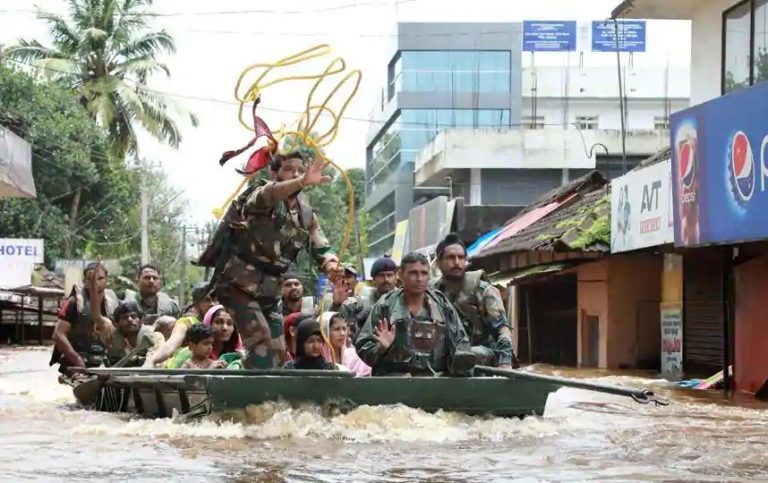
The controversies around devastating floods in Kerala refuse to die. After the allegations that the central government was ignoring the request for aid, and media spreading the narrative that North India was depriving South India of its due, now a new allegation has been made. For last few days, a section of media has been reporting that the central government has sent a bill for rescue operations done by central security forces during the floods.

Kerala chief minister Pinarayi Vijayan said that the Air Force has asked the state to pay over ₹33.79 crore as the charge for rescue operations. This was presented as a grave injustice done to Kerala by the centre by many people. Shashi Tharoor tweeted that central govt is taking back money from the aid it has given to the state.


Official Twitter handle of Mahila Congress said that it “is one of the most shameful & deplorable acts one can imagine.”


Soon this was used to launch an attack on the central government and BJP by the usual suspects.


Although the fact that the centre has sent a bill to the Kerala government is true, the claim that it is an unusual act done against Kerala is false. By sending the bill, the union government has performed a routine procedure which is always done when security forces are engaged in civilian works, and it is not unique to Kerala floods.

According to accounting rules of the government, the state government has to pay for various duties performed by armed forces and also for various items used for such works. The Government Accounting Rules, 1990 specified by the Controller General of Accounts says that state government has to pay for use of armed forces for various activities like rescue operations in disasters, assistance taken for development activities etc. Only for taking help of armed forces in the maintenance of law and order, the state government need not pay. Appendix 5 of the rules give the detail of this procedure.

The defence budget provides for defence related activities of the armed forces, therefore for any non-defence use of the forces, it has to be paid from the civilian budget. That is a normal procedure being followed, and not something the Modi government has specifically done for Kerala floods. Although theoretically, the state government has to pay for it, in most cases it comes from the central government. While allocating relief package for a state after such a disaster, the cost of deployment of armed forces is factored in that package. At the time of disbursement of the money to the state, this amount is deducted. This means the state is actually not paying from its funds, but it is paid from the grant received from the central government. This is essentially a book adjustment done by the Centre, as the amount is directly paid to the relevant armed force by the union government.

This is not the first time the central government coming under attack for this ‘billing’, this happened after most disasters involving rescue operations by defence forces. In 2015, the centre had sent a bill of ₹500 crore to Jammu and Kashmir for services provided by defence forces during the devastating floods in the state in 2014. After this was reported by media, it had created a similar outrage.

Defence ministry sending a bill to states for use of defence forces for non-defence purposes is a routine accounting procedure as per established law, and it does not reflect any bias against any state as political parties and section of media are trying to portray.
Rajasthan: BJP candidate makes controversial statement backing child marriage, district collector takes cognizance

In a shocking revelation, BJP candidate, Shobha Chauhan, contesting from Sojat district in Rajasthan has been seen backing child marriage.

Chauhan was addressing a gathering at a Sneh Sammelan at the Peepaliya Kala region in Sojat area.

In the video that went viral, she has been heard saying to the people that if she is voted to power, she would make sure that there is no police interference in any child marriage in her constituency.

Shobha Chauhan was also caught saying “If we have ‘Satta’ (power) and Sangathan’ (state government) at our disposal, we won’t let the police intervene in child marriages.”

This bizarre promise has sparked off a controversy as the nation, especially Rajasthan, has been trying to do away with the age-old custom of child marriage.

This illegal statement, coming from a BJP candidate just before Rajasthan goes in for assembly elections might bring in embarrassment for the party.

However, the district collector of Pali, Sudhir Kumar Sharma, has reportedly taken cognizance of this statement. Pali’s Sojat Returning Officer too has issued a notice to the BJP candidate following her controversial statement. The notice was issued for violation of model code of conduct.

“We have issued a notice to her and sought an explanation. We have got the video which has gone viral. The notice was issued on December 1. She has been given two days’ time to reply,” Sojat returning officer Ayub Khan said.

Meanwhile, the election commission officer of the district said that the matter is being probed and an action will be taken if the video is found to be genuine.

Rajasthan will vote for 199 seats of the 200-member assembly on December 7 and counting will take place on December 11.

Rajasthan: Electorate will send ‘turncoat’ Manavendra Singh back to where he belongs, says Vasundhara Raje’s son

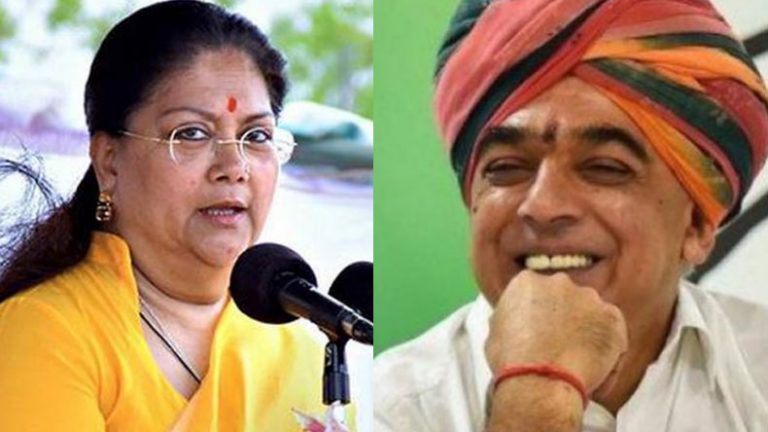
Calling Congress’ Manvendra Singh a ‘turncoat’, BJP’s Jhalawar MP and Chief Minister Vasundhara Raje’s son Dushyant Singh on Sunday said that the Congress candidate from Jhalrapatan has been “parachuted” to the constituency and the electorate will send him back to where he belongs.

Dushyant Singh who has been spearheading his mother’s campaign in Jhalawar, Rajasthan said in an interview with PTI, Raje has worked really hard in the constituency and the development work done by her has been “phenomenal”. Speaking about the transformational changes the district of Jhalawar and Baran have experienced in the last 30 years he furthered that, “For her (Raje), the electorate is her family and the family is actually campaigning for her, it is not Mrs Raje.”

He went on to criticise Manvendra Singh by adding that “He has been parachuted by the Congress president (Rahul Gandhi). When the Congress president was here a few months back, he had said on stage, in Jhalawar especially, that he will not field any parachute candidates in Rajasthan.

“But he has put a paratrooper here, our family, the electorate, is ensuring that we send him back to where he belongs,” the 45-year-old leader said.

Manvendra Singh, son of former BJP leader Jaswant Singh, was pitted against Raje just weeks after crossing over from the BJP to the Congress.

Congress’ decision to field Singh against Raje irked the Chief Minister who while addressing the public after filing her nomination papers in Jhalawar district had said, “The Congress could not find any candidate and he (Manvendra Singh) was to be given ticket from somewhere and therefore, he was sent here (Jhalrapatan).”

Miffed with the Congress’ strategy she had said, “But they should know that it is not a fight of one person, this is a contest fought by Jhalawar and Rajasthan, which is a family.”

Congress President Rahul Gandhi during his speech in poll-bound Rajasthan, in August, had promised that the party will not allow any ‘parachute candidates’ to contest the elections. But contrary to his claim, the first list of Congress’ candidates for the Rajasthan assembly elections had the names of six such candidates with former BJP leader Manvendra Singh getting a ticket to contest from Jhalawar district which is predominantly Vasundhara Raje’s key domain.

Asked if the “outsider” tag given to Manvendra Singh was a poll issue, Dushyant Singh replied, “his (Manvendra Singh’s) family has moved from district to district, so it is part of his culture.” He further alleged that since they have never been associated with one particular place for very long they have not contributed to the development of any place.

On being asked whether Rajput votes could split with both candidates being from the same community, Dushyant Singh said: “My grandmother was a Kshatriya, my mother is a Rajput. My mother believes in all communities, unlike her opponent. All 36 communities are voting for the chief minister.”

Raje has been representing Jhalrapatan seat in the House of 200 assembly seats since 2003.

Manvendra Singh, son of rebel leader Jaswant Singh, formerly with the BJP, quit the BJP in September and joined the Congress in October. Singh was being allegedly sidelined within the ruling party, reportedly because of Raje’s feud with his father Jaswant Singh, who was denied a BJP ticket in the last Lok Sabha polls.

Apart from Manvendra Singh the other ‘parachute candidates’ which the Congress have fielded are, former BJP MP Harish Meena, who had switched over to the Congress on November 14, has been fielded from Deoli Uniara, Habib Ur Rehman from Nagaur, Sona Devi Bavari from Raisinghnagar and Khanhaiya Lal Jhawar from Bikaner East seat. Former IPS officer Sawai Singh Godara has been fielded from Khinvsar seat.

With Rajasthan going into polls on December 7, it would be interesting to see whether Congress’ attempt to cast a parachute candidate formally from the same party would go in the party’s favour or would turn out to be a major blooper, costing the party a hefty price.

If BJP comes to power in Telangana, Owaisi will have to flee from the state: UP CM Yogi Adityanath

Ahead of the state assembly elections in Telangana, Chief Minister of Uttar Pradesh Yogi Adityanath while speaking at a campaign rally on Sunday slammed AIMIM chief Asaduddin Owaisi. During his speech, Yogi Adityanath warned Asaduddin Owaisi that if BJP comes to power, Owaisi will have to flee Hyderabad, reported ANI.

Addressing a public rally in Tandur, Vikarabad, Yogi Adityanath said, “If BJP comes to power I assure you Owaisi will have to flee from Telangana the same way Nizam was forced to flee from Hyderabad.”

Uttar Pradesh Yogi Adityanath further added that he has full faith that BJP will form the government in Telangana in future. He accused both Congress and the TDP of working against the interests of farmers and backward classes in the state of Telangana. He praised Prime Minister Modi saying that development has taken place in the country without any discrimination under his leadership and urged the people of Telangana to vote for the BJP.

Yogi Adityanath warning to Owaisi comes as a result of an earlier statement made by AIMIM Chief saying that he would ask Telangana caretaker Chief Minister KC Rao to send some kalyani (beef) biryani to BJP President Amit Shah.

The elections to Telangana legislative assembly will be held on 7th December along with Rajasthan and the results will be declared on 11th December along with other four states, Chhattisgarh, Rajasthan, Madhya Pradesh and Mizoram. Congress and TDP have formed a pre-poll alliance to fight against the ruling TRS led by K Chandrashekhar. The BJP is fighting Telangana elections alone against the Congress, TDP, AIMIM and the ruling TRS.

Kerala to build a ‘women’s wall’ on new year day to prevent the state from ‘sliding back into medieval madness’

The Kerala government has announced to build a 600 km long ‘women’s wall’ on the new year day to prevent Kerala from ‘sliding back into medieval madness’ as tweeted by Thomas Isaac, Finance Minister of Kerala.


Chief Minister Pinarayi Vijayan, who was speaking after a meeting with socio-cultural organisations in Thiruvananthapuram said, ”No one can push back the progressive society of Kerala into the dark ages”.

The meeting was organised with prominent caste-based organisations in order to seek their support following the protests by Ayyappa devotees all over Kerala against the entry of women of all ages into Sabarimala after the Supreme Court verdict.

The Chief Minister while seeking support of the “progressively-thinking” minds of the state to save the secular fabric of the state said, “As part of the combined efforts of all these organisations which took part in the meeting, a women’s wall will be formed on January 1 from the northern district of Kasargode till Thiruvananthapuram, to show the country the secular and progressive mindset of the state”.

Meanwhile, a four-member team reportedly picked by BJP President Amit Shah, has arrived in Kerala to get a first-hand account of the situation in the State. The team consists of Saroj Pandey, Vinod Sonkar, Prahlad Joshi and Nalin Kumar Kateel who will submit their report to Amit Shah within 15 days. The team will also meet the Panadalam Royal family.

Vijayan, on Wednesday, had said that Sabarimala won’t be allowed to become an Ayodhya.

B Sreedharan Pillai, the BJP State President, has announced that the party leaders would launch an indefinite hunger strike before the secretariat to raise their demands that include the lifting of prohibitory orders and providing basic amenities to Ayappa devotees in and around the temple.

Pillai told that the party is planning a 15-day-stir, as of now and further course of the agitation will be decided by the party after taking into consideration the CPI(M)-led LDF government’s stand on their demands.

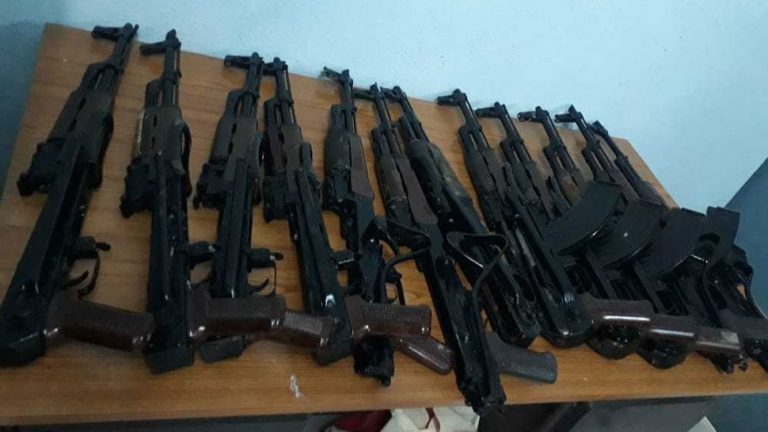
Munger: Condemned weapons of Army smuggled to Maoists, one more smuggler arrested

0

According to a report of Hindustan Times, the National Intelligence Agency and the Bihar police have been investigating an arms smuggling case involving smuggling of weapons condemned by the Army.

A former army man Purushottam Rajak is the suspected mastermind of the racket. He was arrested from Jabalpur in September. According to investigators, he was earlier picked up by the army officers in August on suspicion of stealing parts of AK-47 rifles from an army facility. He was later released after initial questioning after he claimed that the parts found in his vehicle were planted.

The case which was earlier being investigated by the Bihar police was handed over to the NIA considering the national security ramifications of the case. According to the investigation of the NIA and the Bihar Police, at least 125 AK-47s, fabricated from parts of condemned weapons of the army, dumped in its stores in Jabalpur and Madhya Pradesh. The weapons reached Bihar’s Munger from where they found their way into the hands of the Maoists. Munger is infamous for its illegal arms factories. Munger police have earlier busted one such racket involving a nexus between officers of Jabalpur’s Central Ordnance Depot and local arms dealers.

As per Hindustan Times, an NIA official on the condition of anonymity revealed that inadequacies in record-keeping of condemned weapons also helped the accused. “Some of the stores where these condemned weapons were kept were not in good condition. In one case, a portion of one of the walls of a store had collapsed too, making it accessible, These claims will be verified,” he added.

A senior officer of the Indian Army said, “He (Rajak) worked in tandem with those at the Ichapore gun factory (in West Bengal) and sourced some of the components from there…”. Having been an army man, Rajak knew how to fabricate a weapon using sapres from different weapons. According to Inspector General of Police (operations), Kundan Krishna, around two dozen AK-47s have been recovered from different parts of Munger.

Another suspect, who is also a former army man, Mohammad Niyazur Rehman, also has been arrested by the Bihar police in relation to this case. Rehman is a native of Mirzapur Bardah village in Munger.

As told by the NIA official cited above, “Rajak claims that after 2003, he began peddling arms again only in 2012-13 but we doubt… He says that after taking premature retirement from the army in 2008, he settled in Jabalpur. In 2012 he again tried to get in touch with Niyazur and wrote a letter to him but he didn’t get any reply. He sent another letter and this time it was replied to by Niyazur’s brother Shamsher who claimed Niyazur was dead but that he (Shamsher), was ready to do business with Rajak. He found an accomplice, another civilian employee, Suresh Thakur, working in the Central Ordnance Depot and started arms peddling again”.

“Normally he used to carry three AK-47s in his bag to Bihar and never got down at any station. His receiver used to join him on the journey and got down with the bag with the weapons. Rajak took Rs 3.5 lakh for a weapon. His Munger receivers used to sell the weapon at a profit of Rs 1 lakh per gun. An AK-47 could fetch anything between Rs 5 and Rs 7 lakh depending upon the customer,” the official further added.

SP Munger, Babu Ram said, “The racket is far bigger than we anticipated”. Thirty-five suspects have been held so far. On Friday, Bihar Police has arrested one more smuggler, Sarfaraz Alam, in connection with the AK 47 smuggling case.

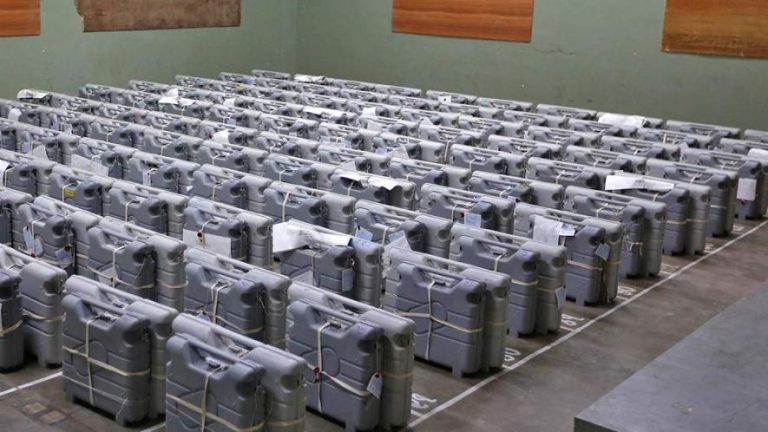
Congress and AAP spread EVM hacking theory after unused machines found outside strong rooms

Congress and Aam Aadmi Party are continuing with their ‘EVMs are hacked’ theories during the ongoing assembly elections. Senior Congress leader Ahmed Patel posted a video on Twitter on December and tweeted “This is absolutely shocking!” hinting at manipulation of EVMs.


The video showed a bus filled with Electronic Voting Machines. It was alleged that this was a school bus without a number plate, carrying EVMs to the strong room two days after the poll was over. Referring to this, supporters of Congress and some journalists started to spread an allegation that BJP was trying to manipulate the results of the election by tampering with the EVMs.

But the fact is that those EVMs were not used for polling, as they were reserve EVMs. During elections, Election Commission always keeps some extra EVMs ready, so that in case of any malfunction of EVMs used for polling is detected, they can be replaced immediately. After the polling is over, the unused EVMs are returned to the election commission office, they can’t be kept in the strong room.


It is important to note that, Congress leaders knew that those were reserve EVMs, still they chose to spread the misinformation that BJP was trying to manipulate the elections.

Similarly, on November 30, AAP leader and Delhi MLA Saurabh Bharadwaj had posted a video which showed two persons in a hotel room with two EVMs with them. He claimed that the persons in the hotel room were BJP leaders.

In the video, it is seen that some people confronted the persons handling the EVMs, post which it was revealed that they were government officials on election duty. They also informed that the EVMs kept in the room were extra machines i.e. reserve EVMs.


Reacting to both the incidents, the Election Commission has confirmed that these were incident of negligence by election officials where unused EVMs were carried in a casual manner, but no tampering with EVMs had happened.

The commission said that the officer who submitted the unused reserved EVMs seen in the bus has been suspended, as he has delayed in doing so. The commission also clarified that the persons seen in the hotel room were election officials and the room was booked by them, not by any BJP leader as the AAP minister claimed. EC said that while both the officials have been suspended, no evidence of tampering was found with the two EVMs. Both the EVMs were not used in elections.

Reacting to various allegations on EVM, Chief Electoral Officer of Madhya Pradesh reiterated that all EVMs are tamperproof, and all EVMs used in voting are safely secured and sealed in strong rooms. They also informed that the strong rooms were under joint surveillance of security forces and agents of political parties.


On the allegations that BJP was trying to place extra EVMs pre-loaded with BJP votes in the strong rooms, the EC refuted the allegations and informed that strong rooms are sealed and they have not been opened.


It is important to note that after elections are over, political parties always deploy workers to keep a vigil on the strong rooms till the day of the counting. And this is not new practice after the introduction of EVMs, this is an old practice continuing since ballot box days. Compared to imaginary EVM hacking, ballot box tampering was real and easy to do. To prevent this, parties and candidates used to keep a 24×7 surveillance on the strong rooms. According to rules, political parties are also allowed to be present at the time of sealing the strong rooms, and they can also put their own seals on the locks.

The Election Commission rules allow party representatives to keep a watch on the strong rooms from the outside of outermost security perimeter. For this purpose, they are allowed to stay in tents officially erected for them. Authorities also arrange for basic amenities like drinking water and toilets etc for them. The strong rooms are also kept under CCTV surveillance and the party representatives can see the live footage on screens arranged for them.

Like all parties, Congress has also deployed authorised agents to monitor the strong rooms, and one such party worker had died recently in Chhattisgarh for being outdoors for long hours in cold.

With such round the clock vigil allowed to political parties, along with official security provided by central forces, it is actually impossible to tamper with EVMs kept in the strong rooms. And the unused EVMs are not meant to be kept inside strong rooms. If they are kept, that will be actually tampering with the election process.

Rajasthan: Congress gives tickets to children of key accused in ‘Bhanwari Devi murder case’

In poll-bound Rajasthan, Congress has reportedly given tickets to children of a former Minister, Mahipal Maderna and Congress MLA Malkhan Singh Bishnoi, both key accused in the gruesome Bhanwari Devi murder case.

According to reports, Divya Maderna, daughter of Mahipal Maderna, will be contesting from Osiani district in Jodhpur, while Malkhan Singh’s son, Mahindra Bishnoi, will be contesting from Looni district in Jodhpur.

Ironically, Congress President Rahul Gandhi had very confidently denied giving party tickets to candidates with criminal proceedings against them.

However, known for their double standards and a penchant for indulging in caste-based politics, the Congress party, maliciously attempting to woo the Jat and Bishnoi community, amongst whom these two contestants are apparently popular, have decided to give tickets to children of both Malkhan Singh Bishnoi and Mahipal Maderna who are in jail in the Bhanwari Devi murder case.

The kidnap and murder of 37-year-old auxiliary nurse midwife Bhanwari Devi of Jodhpur in 2011 had created a big political turmoil jeopardising the political careers of two political heavyweight families of the Jodhpur region – the Madernas and the Bishnois and by unsettling the Ashok Gehlot government back in 2011.

Bhanwari Devi Murder Case:

The government nurse Bhanwari Devi, posted at a health sub-centre, was close to both families.

According to the CBI charge sheets, Bhanwari Devi made a sex tape of her with Maderna with the help of Bishnoi’s sister, Indra. She (Indra) had a political plan – she wanted to defame Maderna with the sleaze tape and see him removed from the ministry. She thought Maderna’s removal will create space for her brother, Bishnoi, in the cabinet.

CBI said Maderna’s motive for killing Bhanwari Devi was this tape.

As for Bishnoi’s, Bhanwari Devi allegedly had illicit relations with Malkhan Singh Bishnoi, who inherited his father Ram Singh Bishnoi’s political legacy in Luni and was elected as an MLA in 2008.

The investigation later revealed that Malkhan Singh is the biological father of her youngest daughter. (Bhanwari Devi had three children). For Bishnoi, the motive behind Bhanwari Devi’s killing was the nurse’s threat to announce during a community gathering on September 7, 2011, that Malkhan Singh was her daughter’s father.

She allegedly blackmailed Malkhan Singh and demanded a promise that he would marry off their daughter with the same pomp and show he had organised the marriage of his daughter. She wanted the Luni legislator to give at least 20 kg of gold and spend at least Rs 50 lakh on their daughter’s wedding.

Three Bishnoi siblings – Malkhan, Paras Ram and Indra – and several other members of their extended family are facing charges of kidnap and murder in the murder case.

The CBI named 17 people as accused in the case, most of the Bishnois. Maderna is the only one from his family facing charges of involvement in the murder.

Six years after the Central Bureau of Investigation (CBI) closed the probe into Bhanwari Devi murder case filing three charge sheets, the arrest of Indra Bishnoi by the anti-terrorist squad of Rajasthan police on June 2, 2017, brought the case back into the limelight.

The Congress party had suffered a big blow in 2013 Rajasthan Assembly elections when their impulse to use this episode to gain sympathy votes had massively boomeranged at them. Malkhan’s mother and Ram Singh’s widow, 78-year-old Amri Devi contested on Congress ticket from Luni had lost.

Bhanwari Devi murder case, not only imperilled the political careers of the Bishnoi and Maderna families but also put the then Chief Minister and Congress leader, Ashok Gehlot’ political course under threat with BJP sweeping the 2013 assembly elections by bagging 162 out of 199 seats in Rajasthan.

With 2018 Rajasthan Assembly elections knocking at the door, it would be interesting to see whether Congress’ attempt to rehash the same political stunt falls in its favour or like the previous elections come home to roost.

Rajasthan goes to polls on 7th December along with Telangana and the results will be declared on 11th December.

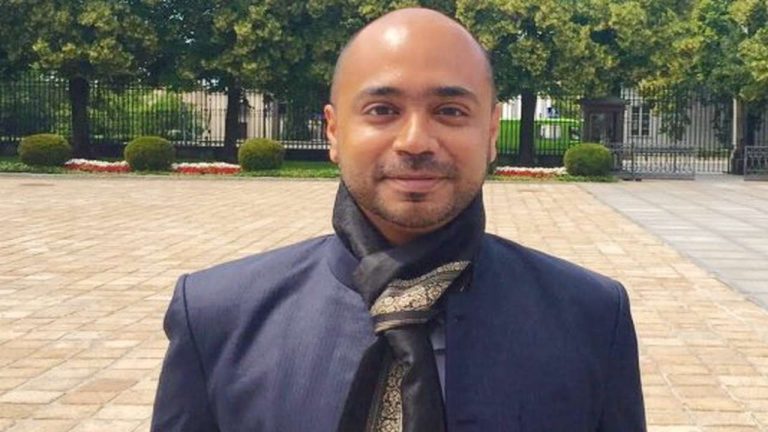
Defence analyst Abhijit Iyer-Mitra’s health deteriorates in Odisha jail, admitted to hospital

Defence analyst Abhijit Iyer-Mitra who has been arrested over his alleged anti-Odisha remarks has been admitted to Capital Hospital after he complained of illness, reported Orissa Post.

Abhijit Iyer has been under judicial custody in Jharpada jail after he was arrested for allegedly hurting sentiments of the Odia people after he had posted a satirical video on social networking website, Twitter.

Reportedly, Abhijit Iyer has been facing some severe mental trauma which has led to deteriorating health condition. He has now been admitted to the surgery ward of Capital Hospital.

A senior police officer has told local media that his health condition has been bad since Friday. He further added that Abhijit was earlier taken for a medical check-up and put back in the jail later. However, he has now been admitted to the hospital after his condition further worsened Friday night.

Abhijit Iyer Mitra was first arrested in September for allegedly hurting religious sentiments of people and making derogatory remarks against the state, the Konark temple and Lord Jagannath. However, he had immediately clarified regarding the controversy soon after it went viral. Iyer-Mitra had also allegedly flown in a helicopter with former BJD MP Baijayant Panda over the Chilika Lake.

A Delhi court had granted him bail, but it had ordered him to join the police investigation but he did not, alleging a threat to his life. Iyer-Mitra then moved the Supreme Court for protection from arrest. On October 4, the top court refused to grant him bail, saying jail was the “safest place” for him.

On October 24, the Bhubaneswar-Cuttack Police had arrested him in connection with a criminal case filed for his tweets in 2017.  A camp court at the Jharpada Jail in Bhubaneswar had once again declined defence analyst Abhijit Iyer-Mitra’s bail plea.

However, the Odisha assembly had recently accepted the recommendations of a House committee for considering an apology from journalist Abhijit Iyer Mitra but he was not released from the custody.

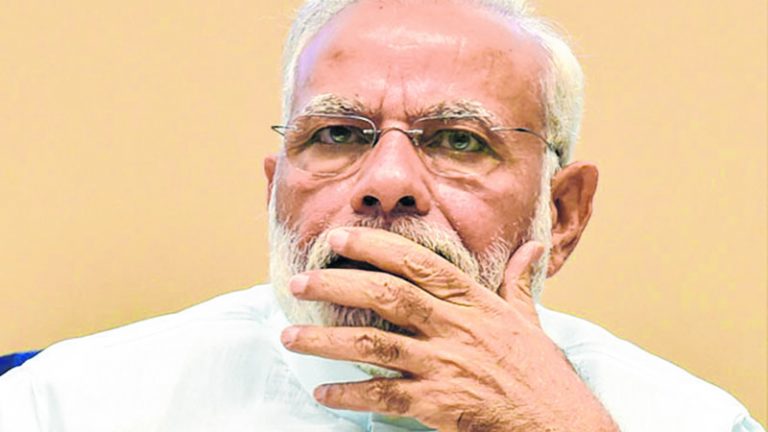
Government officials’ promotions to be attached to public grading and feedback system: DoPT

The Narendra Modi government is mulling to bring in new regulations to link performance of government officials to their promotions by bringing a public feedback and grading system reported Navbharat Times.

According to the reports, the Department of Personnel and Training (DoPT) has decided to attach the promotions of civil servants to a public grading and feedback system. The new system will account the grading of each government officials received by the public and based on these ratings the promotion of public servants will be considered. The officers and staff with higher grading will be considered for further promotions.

A proposal was submitted to the union government regarding this in the past. The PMO after deliberations had sent instructions to the Department of Personnel and Training (DOPT), which immediately accepted these proposals. The new grading and feedback system is likely to be implemented from April 1, 2019.

The DoPT will consider the feedback it receives from the public with respect to a government official and then decides whether the official deserves an increment or promotion. Under the new system, the public will be given a chance to grade the officer on the basis of work done by the concerned public official, which will be then considered by the DoPT for further decision on his/her promotions. The behaviour, work ethics and functioning of each officer will be in the public domain after the new system is implemented.

Reportedly, the new grading system is being designed on the instructions of the PMO. The new system will record every feedback detail of an official throughout his/her career. In the new system, it is easier for the DoPT to use the new data available regarding an official and use it to better placement and promotions of certain high-graded bureaucrats. The new system will promote meritocracy in the country’s bureaucracy enabling effective and fast decision making on policy related issues.

The new system will further bring in transparency and efficiency among public servants, as the system will fix accountability issues of each public servant, which has been missing in the country’s powerful bureaucratic structure. Further, it will help in determining the non-performing government officials, who can then be held responsible for his/her inactions.

The Narendra Modi government’s decision to bring in reforms in civil services of the country is a much-needed initiative of the hour. The new performance-related grading system is expected to further bring in an effective administration and efficient public service delivery by linking performance of an official to his/her promotions and rewards.