

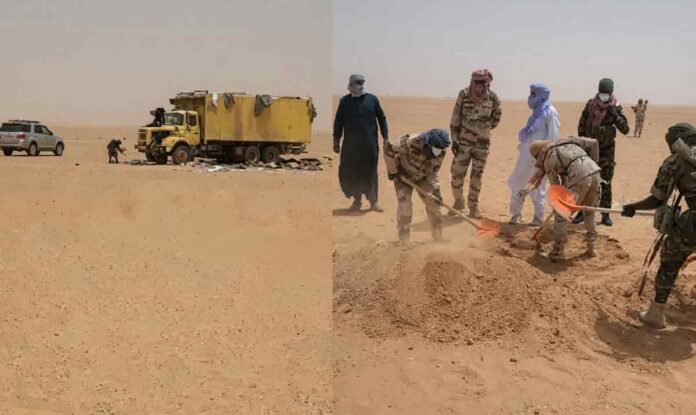
In a heartbreaking incident, at least 49 people have died of thirst in a remote part of the Sahara Desert in northern Niger after the lorry carrying them broke down, leaving the passengers stranded for days without water. The victims, who were returning from Telhandek town in Mali where they had participated in celebrations for the Muslim festival of Eid al-Adha, faced extreme conditions in the desert, more than 80 kilometres west of Assamaka, a border crossing point between Niger and Algeria.
According to local authorities in the Agadez region, the group was travelling in an overloaded vehicle when it suffered a mechanical failure, stranding them far from any immediate help in the vast and unforgiving terrain of the Sahara. The passengers were stranded in the desert for several days. The driver, his assistant and some passengers tried to repair the vehicle, but they were not successful.
With temperatures soaring, no mode of transportation and no access to drinking water, most of the passengers perished from severe dehydration. Only two survivors managed to endure the ordeal by walking more than 50 kilometres to reach a water source and eventually alerting officials in Assamaka.
The authorities promptly dispatched rescue personnel, but it was too late for the group. The rescuers located the stranded vehicle and discovered dozens of bodies both beneath the immobile truck and scattered in the surrounding area, where they had sought shelter from the intense desert heat. The deceased, all nationals of Niger, were buried in mass graves dug on site due to the remote location.
However, while returning from the site, the rescue team was able to assist another truck stranded in the desert for 3 days. The vehicle carrying 60 people was stuck after its battery died. The team distributed water to the exhausted and distressed travellers and helped repair the vehicle, allowing them to safely resume their journey.
The vast Sahara, around 9 million square kilometres in size, is known for its extreme temperatures; its daytime temperature can cross 50 degrees Celsius, which drops dramatically during the night. The place where the tragedy occurred is one of the most remote and hazardous zone in the desert, with limited infrastructure and scarce water sources.
The route between Niger and Algeria through Assamaka has been used for centuries by travellers and traders, but it remains dangerous due to extreme weather conditions, mechanical failures, and the vast distances between settlements.
