

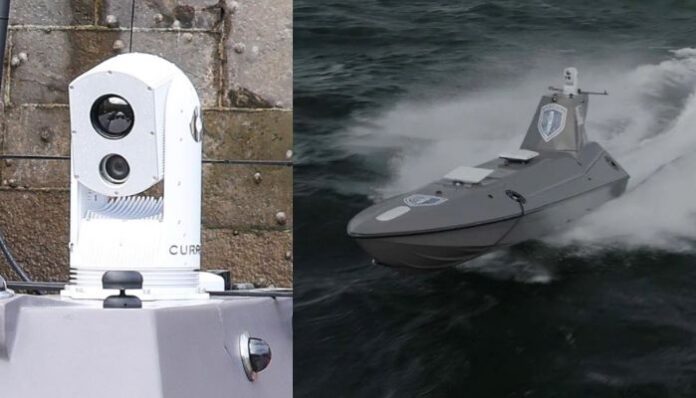
The British Royal Navy surveillance or spy drones used by elite special forces were found sending basic operating data to an IP address in China. This explosive revelation has raised fresh concerns over Chinese components in sensitive British military equipment.
The K3 Scout unmanned vessels, supplied by British defence contractor Kraken Technology Group, are part of a £12 million fleet used by the Royal Marines. The drones have been in service since March and were intended to support Britain’s efforts to modernise its war-fighting capabilities.
The discovery was made during a routine cyber vulnerability assessment. Investigators found that cameras fitted to the drones contained some components made in China and were sending “heartbeat communications” to an IP address in the country. These signals are basic messages that tell a device that it is connected and working normally.
MoD removed internet access
The Ministry of Defence (MoD) responded by removing all internet connectivity from the cameras. The department said its investigation found no evidence that sensitive information or MoD systems had been accessed, compromised or transmitted outside the UK.
However, the discovery created national security concerns because the drones had been used near the headquarters of the Special Boat Service (SBS) in Poole, Dorset. There were concerns that the cameras could have remained active even when the drones were switched off and that the equipment had been present near meetings involving senior special forces personnel.
A defence source familiar with the matter said the K3 Scout drones were also part of a future defence package being considered by Britain to help protect freedom of navigation in the Strait of Hormuz. Preparations for British plans in the Gulf had reportedly been carried out using the drones.
The source described the situation as a major failure to properly check the country of origin of the components used in the equipment and said confidence in the platform had been lost.
Questions over Chinese components
Kraken supplied the drones but sourced the cameras from a third-party company, which had provided assurances about their security.
The incident has highlighted concerns about China’s strong position in global technology supply chains and the possibility of foreign-made components entering equipment used in sensitive military locations.
The K3 Scout is part of the Royal Navy’s Project Beehive, a programme aimed at developing a combined fleet of uncrewed vessels and traditional warships. The vessels are operated by the Coastal Forces Squadron and 47 Commando of the Royal Marines.
The K3 Scout can carry a payload of up to 600kg and is designed to operate continuously for 30 days. The model has also been purchased by the US Special Operations Command and has taken part in Nato trials in the Baltic.
The British Government has committed £5 billion to drone technology and has promised to speed up military innovation while making defence procurement “unashamedly pro-Britain”. The latest discovery has raised questions about whether equipment presented as British-made can be fully trusted when some of its components come from overseas.
Wider concerns about China
The incident comes as Britain faces growing security concerns about China while the Labour Government is also trying to improve diplomatic and trade relations with Beijing.
Last year, MI5 warned MPs that Chinese intelligence services were “relentless” in their efforts to interfere with and influence Parliament. The warning included concerns that employment websites such as LinkedIn could be used to collect sensitive information.
The warning came weeks after a case involving two men, including a parliamentary researcher accused of spying for China, collapsed. The case was affected by the Labour Government’s inability to describe Beijing as an enemy.
In 2020, the Conservative government ordered Huawei to be removed from Britain’s 5G network following security concerns. Officials in Washington had warned that allowing the Chinese telecom company access could create a spying risk, pointing to China’s strict national security laws.
The MoD has removed Chinese-made hardware and cameras from sensitive locations. Last month, The Telegraph reported that the SBS had banned Chinese-made electric cars from its headquarters over similar security concerns.
Meanwhile, the Labour Government has pursued closer relations with Beijing, including plans for a Chinese super-embassy at Royal Mint Court in London. The project has faced concerns because of its proximity to sensitive communication lines. Weeks later, British national and Hong Kong pro-democracy media tycoon Jimmy Lai was sentenced to 20 years under Hong Kong’s national security laws.
MoD and Kraken respond
An MoD spokesman said a routine cyber vulnerability assessment had identified an issue involving a Kraken Unmanned Surface Vessel sub-system used by the Royal Navy. The department said a full investigation found no evidence that MoD data or systems had been accessed, compromised or transmitted externally.
Kraken said some third-party, NDAA-compliant cameras contained a small number of components originating outside the UK. After a full audit by Kraken and the Royal Navy, the company said it was confident that no sensitive information had been shared outside the intended channels and that possible vulnerabilities had been identified and closed.
NDAA compliance refers to equipment meeting the requirements of the US National Defence Authorisation Act, including restrictions on components from certain manufacturers.
Alicia Kearns, the shadow security minister, called for the Government to urgently audit military equipment for hidden Chinese components. She said Britain must know exactly what is inside its military equipment if it wants to maintain control over its own defence systems.
