

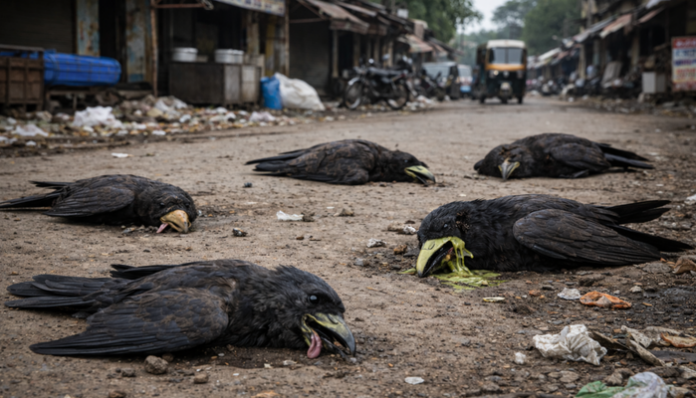
Tamil Nadu was put on high alert after hundreds of crows were found dead in Chennai on Friday (6th February). Laboratory tests of the samples collected from the dead crows confirmed the presence of highly pathogenic H5N1 virus, indicating the spread of avian influenza (bird flu) in the region. Several hundred crows were found dead in areas, including Adyar, Velachery, Thiruvanmiyur and along the East, triggering swift preventive action from the state government. This comes after bird flu cases were detected in crows in Naugachia, Bihar.
As per reports, an advisory was issued to the public to contain the outbreak of the flu. Local authorities have ordered all carcasses of crows and poultry to either be incinerated or deeply buried according to biosecurity protocols. Additionally, to ensure safe disposal of dead birds, people have been strictly advised not to touch or handle them and to inform local authorities if they spot dead birds. The Union Ministry of Animal Husbandry wrote to the Chief Secretary of Tamil Nadu, calling for increased surveillance and quick response measures.
The following precautionary measures have been advised by the Tamil Nadu government:
- Avoid direct contact with sick, dying or dead birds, including crows, poultry and waterfowl.
- Do not touch dead birds with bare hands. Use gloves or protective gear if handling is necessary, then wash hands thoroughly.
- Report unusual bird deaths to local veterinary or animal husbandry departments immediately.
- Ensure poultry kept at home or on farms are in enclosures that limit contact with wild birds.
- Maintain good hygiene practices, like frequent handwashing with soap and clean water, especially after handling poultry or animal feed.
- If people develop flu-like symptoms, fever, cough, sore throat or shortness of breath after potential exposure to dead birds or poultry, they should seek medical advice promptly. Early medical evaluation and appropriate diagnostic testing are crucial for timely care and containment.
What is Bird Flu or the H5N1 virus?
H5N1 virus is said to be a highly pathogenic strain of the influenza A virus, which is popularly known as bird flu. The virus primarily infects birds, including poultry like chickens and ducks. It can spread through saliva, nasal secretions, droppings, contaminated surfaces or water sources. The virus causes severe diseases and proves lethal for birds, and it can eliminate vast bird populations. It is usually found in wild and migratory birds, but can also spread to poultry. This is the reason that containment measures play a significant role in handling the infection.
Does H5N1 affect humans?
In rare cases, the virus can infect humans and mammals after they come in close contact with infected birds or a contaminated environment. The symptoms of the infection in humans are similar to those of severe influenza. Human-to-human transmission of the virus is extremely limited. However, since the infection can be severe and has pandemic potential, health agencies across the world, including the World Health Organisation (WHO), closely monitor the flu.
