

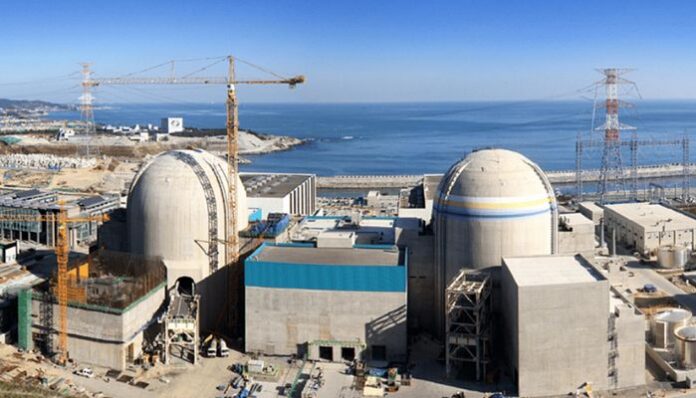
A drone strike near the Barakah Nuclear Energy Plant in the United Arab Emirates (UAE) triggered a fire on Sunday, 17th May, raising fresh fears of a wider regional escalation at a time when tensions between Iran and the United States remain extremely fragile despite a ceasefire agreement.
According to UAE authorities, the incident took place in the Al Dhafra region when a drone hit an electrical generator located outside the inner perimeter of the Barakah nuclear facility. Officials confirmed that no injuries were reported and radiation levels remained completely normal.
The UAE Ministry of Defence later said the country’s air defence systems had intercepted three unmanned aerial vehicles (UAVs) that entered the country from the western border direction. According to the ministry, two drones were successfully destroyed mid-air, while the third managed to strike the generator near the plant.
UAE air defences intercept 3 UAVs.
— وزارة الدفاع |MOD UAE (@modgovae) May 17, 2026
The Ministry of Defence announced that on 17th May 2026, UAE air defence systems intercepted three UAVs that entered the country from the western border direction.
The ministry said that two of the UAVs were successfully intercepted, while the… pic.twitter.com/Ca6JRwc8w8
No impact on nuclear operations
Officials stressed that the attack did not affect the functioning of the Barakah Nuclear Energy Plant, which is the first nuclear power station on the Arabian Peninsula.
In a statement shared on social media, the UAE’s nuclear regulator said, “All units are operating as normal.”
The Federal Authority for Nuclear Regulation (FANR) also confirmed that the incident did not affect “the safety of the power plant or the readiness of its essential systems.”
The Federal Authority for Nuclear Regulation (#FANR) confirmed that the fire did not affect the safety of the power plant or the readiness of its essential systems, and that all units are operating as normal. The public is reminded to obtain information from official sources… pic.twitter.com/IOzxrYIzsZ
— UAE Forsan (@UAE_Forsan) May 17, 2026
The Abu Dhabi Media Office stated that “competent authorities” responded immediately after the fire broke out. It added that the blaze was limited to an external generator located outside the facility’s inner security zone and that “all precautionary measures” had been taken.
تعاملت الجهات المختصة في إمارة أبوظبي مع حريق اندلع في مولد كهربائي خارج المحيط الداخلي لمحطة براكة للطاقة النووية في منطقة الظفرة، ناجم عن استهداف بطائرة مسيرة دون تسجيل أي إصابات، ودون أي تأثير على مستويات السلامة الإشعاعية، وقد تم اتخاذ كافة الاجراءات الاحترازية، وسيتم…
— مكتب أبوظبي الإعلامي (@ADMediaOffice) May 17, 2026
The Barakah plant is located around 225 kilometres west of Abu Dhabi and close to the Saudi Arabian border.
UAE launches investigation
While the UAE has not officially blamed any country for the attack, authorities confirmed that investigations are currently underway to identify the source of the drones.
The Defence Ministry said further information would be released once the investigation is completed. It also stressed that the UAE remains fully prepared to deal with any threats to national security.
“The Ministry of Defence affirmed that it remains fully prepared and ready to address any threats and will firmly confront any attempts to undermine the country’s security,” the statement said.
UAE air defences intercept 3 UAVs.
— وزارة الدفاع |MOD UAE (@modgovae) May 17, 2026
The Ministry of Defence announced that on 17th May 2026, UAE air defence systems intercepted three UAVs that entered the country from the western border direction.
The ministry said that two of the UAVs were successfully intercepted, while the… pic.twitter.com/Ca6JRwc8w8
Neighbouring countries, including Qatar and Saudi Arabia, strongly condemned the attack and described it as a threat to the stability and security of the entire Gulf region.
IAEA expresses ‘Grave Concern’
The incident also drew attention from the International Atomic Energy Agency (IAEA). The agency said one reactor at the plant had temporarily relied on emergency diesel generators after the strike.
IAEA chief Rafael Grossi expressed “grave concern” over the incident and warned that any military activity around nuclear facilities was “unacceptable”.
The IAEA has been informed by the UAE that radiation levels at the Barakah NPP remain normal and no injuries were reported after a drone strike this morning caused a fire in an electrical generator located outside the inner site perimeter of the NPP. Emergency diesel generators… pic.twitter.com/km2rg08Gvd
— IAEA – International Atomic Energy Agency ⚛️ (@iaeaorg) May 17, 2026
Iran-US tensions continue
The attack comes against the backdrop of continuing tensions in the region following the US and Israeli military operations against Iran that began on 28th February. The UAE has faced repeated missile and drone threats since then.
Although a ceasefire between the US and Iran was announced on 8th April, tensions have remained high due to disagreements over the conflict and the continued closure-related crisis surrounding the Strait of Hormuz, one of the world’s most important oil shipping routes.
Reacting to the situation on Sunday, Donald Trump posted on Truth Social, “For Iran, the Clock is Ticking, and they better get moving, FAST, or there won’t be anything left of them.”
Iran also responded sharply. Senior Iranian armed forces spokesperson Abolfazl Shekarchi warned that if Trump’s threats were acted upon, the United States would “face new, aggressive, and surprise scenarios, and sink into a self-made quagmire.”
