

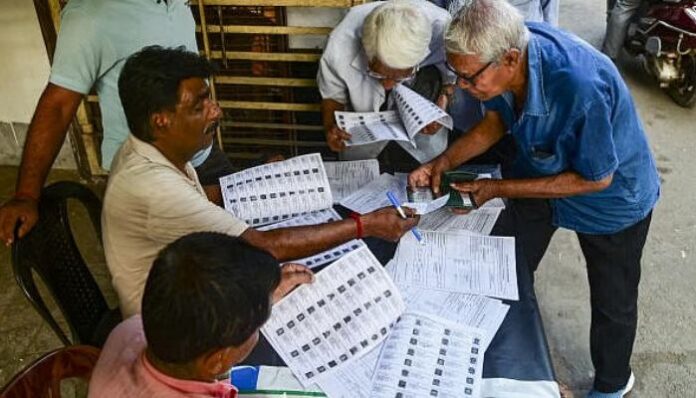
In one of the largest voter roll revisions in recent years, the Election Commission of India has removed over 7.2 crore names from electoral lists across nine states and three Union Territories after completing a Special Intensive Revision (SIR) exercise. The move is aimed at updating the rolls by removing ineligible entries and ensuring accuracy ahead of key elections. However, 2 crore names of new voters and voters in new addresses were added in the process, and the net deletion was 5.2 crore.
The 12 states and the UTs where the SIR has been completed are Uttar Pradesh, West Bengal, Tamil Nadu, Rajasthan, Chhattisgarh, Kerala, Puducherry, the Andaman and Nicobar Islands, Lakshadweep, Gujarat, Madhya Pradesh and Goa. Of the total, over 6.5 crore absent, shifted, dead, doubly enrolled and ‘other’ electors were identified and dropped from rolls. Another 63.2 lakh names were deleted through Form 7 (objections to inclusion in roll) and adjudication. In West Bengal, 27.2 lakh names were deleted by judicial officers.
Nearly 66.9 lakh of the deletions were due to deaths, 1.3 crore due to enrolment at multiple places, 1.3 crore were found absent at registered addresses, 3.1 crore had shifted permanently, and 12.7 lakh were placed in ‘others’ category.
Before the revision began, these 12 regions together had close to 51 crore registered voters. After the process was completed and the final rolls were published, the number came down to around 45.81 crore. This marks a reduction of about 10.2 % in the total electorate, reflecting the scale of the cleanup carried out during the exercise.
Uttar Pradesh saw the highest decline, with over 2.05 crore names removed from the voter list. Before the exercise started, the total number of voters stood at 15.44 crore. After the revision, the final count has come down to 13.39 crore. In the draft roll published earlier, about 2.88 crore names had been removed. However, 84.28 lakh names were added to the roll after the claims and objections phase.
West Bengal‘s voter count dropped from over 7.6 crore to 6.7 crore, with nearly 90.8 lakh names removed. Officials said that these deletions included entries cleared after proper judicial scrutiny as part of the verification process.
Tamil Nadu recorded the third-highest reduction, where the number of voters declined by over 74 lakh from around 6.41 crore. Gujarat followed closely, with a drop of more than 68 lakh voters, bringing its total down from 5.08 crore to about 4.41 crore.
The Special Intensive Revision covered a wide geographic spread, including Uttar Pradesh, Kerala, Tamil Nadu, West Bengal, Madhya Pradesh, Chhattisgarh, Gujarat, Goa, and Rajasthan. The exercise was also conducted in the Union Territories of Andaman and Nicobar Islands, Puducherry, and Lakshadweep.
The timing of the revision is significant, as assembly elections in Tamil Nadu and West Bengal are scheduled later this month. Meanwhile, polling in Puducherry, Kerala, and Assam has already taken place on 9th April. The updated electoral rolls are expected to play a key role in ensuring smoother and more accurate conduct of these elections.
Officials said that the entire process was carried out systematically to remove duplicate, shifted, deceased, or ineligible entries, helping strengthen the integrity of the electoral system.
