

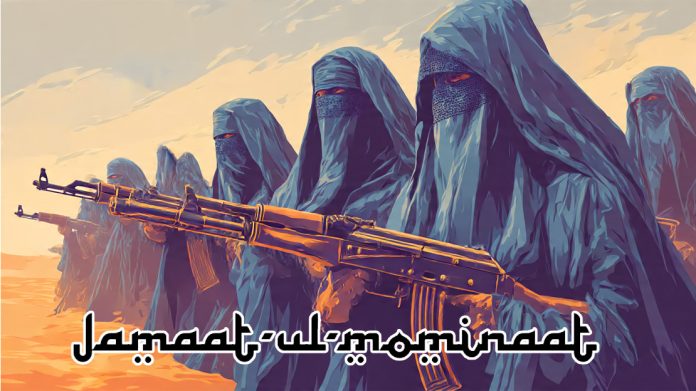
After facing a major setback in India’s Operation Sindoor, which destroyed its main headquarters at Markaz Subhanallah in Bahawalpur, Pakistan, the terror group Jaish-e-Mohammed (JeM) seems to be changing its strategy. The outfit has announced the formation of its first-ever women’s unit, named ‘Jamaat-ul-Mominaat’, as revealed in a letter issued under the name of JeM chief Maulana Masood Azhar.
According to the media reports, recruitment for this women’s wing began on Thursday, 8th October, in Bahawalpur. The new unit will be led by Sadiya Azhar, the sister of Masood Azhar. Her husband, Yusuf Azhar, was killed during India’s airstrike on 7th May, as part of Operation Sindoor.
Sources said the group has started recruiting wives of its existing members as well as women from poor backgrounds who study in JeM-run religious institutions across Bahawalpur, Karachi, Muzaffarabad, Kotli, Haripur, and Mansehra. The purpose of this wing, as per intelligence inputs, is not just to spread propaganda but also to carry out ground-level recruitment and psychological warfare.
Pakistan-based terror organization Jaish-e-Mohammed (JeM) announces the formation of its first-ever women’s wing, named “Jamaat-ul-Mominaat.” Recruitment for this newly created unit started at Markaz Usman-o-Ali in Bahawalpur.
— Sidhant Sibal (@sidhant) October 9, 2025
From the poster: pic.twitter.com/1zuD2PWcOL
The group has also begun spreading its influence through social media platforms, WhatsApp groups, and madrasa networks, with some of its propaganda already reaching parts of Jammu and Kashmir, Uttar Pradesh, and southern India.
For years, JeM has kept women away from direct combat or jihad-related roles. However, after suffering heavy losses in Operation Sindoor, sources suggest that Masood Azhar and his brother Talha al-Saif have approved a policy shift, allowing women to take part in the group’s broader operations.
While global terror organisations like ISIS, Boko Haram, Hamas, and the LTTE have previously used women for suicide missions, groups such as JeM, Lashkar-e-Taiba, and Hizbul Mujahideen have traditionally avoided doing so, making this a significant change in JeM’s operational strategy.
