

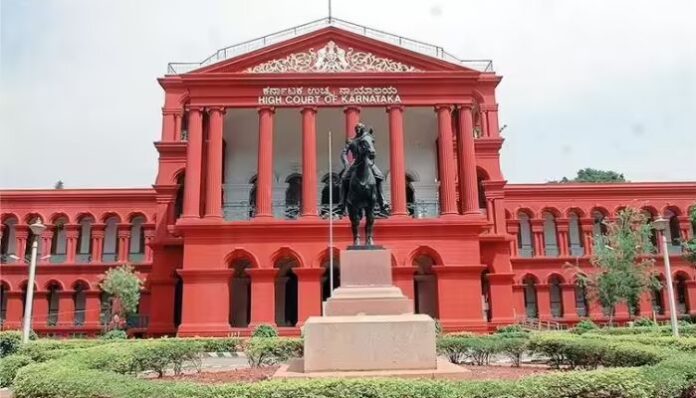
The Karnataka High Court has refused to grant bail to Shahid Khan, accused of being a member of the banned Popular Front of India (PFI) and of playing a role in radicalising Muslim youth and raising funds for terrorist activities. This came up while the court heard his appeal against a lower NIA court’s rejection of his bail plea on 2nd May last year. He’s one of 19 people charged under serious laws like Sections 153A and 120B of the IPC for promoting enmity and criminal conspiracy.
The accused in the case have been booked under several provisions of the Indian Penal Code (IPC) and Unlawful Activities (Prevention) Act (UAPA). These include UAPA sections of 13 for unlawful activities, 17 for funding terror, 18 and 18A for conspiracy and running terror camps, 18B for recruiting terrorists, and 22B for offences by groups or trusts.
A division bench comprising Justice H.P. Sandesh and Justice Venkatesh Naik T heard the appeal and examined the grounds raised by the appellant. He reused some old points from past bail bids but threw in three fresh ones: the investigating officer messed up seizure procedures, no sanction for Section 18 UAPA charges, and the trial was taking too long to start.
Key arguments from the Defence
Khan’s lawyer argued that Section 18 UAPA can’t stick without government sanction, so the trial court shouldn’t even charge him under it. They said being a PFI member and his actions don’t count as a “terrorist act.” Plus, no one’s accusing him of murder or anything that gets death or life sentences, like under Section 17. The lawyer also pointed out cash seized from Khan’s home wasn’t handled right under Section 25 UAPA for forfeiting property tied to terror funding.
The court brought up Section 45 UAPA, which blocks courts from even starting cases on terror punishments or banned groups without prior okay from the government. Prosecution claims all 19 are PFI leaders, members, or foot soldiers. They got mad over stuff like the 2019 Citizenship Amendment Act, NRC rules, hijab row, Babri verdict, and other government laws. The plan? Radicalize Muslim youth through brainwashing, build squads of them, teach them weapons, and push violence like killings or bombings to stir religious hate and chaos across India.
Specifically for Khan, accused number 14, he was Davanagere zone’s district president from 2019. All of them pitched in to run PFI, recruit youth, and do terrorist activities.
Arrest, trial court rejection, and new claims
Khan got nabbed on 22nd September, 2022. The trial court shot down his bail, saying there’s solid evidence he did the crimes and Section 43D UAPA blocks bail when terror charges look prima facie proven.
Another key argument raised by the appellant was related to the seizure of cash from his residence. His counsel argued that the Investigating Officer failed to follow the procedure prescribed under Section 25 of the UAPA for seizure and forfeiture of property, and therefore the offence of raising funds for terrorist activities under Section 17 was not made out.
“In this case, the investigating officer didn’t strictly follow Section 25 of the UAPA at seizure time. But that slip alone isn’t enough for bail, especially with evidence linking him to Section 17 funding for terror. Any procedure mess is just an irregularity; it doesn’t kill the prosecution’s case. There are clear claims and proofthat he raised terror funds. Whether Sections 17 and 18 fully fit is for the trial to sort, not a mini-trial here,” the judges ruled.
The bench further said that any procedural lapse would at best amount to an irregularity and does not strike at the core of the prosecution’s case. It added that there were specific allegations and supporting material showing the appellant’s involvement in raising funds for terrorist activities, and whether all legal ingredients are ultimately proved is a matter for trial.
Court rejects call for case diary and other pleas
Khan’s team wanted the case diary summoned to check vague IO notes. The court said judges can call it for their own help during probes or trials, but not hand it over or let the accused demand it. “The appellant has no right to ask for it. In co-accused appeals, no diary was summoned; we just checked the IO’s material and prosecution strength, then decided. His IA No.2 of 2025 to get it isn’t allowed. It’s only for court reference if needed, not for the accused,” they explained.
The bench also dismissed the sanction issue for now, saying it’s trial stuff, and noted the lower court already covered all the evidence well in denying bail.
After digging into the records, the judges saw the trial court’s order was spot-on and needed no changes. They upheld the denial, keeping Khan in custody amid these heavy terror conspiracy charges.
