

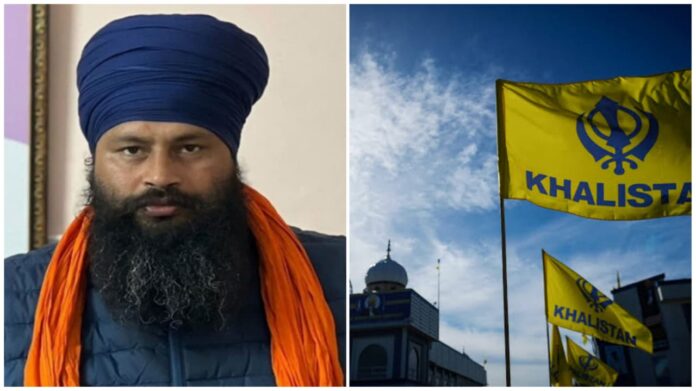
Days after anti-drug activist Parvinder Singh Jhota was shot dead in Punjab’s Mansa, Khalistan supporters are attempting to exploit his killing to promote secessionist sentiments, with a viral video blaming Hindus for his death and calling for a separate Khalistan.
Sikh man says “They (Hindus) killed Jhotta Tomorrow it can be you They (Hindus) have support of Delhi We need our own Khalsa rule We want Khalistan The whole world wants to give Sikhs Khalistan Wake up and get your own Khalsa Raj” And the poor Hindu people here on Twitter were thinking Jhotta got killed due to a drug bust gone wrong 😂 https://t.co/qpfrg7Tbpm
— Ahlawat (@bahlawat10) October 14, 2026
In the video, individuals claim that Hindus were responsible for Jhota’s killing attempt to portray the incident as a conflict between communities and demand a separate Sikh state.
“They (Hindus) killed Jhota. Tomorrow it can be you. They (Hindus) have support of Delhi. We need our own Khalsa rule. We want Khalistan. The whole world wants to give Sikhs Khalistan. Wake up and get your own Khalsa Raj,” the speakers say.
The claims blaming Hindus collectively for the murder remain unsubstantiated. The killing followed a confrontation between Jhota and a medical store owner over alleged drug sales. The incident has raised concerns about attempts to turn a criminal case into a communal and separatist campaign.
Amritsar observes complete bandh over Jhota’s murder
Meanwhile, a complete bandh was observed across Amritsar district on Thursday, October 15, following a call issued over Jhota’s killing. Commercial establishments remained shut, while traffic on roads and footfall at public transport facilities declined.
Members of the Kisan Mazdoor Sangharsh Committee visited major markets and urged shopkeepers to close their establishments. Markets across the city, including Katra Ahluwalia, Shastri Market, Lawrence Road, Ranjit Avenue and Majitha Road, wore a deserted look. Shopping malls and several industrial areas also witnessed closures.
Essential services, including pharmacies, continued operating.
Farmers and members of other organisations gathered at Golden Gate in Amritsar at 7 am, raising slogans against the Bhagwant Mann-led Punjab government and demanding its dismissal. Protesters burnt an effigy of Chief Minister Mann despite heavy rainfall, accusing the government of failing to curb the drug menace.
Institutions run by the Shiromani Gurdwara Parbandhak Committee (SGPC) also remained closed in protest against the murder.
Who was Parvinder Singh Jhota?
Jhota had become known in Mansa and neighbouring areas for confronting medical store owners over the alleged illegal sale of intoxicating medicines. He frequently livestreamed these confrontations on Facebook, attracting a substantial following.
On October 13, Jhota confronted a medical store owner, alleging that addictive substances were being sold illegally. An elderly man accompanying him reportedly claimed to have purchased the substances from the shop. During the Facebook Live broadcast, Jhota questioned the shopkeeper and demanded access to CCTV footage.
The confrontation escalated as the shopkeeper, who was seen holding a pistol, argued with Jhota. The activist continued challenging him, even repeatedly saying, “Maar mujhe, maar mujhe” (Kill me, kill me).
The argument continued for approximately four minutes before the shopkeeper allegedly opened fire, killing Jhota. His phone fell to the ground, ending the livestream. The accused reportedly fled after the shooting.
The allegations of illegal drug sales and the circumstances of the shooting remain matters for investigation.
Jhota’s father accuses Punjab government, AAP MLA
In his first statement following the killing, Jhota’s father accused the Punjab government and Mansa AAP MLA Vijay Singla of backing those responsible for his son’s death.
“Drug addicts killed my son with the backing of the Punjab government and Mansa AAP MLA Vijay Singla,” he alleged.
Jhota’s activism had previously attracted controversy. In July 2023, he was arrested following a confrontation involving a medical store owner and faced allegations including assault, trespassing and rioting. He was released approximately two months later.
His killing has intensified scrutiny of the Mann government’s anti-drug campaign, Yudh Nashian Virudh, with opposition leaders questioning the administration’s handling of drug abuse and enforcement against illicit pharmaceutical sales.
