

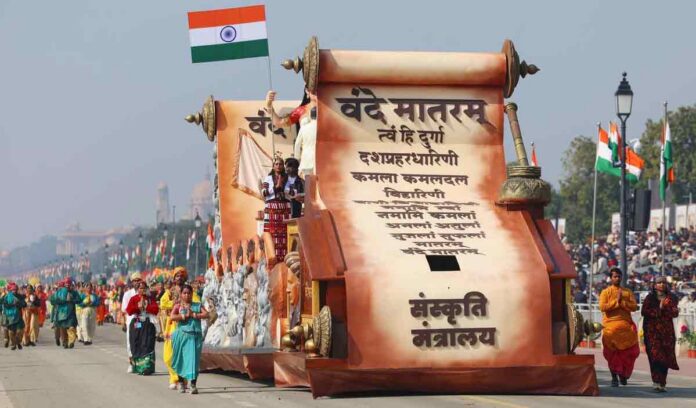
The Lok Sabha on Thursday passed the Prevention of Insults to National Honour (Amendment) Bill, 2026, providing legal protection to the national song Vande Mataram on a par with the national anthem Jana Gana Mana. The legislation was cleared by a voice vote amid noisy protests and a brief debate, a day after the Rajya Sabha had approved it.
The bill seeks to amend Section 3 of the Prevention of Insults to National Honour Act, 1971. Under the existing law, intentionally preventing the singing of the national anthem or causing disturbance to any assembly engaged in its singing attracts imprisonment of up to three years, a fine, or both. The amendment extends identical protection to Vande Mataram. Anyone found intentionally preventing its rendition or disrupting a gathering singing the national song will face the same penalty.
Notably, the legislation does not make singing Vande Mataram compulsory, nor does it punish those who choose not to sing it.
Union Minister of State for Home Affairs Nityanand Rai had introduced the amendment in the Rajya Sabha on 24 July. Replying to the debate in the Upper House, Rai said the bill was aimed at protecting the country’s “honour and cultural heritage”, describing Vande Mataram as a symbol of India’s freedom struggle and national consciousness.
The Upper House cleared it on Wednesday by voice vote after most opposition members, including those from the Congress, Trinamool Congress, DMK, RJD and Left parties, staged a walkout. They were protesting the alleged use of force by Delhi Police against students demonstrating over the NEET paper-leak issue and demanding a statement from Home Minister Amit Shah.
In the Lok Sabha, where the bill was presented today, proceedings were similarly disrupted as opposition members continued their agitation over the NEET protests. Despite the din, the House took up the bill and passed it following a short discussion. While some members backed stricter provisions to prevent disrespect to national symbols, others flagged concerns over the need for broader consensus and debate.
The government has linked the amendment to the year-long celebrations marking the 150th anniversary of Vande Mataram, composed by Bankim Chandra Chattopadhyay. The Statement of Objects and Reasons cites the observations of Constituent Assembly President Dr Rajendra Prasad on 24 January 1950 that the song, which played a historic role in the freedom struggle, should be honoured equally with Jana Gana Mana. Until now, the 1971 Act covered the national flag, the Constitution and the national anthem, but contained no specific provision against intentional obstruction of the national song.
With both Houses having cleared the bill, it will now be sent to the President for assent before it becomes law.
