

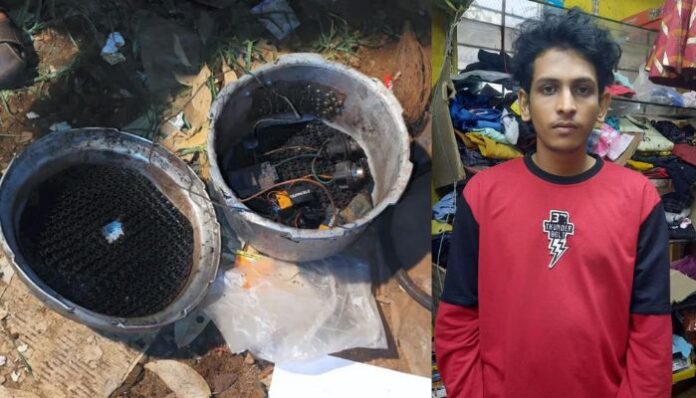
In a major development in the 2022 Mangaluru cooker blast case, the main accused, Mohammed Shariq, has now chosen to plead guilty before a special NIA court in Bengaluru.
The blast took place on 19th November, 2022, inside an autorickshaw in Mangaluru. Shariq, a 27-year-old from Shivamogga, was carrying a cooker bomb that accidentally exploded on his lap due to a timer error, leaving him with severe burn injuries. He was later arrested by the National Investigation Agency (NIA) after being discharged from the hospital.
Initially, Shariq had denied all charges when they were framed against him on 20th April, 2024. But in December 2025, he changed his stand and filed an application for pleading guilty under Section 229 of the CrPC. The application filed by Shariq was accepted by the court on March 26th, and another hearing is scheduled after he re-reads the charges against him and pleads guilty.
Shariq is also suspected of being a part of an Islamic State-inspired terror group based out of Shivamogga and is involved in several incidents since 2020. He is also accused of being involved in the training of others for making IEDs and was also wanted in another terror case filed in September 2022 for the testing of IEDs. In fact, he had reportedly sent cryptocurrency funds to co-accused Syed Yasin to help build and test explosive devices.
Further, members of this Shivamogga module have also been involved in the 1st March, 2024, Rameshwaram Cafe blast in Bengaluru. The IED used in the blast was said to be similar to the one Shariq carried in Mangaluru blast. Key accused in that case include Mussavir Hussain and Abdul Matheen Taha, both linked to the same network.
Before the blast, Shariq already had a criminal background. In 2020, he was arrested for painting anti-national graffiti in Mangaluru and spent eight months in jail in 2021. Authorities also found that the module received over Rs 3 lakh through cryptocurrency between 2020 and 2022.
His decision to plead guilty is being seen as a possible attempt to seek a reduced sentence or early release. He faces multiple charges, including terrorism, criminal conspiracy, attempt to murder, forgery, and violations under the Explosive Substances Act. However, he has not yet pleaded guilty in the separate Shivamogga IED testing case, where some other accused have already done so.
Political row after the blast
Soon after the incident, the blast became a major political issue in Karnataka. Congress leader D. K. Shivakumar had questioned the seriousness of the incident and accused the BJP government of exaggerating it for political benefit.
Speaking at a press conference in Bengaluru, he claimed that the blast is being made a major issue to distract public attention from the voter data theft controversy. He also expressed doubts about calling Shariq a terrorist so early, asking how the police could make such a claim without a full investigation. At one point, he even hinted that the incident could have been staged to influence public opinion.
These remarks drew strong criticism from the BJP. Then Home Minister Araga Jnanendra accused Shivakumar of demoralising the police and trying to appeal to minority voters. He maintained that Shariq had a history of serious crimes, including charges under the Unlawful Activities (Prevention) Act, and had absconded after getting bail earlier.
The case continues to be closely watched, not only because of its implications on national security, but also because of the political debate that has been generated since the blast occurred.
