

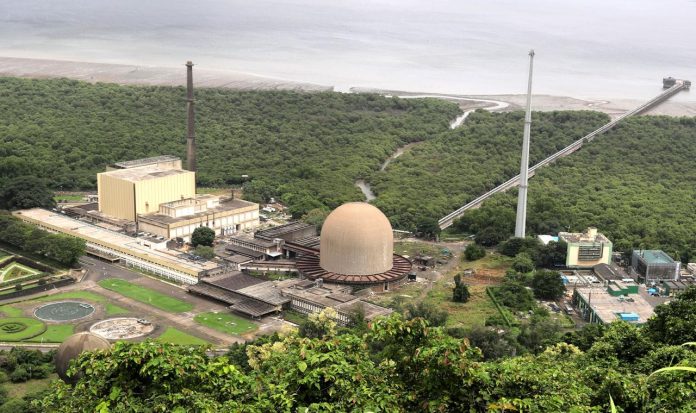
India’s national security establishment was jolted after the Mumbai Police’s Crime Intelligence Unit (CIU), in coordination with the National Investigation Agency (NIA) and the Intelligence Bureau (IB), arrested a 55-year-old man who had been posing as a scientist from the Bhabha Atomic Research Centre (BARC).
The accused, identified as Akhtar Hussain Qutubuddin Ahmed, was detained from his Versova residence on Friday and has been remanded in police custody till October 24. Officers said that Akhtar had travelled extensively abroad under false identities, presenting himself as a senior nuclear scientist or intelligence agent.
During the raid, investigators recovered 14 highly sensitive blueprints and documents related to nuclear bomb design, multiple forged identity cards, and several digital storage devices. The seized material has been sent for forensic examination.
According to the police, two fake BARC identity cards were found, one in the name of “Alexander Palmer” and another as “Ali Raza Hussain.” Both carried Akhtar’s photograph. “Given his past, it was impossible for him to travel abroad under his real name, so he simply made new ones,” an officer said.
Further investigation revealed that some of the recovered blueprints had been printed at a local shop in Andheri, raising suspicions about the source of these files and potential collaborators. Officials have also seized fake passports, Aadhaar and PAN cards, driving licences, multiple mobile phones, and pen drives from the accused’s flat.
Senior officers said Ahmed’s résumé “appears more fiction than fact.” He reportedly harboured a deep fascination with physics, nuclear science, and espionage, often introducing himself as a secret agent or atomic researcher. “He likes the idea of being a man with secrets,” an investigator remarked. “Unfortunately, the only secret he’s keeping now is how he managed to get those BARC IDs.”
Officials said Ahmed had previously worked in oil and marketing firms in the Gulf and was deported from Dubai in 2004 after allegedly trying to sell “sensitive information” about India. However, past inquiries by Indian agencies and the Department of Atomic Energy (DAE) had found no concrete evidence against him at the time. He had claimed that he was “fixed” by an army officer following a business dispute.
In his latest act, police believe Ahmed used his fake scientist persona to meet foreign nationals and allegedly extract money under the pretext of sharing confidential material. A senior officer described him as “a smooth-talking conman who may never have accessed a real high-security zone but managed to make others believe he could.”
The Mumbai Crime Branch, along with central agencies including NIA and IB, is now verifying whether Akhtar had any links to foreign intelligence networks or terror organizations and whether any classified nuclear or defence-related data may have been compromised.
This shocking incident has once again raised serious concerns about security lapses and identity verification systems at India’s premier scientific and nuclear research institutions.
