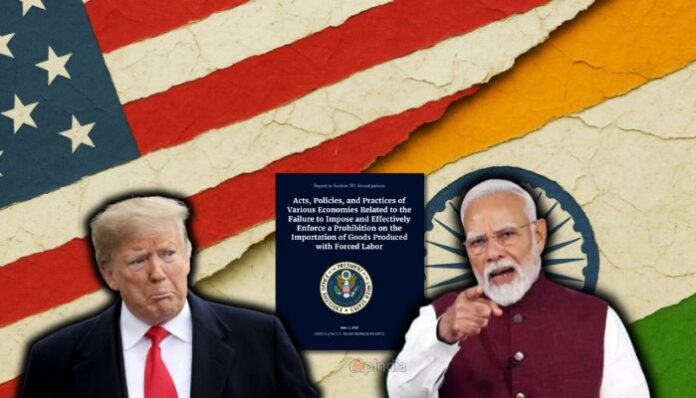
The US Trade Representative (USTR) has proposed to impose fresh tariffs on around 60 trading partners for reasons as vague as ‘forced labour’. The USTR released a 98-page report on 3rd June, in which it proposed tariffs ranging from 10 to 12.5% on India, China, Japan, Pakistan, South Korea, Brazil and Switzerland, among others.
The USTR has proposed 10% tariffs on Canada, Mexico, Taiwan and the United Kingdom over alleged failure to enforce a forced labour import ban.
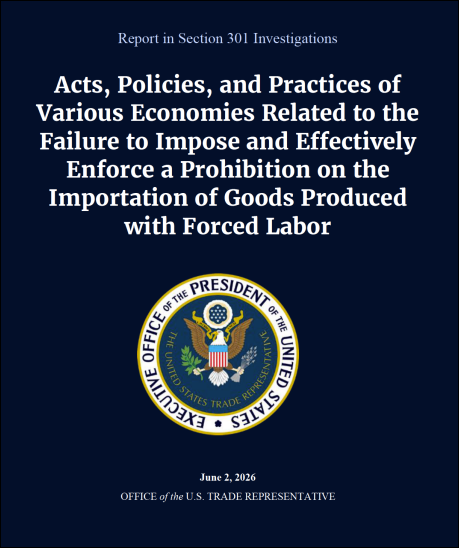
In the report titled “Acts, Policies, and Practices of Various Economies Related to the Failure to Impose and Effectively Enforce a Prohibition on the Importation of Goods Produced with Forced Labor”, the USTR detailed the findings of the investigation launched into trading partners under Section 301 (b)(1) of the Trade Act of 1974.
Notably, Section 302(b)(1)(A) of the Trade Act of 1974 authorises the US Trade Representative to initiate an investigation to determine whether an act, policy, or practice of a foreign country is actionable under Section 301 of the Trade Act. Actionable matters under Section 301 include acts, policies, and practices of a foreign country that are ‘unreasonable’ or ‘discriminatory’ and burden or restrict US commerce.
Under the section “India: Findings of Investigation”, the USTR claimed that India failed to effectively enforce the forced labour import ban.
“In sections III.A.7 and III.B.7, USTR found that India has failed to impose and effectively enforce a forced labor import prohibition. In section IV, we found that the failure to impose and effectively enforce a forced labor import prohibition is unreasonable. In section V, we found that the failure to impose and effectively enforce a forced labor import prohibition burdens or restricts U.S. commerce,” the USTR report reads.
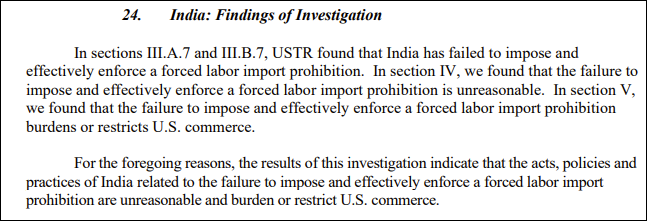
“For the foregoing reasons, the results of this investigation indicate that the acts, policies and practices of India related to the failure to impose and effectively enforce a forced labor import prohibition are unreasonable and burden or restrict U.S. commerce,” it adds.
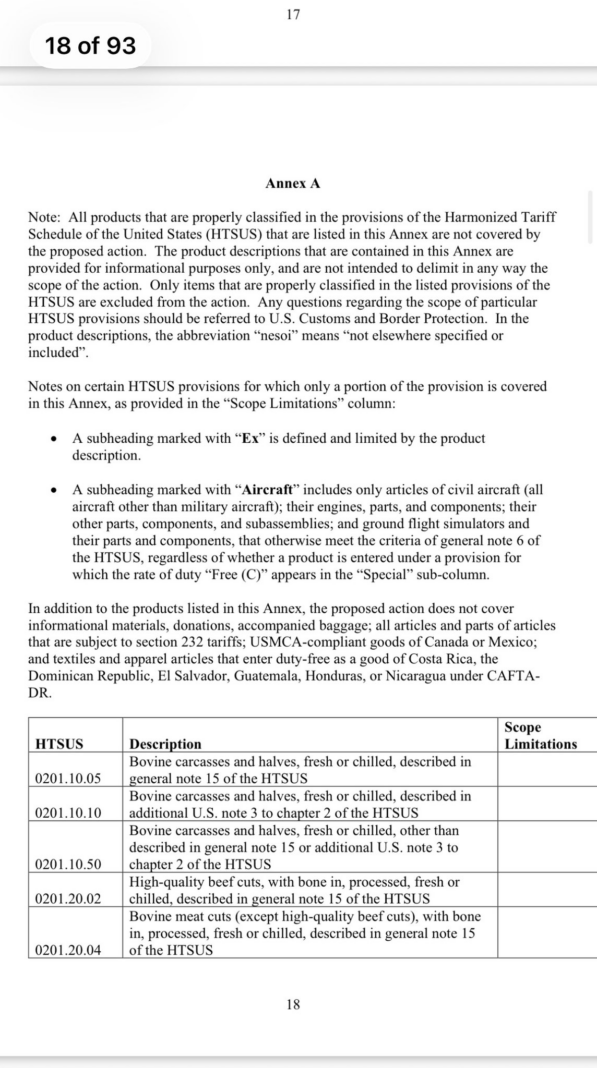
Regarding the scope of the proposed tariffs, the 10 to 12.5% tariffs, if approved, would apply to almost all US imports, with exemptions covering 70 products, including aircraft, beef, coffee, etc. The USTR has also proposed a textile or apparel quota mechanism for relief on limited volumes.
While the USTR report has sparked debate and even political mudslinging in India, it must not be forgotten that this is just a proposal that may or may not be approved. Despite this, several opposition leaders and their media allies have already started portraying the USTR proposal for imposing new tariffs on India as Prime Minister Narendra Modi’s ‘failure’.
Public comments on the tariff proposal are due by 6th July.
Trump’s tariff tirade against India, strained ties, and the US court’s ultimate hammering down of his ‘weapon’
In August 2025, the Trump administration imposed ‘reciprocal’ tariffs on Indian goods, and later doubled them to 50%. The additional tariff was a ‘punishment’ for buying Russian oil. OpIndia reported earlier how India’s refusal to give a fake credit to Trump for ending the India-Pakistan conflict in May last year irked the US President, and he unleashed tariffs and rhetorical attacks against India.
India and the US have never been the best of friends. To be perfectly honest, America has no friends. During his farewell address in 1796, President George Washington advised the young America, “Steer clear of permanent alliances with any portion of the foreign world”.
The US has never permanently allied with any country, although geopolitical circumstances have compelled the ‘superpower’ to explore ties with various countries. During the 1971 war, the US supported Pakistan against India. The US imposed sanctions on India when the country conducted successful nuclear tests, becoming a nuclear power. America consistently attempted to undermine India. However, in the last two decades, Washington made efforts to woo India on its side, not out of any love or remorse for past actions, but as a democratic counterweight against an autocratic China.
Then enters Donald Trump, who destroyed the years of American efforts to bring India to its side by launching a tariff tirade that India did not deserve. For nearly three years, India bought discounted Russian oil, refined it and supplied it to various countries across the world and sustained global energy supplies as Russia faced sanctions for its war against Ukraine.
Even America supported India in buying Russian oil. Even Trump was fine with India’s Russian oil purchases until the May India-Pakistan conflict. However, as India killed Trump’s hopes for a Nobel Peace Prize, the megalomaniac American President began coddling Pakistan and antagonising India.
Trump’s approach, however, was quite hypocritical. On one hand, Trump would say that he is a “fan” and “good friend” of Prime Minister Modi, on the other, he would call India a “dead economy” and his officials, Howard Lutnick, Peter Navarro and others, would constantly villainise India and accuse it of fuelling the “Russian war machine”.
All this while, talks between India and the US also continued for a bilateral trade deal. As the Modi government refused to open up India’s dairy sector for American exports, Trump’s officials intensified their anti-India rhetoric.
As America launched a war against Iran in February this year, and an energy crisis followed the blockade of the Strait of Hormuz, the Trump administration ‘allowed’ India to buy Russian oil to ensure global supplies and control price spikes. When India was buying Russian oil earlier for the same reasons, the Trump administration cried hoarse; however, when it became imperative to ensure energy supplies to the world amidst the crisis America caused, to save themselves from becoming global villains, they turned to India for help.
Although India made it clear that New Delhi will continue buying Russian oil regardless of whether America allows India to do so or not, the US Secretary of State, Marco Rubio, recently said that America wants to end the license allowing countries like India to buy Russian oil “as soon as possible”, as Iran and the US negotiate a peace deal amidst a fragile ceasefire.
Breaking: America wants to end license allowing countries like India to buy Russian oil "as soon as possible", says US Secretary of State Marco Rubio pic.twitter.com/E8Bm3EEmjz
— Shashank Mattoo (@MattooShashank) June 2, 2026
Not to forget, Trump, who speaks nicely of PM Modi and India and has increased investments in India for his private businesses, recently amplified the racist “hellhole” remark by an American podcaster against India in a Truth Social post.
Marco Rubio, who was in India last month for a two-day visit, received a relatively cold welcome and was questioned by the Indian media about increasing racism against India, the Russian oil issue, and America’s newfound love for the same Pakistan that Trump used to criticise for squeezing dollars out of America in the name of counter-terrorism measures.
While Trump and his officials vilified India for months since August 2025, for New Delhi’s Russian oil purchases, although America itself continued buying various non-essentials from Russia directly, Marco Rubio downplayed the matter. He said that the Russian oil issue was “never specifically about India”.
Rubio, however, did not explain that if the Russian oil issue was not specifically about India, then why India and not China, which has been the largest buyer of Russian oil, was called out for supposedly fuelling the Russian war machine. Why US impose maximum ‘penalty’ tariffs on India and not China? Is it because Trump knows that Washington cannot really harm China, as Beijing has leverage in the form of rare earth elements or RREs essential for the semiconductor industry?
The world saw that Trump’s recent visit to China was nothing more than a nice outing for the American president, yielding no breakthroughs. China even threatened Trump with a direct conflict for backing Taiwan.
America’s hypocrisy and cowardice have been blatant all throughout.
As the India-US trade deal talks advanced, the US lowered its effective tariff rates on most Indian goods to 18% and removed the 25% Russian-oil penalty. While the US claimed in some statements that India has committed to buy more of American energy, diversifying away from Russia, India has maintained that it will continue buying Russian oil and has, in practice, done so.
In fact, during a joint press briefing with Rubio in New Delhi, Minister of External Affairs S Jaishankar clearly stated that India will continue to diversify its energy sources to fulfil its energy needs. He went on to say that if the Trump administration follows an “America First” policy, India has an “India First” foreign policy.
It is apparent that America is not very pleased with India for not acting like a second-tier client state and staying firm on its strategic autonomy. In fact, this USTR tariff proposal with a 70-product exemption comes across as a pressure tactic ahead of the American delegation’s four-day India visit for trade deal talks.
In February this year, the US Supreme Court struck down Trump’s tariffs, stripping him of his brand-new weapon to arm-twist countries into aligning with the US subserviently. The court ruled that Trump’s tariff terrorism was illegal. Since the Trump administration has been searching for ways to reimpose tariffs, and has found a twisted way in the imposing tariffs for the supposed ‘failure’ to impose prohibitions against forced labour. Approved or not, the USTR tariffs proposal against India is only contributing to the deepening trust deficit.
The USTR’s proposal to impose tariffs on India and over two dozen countries over ‘forced labour’ shows that America is yet to come out of the delusion that it is some teacher who needs to discipline children.
India’s reaction: Proposal not final, consultations underway
India has reacted to the development, statting that despite the political attention generated by the report, the proposed tariffs are not yet final.
“As per the report, the proposed tariffs are not yet final and stakeholders can submit requests to participate in public hearings by 22 June 2026. Written comments can be submitted until 6 July 2026. Public hearings will be held on 7 July 2026. The USTR will consider the comments and testimony received before taking a final decision on the proposed measures,” the Ministry of Commerce & Industry said in a press statement.
India has formally engaged with the United States as part of the ongoing Section 301 proceedings and is expected to present its position during the consultation process. Simultaneously, New Delhi and Washington continue negotiations on a broader trade framework agreement announced on 2 February 2026 and reaffirmed in the joint statement issued on 7 February 2026.