

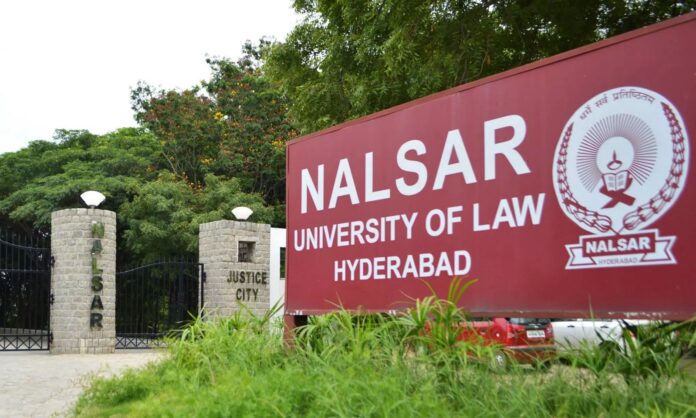
As many as 441 alumni of the National Academy of Legal Studies and Research (NALSAR), Hyderabad, have written an open letter to the Bar Council of India (BCI) condemning its recent attempts to initiate an inquiry into students and faculty members over their participation in a campaign concerning the university’s convocation.
441 NALSAR alumni issue a statement condemning Bar Council of India Chairman Manan Kumar Mishra’s orders passed against the enrolment of NALSAR graduates of 2026.
— Live Law (@LiveLawIndia) August 14, 2026
“The BCI has no role in regulating free speech in University campuses,” they say. pic.twitter.com/PntDZOHmMw
In the letter dated August 14, the alumni addressed BCI Chairman Manan Kumar Mishra and strongly criticised two communications issued by the Bar Council on August 13. The letters, addressed to the Vice Chancellor of NALSAR, had sought an inquiry and report identifying students and faculty members who were allegedly involved in voicing their opinion about inviting the Chief Justice of India to the university’s convocation.
The first BCI communication had reportedly barred NALSAR students graduating in 2026 from enrolling with the Bar Council and called for an inquiry. The BCI subsequently withdrew the bar on enrolment and its demand for an inquiry following public criticism.
The alumni said the manner in which the letters were issued reflected “a lack of empathy for students and their mental health” and a disregard for free speech, while accusing the BCI of attempting to interfere in matters concerning university autonomy.
“The BCI has no role in regulating matters of free speech on university campuses,” the letter stated, arguing that the regulator’s statutory role is confined to legal education and maintaining standards in the legal profession.
The alumni further contended that the BCI does not possess the authority to institute disciplinary proceedings against students or faculty members at a university, particularly without notice or an opportunity to be heard.
Taking particular exception to the language used in the first BCI letter, the alumni said it “vilifies students and faculty” by alleging that they had engaged in “groupism”, “dirty politics”, “nasty politics” and were “instigating and misleading students”.
According to the alumni, such language was inappropriate for a statutory body entrusted with responsibilities towards legal education and the legal profession. They also objected to the BCI’s call for identifying people who allegedly played a role in the campaign, arguing that activities such as organising meetings, communicating with the media, coordinating participation and administering social-media groups constituted protected forms of expression.
“The BCI letters signal as if the students and faculty were hatching a criminal conspiracy. Voicing dissent is not a criminal offence in India,” the letter said.
The alumni stressed that universities are autonomous institutions and argued that legal education, in particular, requires an environment where students can question established ideas and authority.
“Free speech is a fundamental part of that journey,” they said, adding that law students are the inheritors of a tradition in which lawyers across ideological lines participated in India’s freedom struggle by exercising their right to speak freely.
The signatories urged the BCI to engage with the NALSAR controversy through “dialogue and discussion” rather than coercive measures. They argued that legal education must encourage students to question assumptions about state power and develop the ability to reason independently.
The letter also said that the BCI’s subsequent clarification or withdrawal came only after public backlash against its earlier communications.
The alumni concluded by urging the Bar Council to reflect on its approach towards students and legal education, warning that its letters appeared to demonstrate “a predisposition to employ coercive measures” while disregarding fundamental rights, student welfare and university autonomy.
The development comes amid a wider debate over the limits of regulatory authority, institutional autonomy and free speech on law university campuses, particularly when students publicly disagree with decisions concerning prominent constitutional authorities.
