

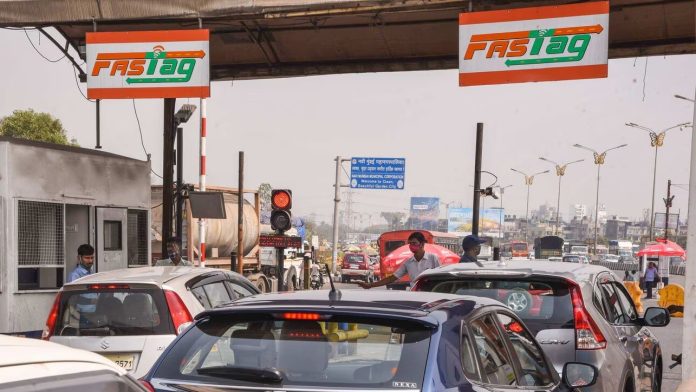
In a major relief to highway users, the National Highways Authority of India (NHAI) has announced a significant reform to the FASTag ecosystem, discontinuing the post-activation “Know Your Vehicle” (KYV) process for personal vehicles in the Car/Jeep/Van category. The change, effective for all new FASTags issued from February 1, 2026, aims to eliminate inconveniences and delays faced by millions of highway users.
In an official press release issued today by the Ministry of Road Transport & Highways, NHAI stated that the decision addresses widespread complaints of “post-activation harassment” despite users possessing valid vehicle documents. The KYV process, introduced last year to prevent misuse and ensure proper linkage of FASTags to vehicles, had required additional verification steps after tag activation, often leading to frustrations at toll plazas.
For new FASTags issued after February 1, 2026, the KYV requirement has been completely discontinued for car category vehicles. Existing FASTag holders will also benefit, as routine KYV will no longer be mandatory. Verification will only be triggered in exceptional cases involving complaints, such as loose tags, incorrect issuance, or suspected misuse.
To maintain system integrity and curb potential abuses, NHAI has introduced robust pre-activation safeguards. As per the directions, issuer banks must mandatorily validate vehicle details against the central VAHAN database before activating any FASTag. Post-activation validation options have been eliminated entirely.
In rare cases where VAHAN data is unavailable, banks must verify using the vehicle’s Registration Certificate (RC), bearing full accountability. These rules apply to both physical and online FASTag sales.
“These reforms reflect NHAI’s continued commitment to making the FASTag ecosystem citizen-friendly, transparent, and technology-driven, while simultaneously strengthening compliance and reducing grievances,” the release noted. By shifting all verification responsibilities to banks upfront, the authority expects a seamless, hassle-free experience for national highway users.
The ministry said that “this reform will bring significant relief to lakhs of common road users who were facing inconvenience and delays after FASTag activation due to post-issuance KYV requirements, despite having valid vehicle documents.”
The move builds on previous simplifications to the KYV process in late 2025, which had already eased document uploads and ensured no service disruptions for incomplete verifications. Today’s announcement marks a further step toward streamlining electronic toll collection, aligning with broader initiatives like the upcoming Multi-Lane Free Flow (MLFF) barrier-less tolling system.
