

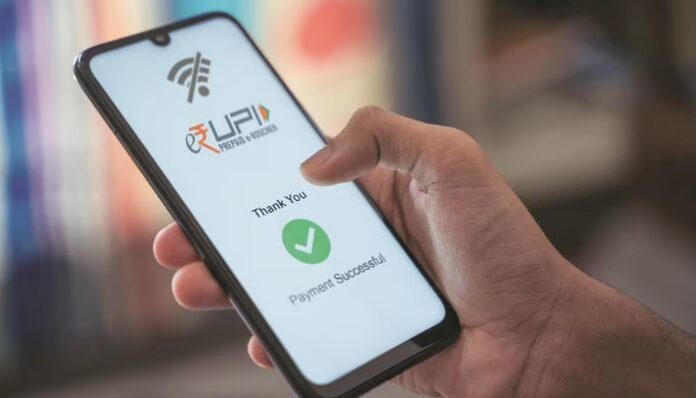
The government has clarified that ordinary users will not have to pay any charges for UPI payments of up to ₹2,000. The Ministry of Finance, in a notification issued on Monday, said banks and system providers cannot impose charges, directly or indirectly, on UPI transactions within this limit or on payments made through RuPay debit cards.
Government announces that banks cannot impose any charges on Unified Payments Interface (UPI) transactions of up to ₹2,000.
— All India Radio News (@airnewsalerts) September 15, 2026
A government gazette notification also bars charges on payments of up to ₹2,000 made through RuPay-powered debit cards.
The notification states that no… pic.twitter.com/yjdMtp2iTI
The clarification comes amid a debate over whether the recent changes to the Payment and Settlement Systems Act, 2007, could lead to charges on UPI payments. The government has maintained that the changes do not mean consumers will have to pay a transaction fee.
What about UPI payments above ₹2,000?
The new notification specifically protects UPI payments up to ₹2,000. It also covers RuPay debit card payments. For higher-value UPI transactions, the government has not introduced any fee for consumers.
The bigger discussion is about Merchant Discount Rate (MDR), a processing fee generally paid by merchants to banks or payment providers when customers make digital payments. Such fees are usually around 1-3% for debit and credit card transactions.
UPI and RuPay debit card payments have had zero MDR since January 2020 as part of efforts to encourage digital payments. Reports suggest an MDR of around 0.4% could eventually be considered for high-value person-to-merchant (P2M) UPI transactions.
Why has MDR become an issue?
UPI has grown rapidly, with more than 24,000 crore transactions worth ₹314 lakh crore recorded in 2025-26. However, payment companies and banks have raised concerns about the rising cost of running the system.
The Department of Financial Services told the Standing Committee on Finance that the payments industry was spending about ₹20,700 crore every year on person-to-merchant transactions. A committee report in March also said that the absence of MDR was making the UPI system financially difficult to sustain.
The government currently supports low-value UPI payments through its incentive scheme for promotion of RuPay debit cards and low-value BHIM-UPI transactions (P2M). The incentive is capped at 0.15% of the transaction value and applies to payments of up to ₹2,000 made to small merchants. Large merchants are not covered.
For 2026-27, the Budget has estimated ₹2,000 crore for this subsidy. The government paid ₹2,196.21 crore in 2025-26, compared with ₹1,922.77 crore in 2024-25.
What changed in the law?
The Taxation and Other Laws (Amendment) Bill, 2026, passed by Parliament last month, removed an earlier exemption under Section 269SU of the Income-tax Act, 1961. That provision applied to businesses with annual turnover above ₹50 crore.
Section 10A of the Payment and Settlement Systems Act had earlier prevented banks and system providers from charging for electronic payment modes covered under Section 269SU, including RuPay debit cards, BHIM-UPI and UPI-QR codes.
The amendment has opened the possibility of MDR being charged on high-value transactions, particularly those involving large merchants such as Amazon and Flipkart. However, it does not itself introduce any fee.
Small payments remain protected
The government has repeatedly said that small-value payments and person-to-person transfers will not be affected. Finance Minister Nirmala Sitharaman had also told the Rajya Sabha on 11th August that the amendment was only an “enabling provision” and did not impose a tax or transaction charge on UPI users.
She said street vendors, cab drivers and kirana shops would not be charged either, and any MDR introduced in the future would be paid by merchants rather than customers.
In August, the Finance Ministry also said the amendment was aimed at supporting UPI’s long-term sustainability, technology upgrades and protection against emerging risks.
Only about 4% of P2M UPI transactions in 2025-26 were above ₹2,000. However, these higher-value payments accounted for nearly two-thirds of the total value of such transactions.
The UPI & Services Steering Committee, headed by NPCI and including 22 members from major banks and the two leading UPI apps, is expected to decide whether MDR should be introduced and how it would work. As of now, no such decision has been taken.
