

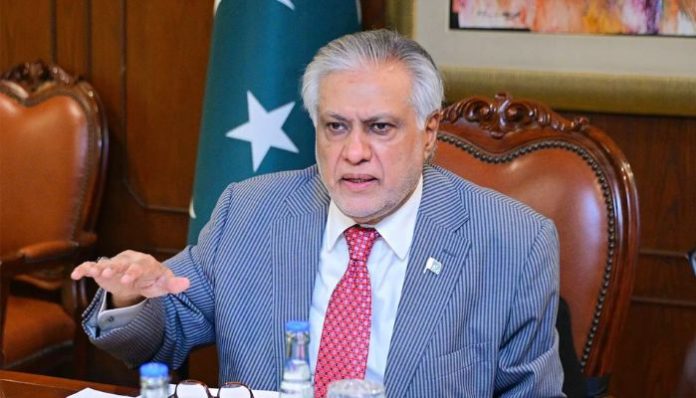
Pakistan has, for the first time, officially acknowledged that Indian military strikes caused damage to its air base during the escalation that followed Operation Sindoor in May this year. The admission came from Pakistan’s Foreign Minister and Deputy Prime Minister Ishaq Dar during a year-end press briefing held on Saturday, 27th December.
Dar confirmed that India had targeted the Nur Khan Air Base located in the Chakala area of Rawalpindi, a key military facility close to Pakistan’s capital Islamabad. He admitted that the strike damaged parts of the base and also injured personnel who were stationed there at the time. This statement marks a significant shift from Pakistan’s earlier attempts to downplay the impact of India’s military action.
Drone attacks and Pakistan’s response
Explaining the events of those tense days, Ishaq Dar said India had sent a large number of drones into Pakistani airspace within a short period. According to him, nearly 80 drones were launched by India over a span of about 36 hours. He claimed that Pakistani forces managed to intercept 79 of them, while one drone succeeded in hitting a military installation.
BIG
— Frontalforce ?? (@FrontalForce) December 28, 2025
Pakistan's FM confirms India's strikes on Nur Khan Air Base in May, says damaged installations, injured personnel pic.twitter.com/uOTbFJ5m11
“That one drone caused damage to a military facility and personnel were injured,” Dar said, while still attempting to project Pakistan’s air defence response as largely successful. However, his remarks effectively confirmed that Indian strikes did penetrate Pakistan’s defences and caused real damage on the ground.
Dar also revealed that Pakistan’s political and military leadership, led by Prime Minister Shehbaz Sharif, held an emergency meeting on the night of 9th May. During this meeting, key decisions were authorised in response to what he described as a rapidly changing and dangerous situation. He went on to say that India “made the mistake” of attacking the Nur Khan Air Base in the early hours of 10th May, indirectly acknowledging the seriousness of the strike.
Indian Army veteran challenges Pakistan’s version
Reacting strongly to Ishaq Dar’s remarks, Indian Army veteran Lt Gen (Retd) KJS Dhillon rejected Pakistan’s claim that the damage and injuries were minor. He accused the Pakistani leadership of hiding the true scale of losses.
Dhillon pointed to reports from Pakistan’s own media, including a list aired by Samaa TV on Pakistan’s Independence Day. The list reportedly named 138 people who were awarded gallantry honours posthumously following Operation Sindoor. According to Dhillon, this strongly suggests that casualties were far higher than what Pakistan has officially admitted.
He also referred to videos shared by Pakistani civilians during the strikes, which showed the Nur Khan Air Base engulfed in flames. Dhillon claimed that all 11 Pakistani air bases targeted by India suffered heavy damage during the operation.
Notably, Pakistan Prime Minister Shehbaz Sharif had earlier confirmed India’s strike on the Nur Khan Air Base. Days after the escalation, Sharif said that Army chief General Asim Munir personally informed him about the attack during the night of 9th and 10th May, further reinforcing India’s account of the operation.
Satellite images back India’s actions
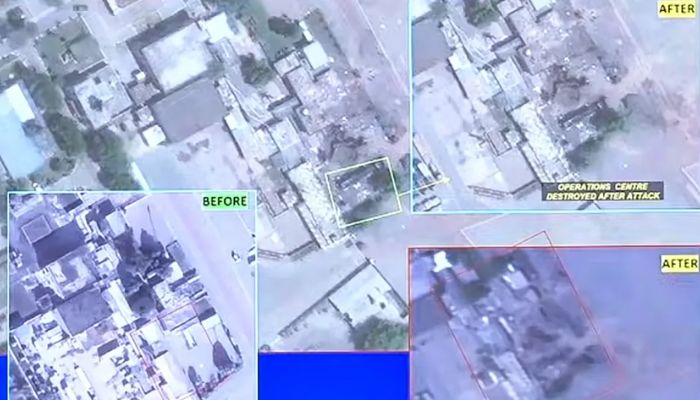
Independent satellite imagery added further weight to India’s claims. Images released by US-based Maxar Technologies on 13th May showed clear damage to multiple Pakistani air bases. These included the Nur Khan Air Base in Rawalpindi, PAF Base Mushaf in Sargodha, Bholari Air Base, and PAF Base Shahbaz in Jacobabad.
#WATCH | Delhi: Air Marshal AK Bharti shows the detailed video of the effects of India's Air Operations at Pasrur Air Defence Radar, Chunian Air Defence Radar, Arifwala Air Defence Radar, Sargodha Airfield, Rahim Yar Khan Airfield, Chaklala Airfield (Nur Khan), Sukkur Airfield,… pic.twitter.com/q1v9X9ZmEi
— ANI (@ANI) May 11, 2025
The satellite pictures, comparing images taken on 25th April and 10th May, revealed damage to infrastructure at these facilities, including buildings and operational areas. The visuals contradicted Pakistan’s early statements that the damage was minimal or insignificant.
Operation Sindoor and India’s military strikes
The strikes were part of Operation Sindoor, launched by the Indian Armed Forces in the early hours of 7th May. The operation targeted nine terror camps located in Pakistan and Pakistan-occupied Kashmir (PoK). India launched the operation as a direct response to the 22nd April terror attack in Pahalgam, Jammu and Kashmir, in which several civilians were killed.
Operation Sindoor led to a sharp military escalation between the two nuclear-armed neighbours. Pakistan responded with increased cross-border shelling, while India carried out further precision strikes on selected military targets. As tensions peaked, Pakistan’s Director General of Military Operations contacted his Indian counterpart and proposed a ceasefire.
India later confirmed that both sides had agreed to stop all military operations on land, sea and air. Foreign Secretary Vikram Misri stated that the request for a ceasefire had come from Pakistan.
