

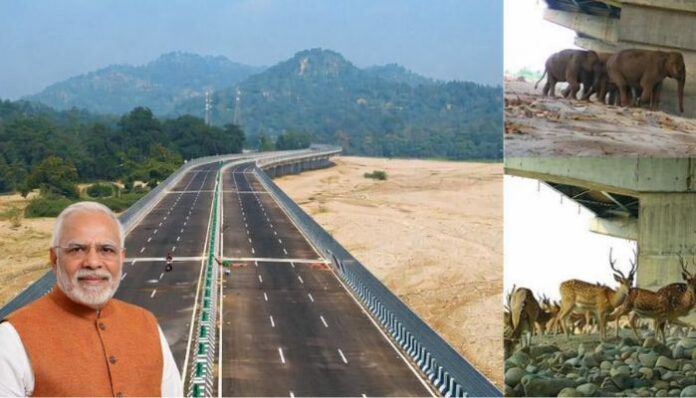
Prime Minister Narendra Modi inaugurated the much-awaited Delhi–Dehradun Expressway on Tuesday, 14th April, marking a major boost to connectivity between Delhi and Uttarakhand. Union Minister Nitin Gadkari, Uttarakhand CM Pushkar Dhami and other dignitaries were present at the event.
📍देहरादून, उत्तराखंड
— Nitin Gadkari (@nitin_gadkari) April 14, 2026
🇮🇳 भारत के रोड इन्फ्रास्ट्रक्चर 🛣️ क्षेत्र के लिए ऐतिहासिक दिवस!
🛣️ दिल्ली-देहरादून इकोनॉमिक कॉरिडोर का लोकार्पण..
देश के आधुनिक इन्फ्रास्ट्रक्चर विकास में एक नया अध्याय जोड़ते हुए आज आदरणीय प्रधानमंत्री श्री @narendramodi जी ने देहरादून, उत्तराखंड में… pic.twitter.com/oTAaWZDqTp
The 213-km-long access-controlled corridor, built by the National Highways Authority of India, is expected to cut travel time between the two cities from nearly six hours to just about 2.5 hours.
Faster travel, better connectivity
The expressway starts near Akshardham in Delhi and passes through key districts such as Baghpat, Muzaffarnagar, Shamli and Saharanpur before reaching Dehradun. Built at a cost of over ₹12,000 crore, the project combines both greenfield and brownfield development across four phases.
PM Modi to inaugurate Dehradun-Delhi Expressway 🇮🇳
— India First Post (@ifpost47) April 13, 2026
Built at ₹12,000-13,000 crore, the project features Asia’s longest elevated wildlife corridor (12-14 km) and the 340m Dat Kali Tunnel.
Seamless connectivity with Delhi-Meerut, EPE & Char Dham Highway, along with 113… https://t.co/nP8Uwfprvl pic.twitter.com/rzjuEze3Qn
The Expressway is equipped with 113 underpasses, 62 bus shelters, nearly 76 km of service roads, and multiple entry-exit points to ensure that nearby towns remain connected.
The improved route is expected to benefit travel to popular destinations like Haridwar, the Char Dham circuit, and Mussoorie, while also boosting trade, tourism and real estate activity in the region.
Asia’s longest wildlife elevated corridor
One of the most unique features of the expressway is its focus on protecting wildlife, especially near the Rajaji National Park area in the Shivalik hills.
#WATCH | Prime Minister @narendramodi will visit Uttar Pradesh and Uttarakhand tomorrow, April 14, where he will inaugurate the Delhi–Dehradun Economic Corridor in Dehradun.
— DD News (@DDNewslive) April 13, 2026
The 213 km, 6-lane corridor, built at a cost of over ₹12,000 crore, will significantly reduce travel… pic.twitter.com/GoAH3nxb0o
A 12-km elevated wildlife corridor has been constructed between Ganeshpur and Asharodi. Supported by widely spaced pillars and with a vertical clearance of around six metres, it allows even large animals like elephants to pass freely underneath.
The project also includes specially designed underpasses to prevent animal-vehicle collisions, sound barriers to reduce traffic noise, and controlled lighting to avoid disturbing nocturnal species. A 370-metre tunnel near the Datkali temple has been built by cutting through the hillside to minimise environmental damage.
Proof that animals are using it
In a major development, a study by the Wildlife Institute of India has confirmed that wildlife is already using these passages.
NHAI and @wii_india Study Highlights Effectiveness of Wildlife Mitigation Measures on Delhi–Dehradun Economic Corridor!
— NHAI (@NHAI_Official) April 10, 2026
The extensive WII report documents the first evidence of wildlife using animal underpasses on the Delhi – Dehradun Economic Corridor. Conducted along the… pic.twitter.com/mZLHaXCHo4
The report, titled “Landscapes Reconnected”, was based on a 40-day monitoring exercise along an 18-km stretch of the corridor. Researchers used 150 camera traps and 29 acoustic devices, capturing over 1.1 lakh images.
Out of these, more than 40,000 images showed 18 different wild species using the underpasses. Animals such as golden jackals, nilgai, sambar, spotted deer and even elephants were recorded moving safely through the corridor. In fact, elephants were spotted using the passage around 60 times.
The study also found that quieter sections of the corridor were preferred by sensitive species like elephants, highlighting the importance of sound barriers and noise control.
Balancing development with nature
Officials say the Delhi-Dehradun Economic Corridor is a strong example of how infrastructure can grow without harming the environment. By reconnecting forest landscapes and reducing human-animal conflict, the project helps maintain natural migration routes in the region.
With faster travel, better safety features, and a strong focus on wildlife conservation, the expressway is being seen as a model for future highway projects in ecologically sensitive areas.
