

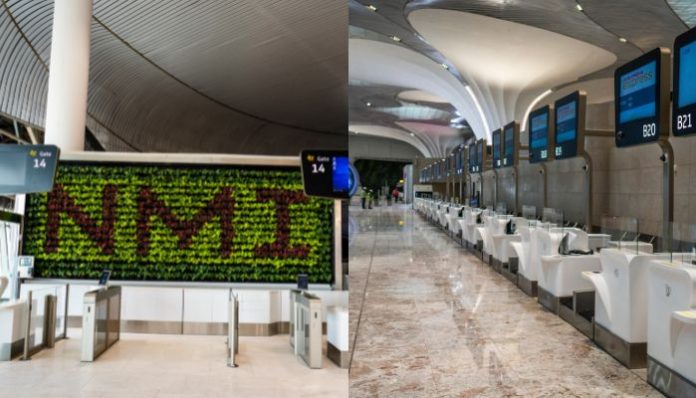
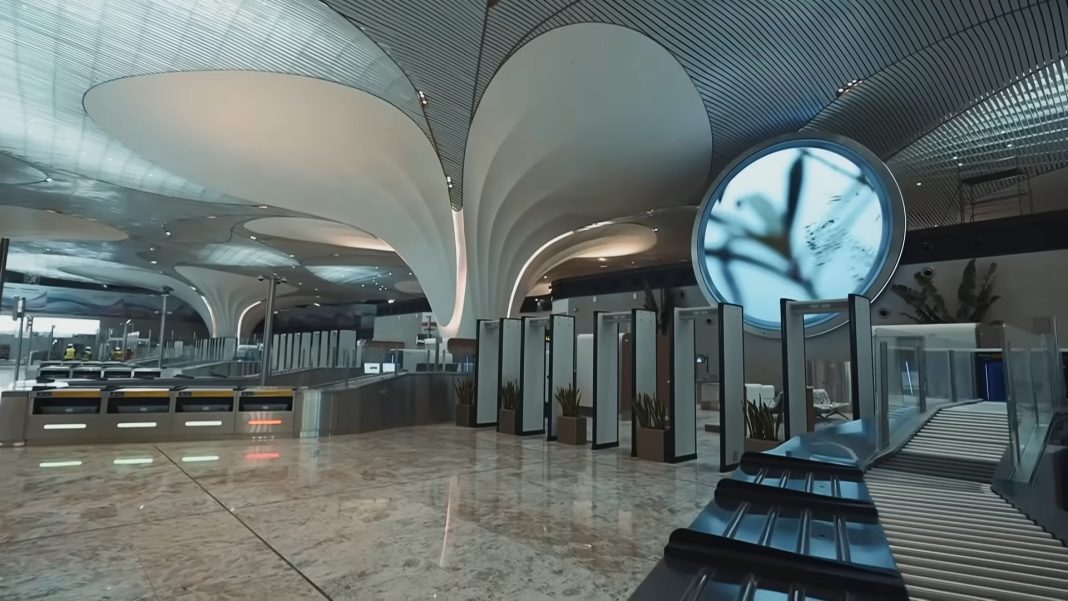
Prime Minister Narendra Modi will inaugurate the Navi Mumbai International Airport (NMIA) on Wednesday, 8th October, marking a major milestone in India’s aviation sector. PM Modi will undertake a walkthrough of the newly built airport at around 3 PM, after which he will inaugurate it at 3:30 PM. Built to ease the heavy traffic on Mumbai’s Chhatrapati Shivaji Maharaj International Airport, the new airport blends modern technology, art, and sustainability to redefine the travel experience for passengers.
The greenfield airport has been developed by a special purpose vehicle named Navi Mumbai International Airport Limited (NMIAL), formed by Adani Airports Holdings Limited and Mumbai’s City and Industrial Development Corporation (CIDCO). NMIAL will also operate and maintain the airport.
Developed under a Public–Private Partnership (PPP) at a cost of approximately ₹19,650 crore, NMIA is India’s largest Greenfield airport project. Stretched across over 1,100 hectares, Navi Mumbai International Airport has been designed as India’s first completely digital airport. It will enable passengers to pre-book car parking, check-in at 66 counters, or use 22 self-baggage drop points for speedy service. The entire terminal is DigiYatra-enabled, offering digital and trouble-free travel from arrival to boarding.
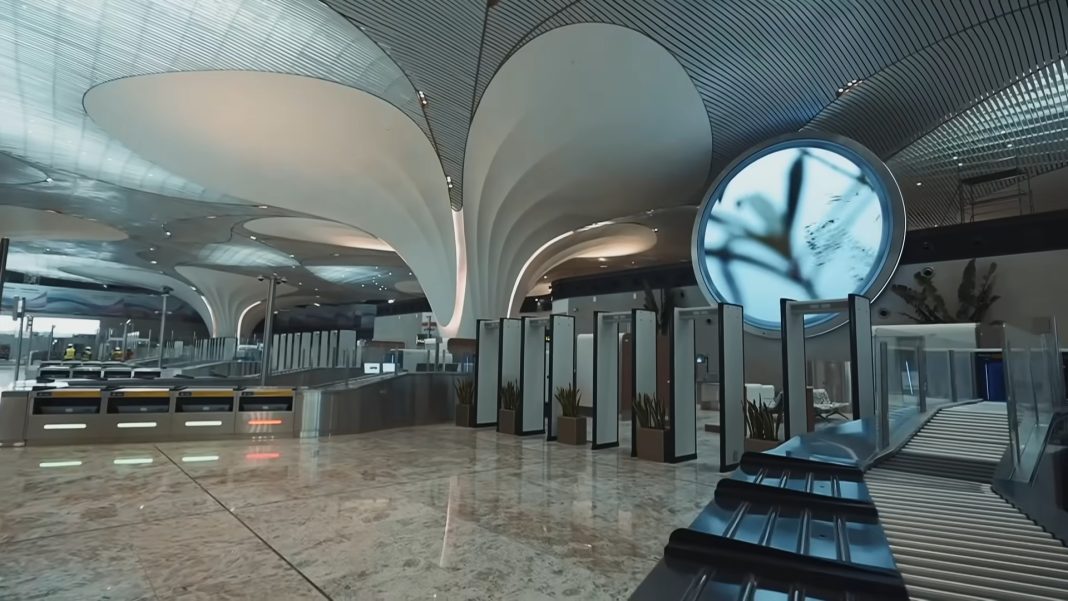
NMIA will include an Automated People Mover (APM) connecting all passenger terminals and city-side infrastructure, dedicated storage for Sustainable Aviation Fuel (SAF), solar power generation of around 47 MW, EV bus services, and water taxi connectivity — a first for any airport in India.
The airport also boasts a standalone mobile app, through which people can order food wherever they are within the terminal and have it delivered to them. For a more interactive experience, the airport has gaming areas, digital art pieces that take up 32,000 sq. ft., and 4,000 sq. ft. of LED display showing visuals inspired by Indian culture and technology.
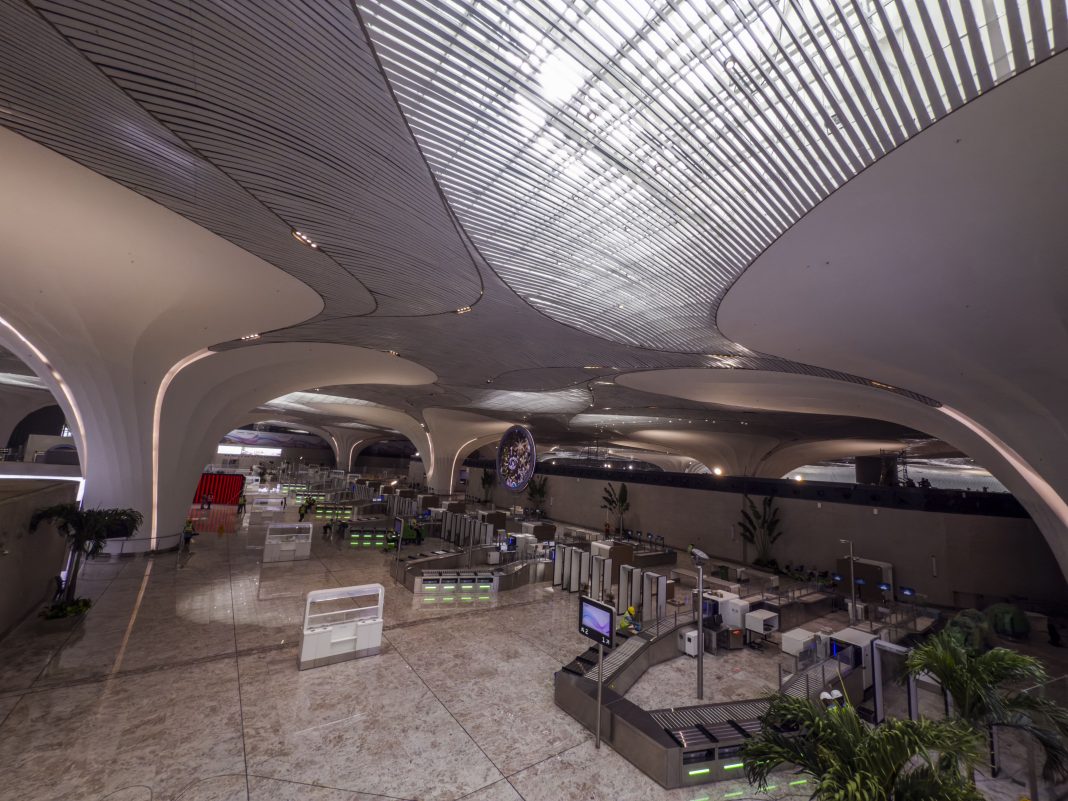
Arun Bansal, Chief Executive Officer (CEO) of Adani Airports Holdings Ltd (AAHL), described the Navi Mumbai airport as an “anxiety-free airport” due to its automation and digital facilities. “We are experimenting with AI-enabled baggage tracking in Ahmedabad, and here, you will be able to get a message on your phone telling you, for example, that your bag is number 20 on the carousel,” he said.
With two runways and AI-driven passenger management systems, NMIA will help to make flying more efficient and smoother. At present one runway has been built, and the second one will be added soon. It has also been constructed with sustainability in mind, complete with rainwater harvesting, lush greenery, and noise reduction systems.
The Navi Mumbai airport will be India’s first major air hub connected to a number of transport systems, such as expressways, metro and suburban railway systems, and waterway services.
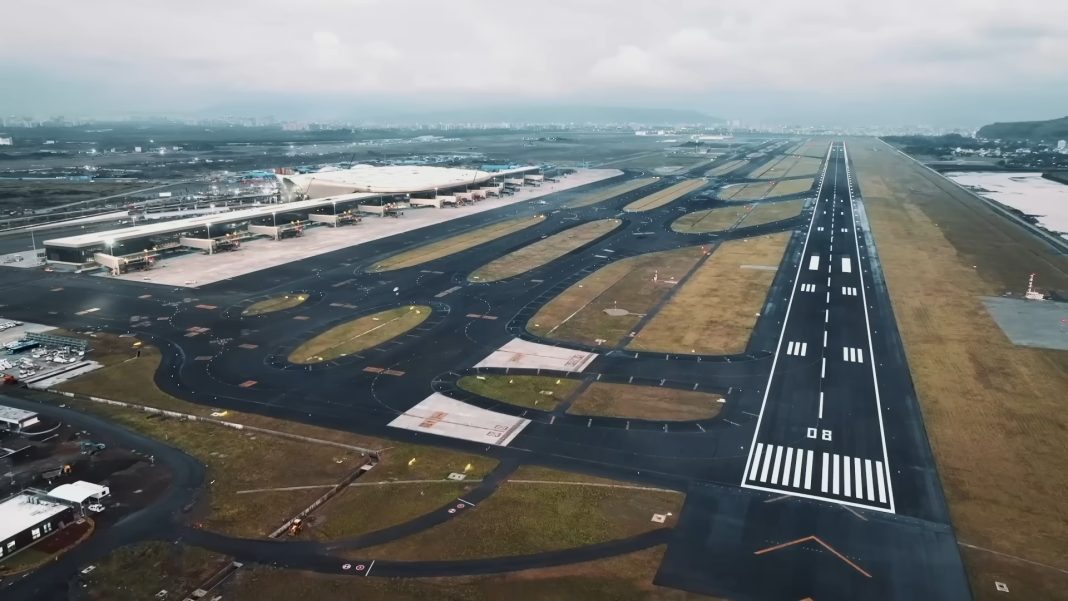
The airport will handle 20 million passengers annually through one runway and terminal in the first phase. After completion of the full airport with two parallel runways and three terminals, the airport is designed to handle 60 million passengers in a year. The design of the terminal is influenced by India’s national flower, the Lotus. The airport will also have dedicated cargo terminal.
According to officials, commercial flights will begin by December 2025, with nearly 40% of operations being international in the initial phase. All major airlines like Air India, IndiGo, Akasa Air etc have announced that they will be operating from the new airport.
PM Modi to also inaugurate the Aqua Line of Mumbai Metro
Along with the airport, PM Modi will also inaugurate Mumbai Metro Line-3, known as the Aqua Line. The new Aqua line, stretching 33.5 km from Cuffe Parade to Aarey JVLR with 27 stations, will serve about 13 lakh passengers every day. The final Phase 2B of the project will connect South Mumbai’s famous cultural areas like Fort, Kala Ghoda, and Marine Drive with key financial and government centres such as the Bombay High Court, Mantralaya, RBI, BSE, and Nariman Point.
PM Modi will also be introducing ‘Mumbai One,’ a unified mobility app that integrates 11 public transport modes on a single platform, such as Mumbai Metro, Monorail, Suburban Railways, and bus services in Mumbai, Thane, and Navi Mumbai.
