

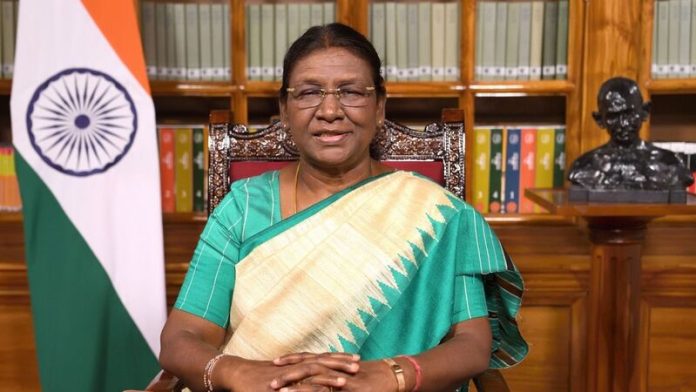
On 30th March, President Droupadi Murmu signed the Transgender Persons (Protection of Rights) Amendment Bill 2026 into law. The Union Law Ministry confirmed the enactment via an official gazette notification on Monday.
Transgender Amendment Bill gets President Murmu's assent @suryapillai683 reports
— The Tribune (@thetribunechd) March 31, 2026
https://t.co/MsG2qjCcCr
The Bill had cleared Parliament last week, with the Lok Sabha passing it first, followed by the Rajya Sabha on 25th March. The Opposition demanded that the Bill be referred to a select committee, citing provisions in the Bill which may affect the dignity and rights of third-gender people. However, the government approved the Bill in Parliament.
The amendment brings a major change to how transgender persons are defined under the law. The earlier Act, introduced in 2019, allowed the gender identity to be perceived by the individual. It included many gender identities such as trans-men, trans-women, gender queer persons, and socio-cultural identities such as kinner and hijra.
Under the new law, the definition has been narrowed. It now includes people from recognised socio-cultural groups such as kinner, hijra, aravani and jogta, along with individuals with intersex variations or congenital differences in biological development. It also covers those forced into adopting a transgender identity through acts like mutilation or coercion. At the same time, the law clearly excludes people identifying only through sexual orientation or self-perceived gender identity.
The government has defended this change, saying the earlier definition was too broad and made it difficult to identify those who genuinely face discrimination. Union Social Justice Minister Virendra Kumar said the aim is to ensure benefits reach those who suffer social exclusion due to biological conditions, while continuing legal recognition and protection for transgender persons.
However, there have been some concerns raised by activists and legal experts. There were 140 lawyers and feminist groups such as ALIFA and NAJAR, who had written to the President before giving hes assent. Many have also pointed out that the right to self-identification, which was a major feature of the 2019 law, has been restricted.
Focus on clarity and implementation
The 2026 amendment is being presented by the government as a step to bring clarity and make welfare schemes more targeted. It introduces a more structured process for identification and aims to prevent misuse by limiting the category to clearly defined groups. The law also provides stricter punishment for crimes like forced identity changes and exploitation, shifting focus towards protecting those who face serious social exclusion.
