

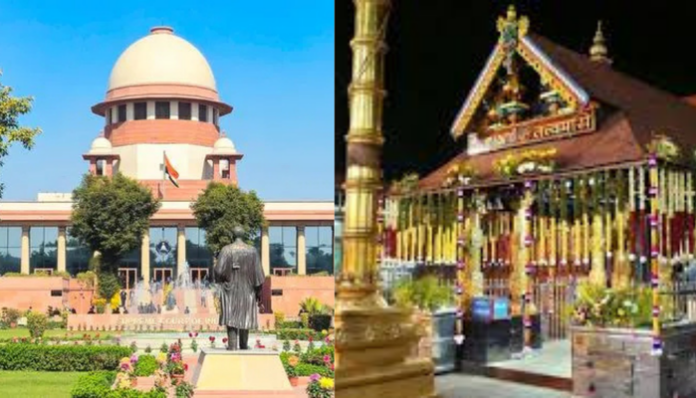
While hearing the Sabarimala reference on Wednesday (15th April), Chief Justice of India Surya Kant said that it is the most difficult part for a court to declare the belief of millions of people wrong. “The most difficult task for a court might be how to give a declaration that the belief of millions of people is wrong or erroneous,” CJI Kant remarked, while responding to submissions over maintainability of public interest litigation (PIL) petitions in matters pertaining to religion.
A Bench of CJI Surya Kant, Justice BV Nagarathna, Justice MM Sundresh, Justice Ahsanuddin Amanullah, Justice Aravind Kumar, Justice Augustine George Masih, Justice Prasanna B Varale, Justice R Mahadevan and Justice Joymalya Bagchi has been hearing the Sabarimala reference case.
Echoing similar concerns, Justice Sundresh also questioned whether courts can decide questions relating to religion without hearing the representatives of millions. Justice Nagarathna said that such PILs should not be entertained when the petitioner is only an interloper. She added that religion cannot be stripped of its core values in the name of social reform. “We cannot hollow out religion in the name of social welfare reform,” Justice Nagarathna remarked.
The hearing of the Sabarimala reference case commenced on 7th April and will conclude on 22nd April. The reference arises from multiple review petitions filed against a 2018 verdict of a Constitution Bench of the Supreme Court, which allowed the entry of women of all ages in the Sabarimala temple, striking down the age-old tradition. The 2018 verdict was delivered by a 4:1 majority, with the sole woman judge on the Bench, Justice Indu Malhotra, giving a dissenting opinion. The decision sparked widespread protests by the devotees of Lord Ayyappa, including women. Over 60 review and writ petitions were filed against the 2018 verdict.
In 2019, a five-judge Constitution Bench, presided by then Chief Justice of India Ranjan Gogoi, issued a majority ruling in November 2019 on the Sabarimala review and writ petitions. The Bench held that larger issues relating to the Essential Religious Practices Test, interplay between Articles 25 and 26 on one hand and Article 14 on the other and the conflict between the judgments in the Shirur Mutt case and Durgah Committee case will have to be decided by a larger Bench. Thus, the matter was referred to the 9-judge Bench
