

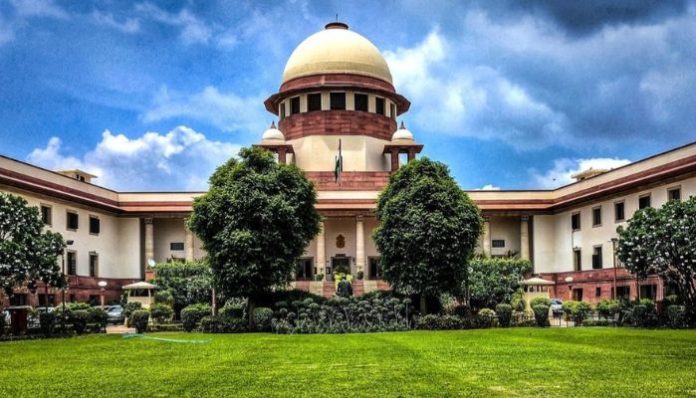
The Supreme Court has reiterated that the Hindu Succession Act, 1956 (HSA), will not be applied to individuals belonging to the Scheduled Tribes. A bench of Justice Sanjay Karol and Justice Prashant Kumar Mishra set aside an order of the Himachal Pradesh High Court, which had held that daughters residing in the tribal regions of the state should be given property rights under the Hindu Succession Act and not based on tribal tradition.
The Supreme Court noted that this direction on the part of the High Court is contrary to Section 2(2) of the Hindu Succession Act. This provision clearly states that the Act does not extend to members of any Scheduled Tribe unless the Central Government makes a special notification in the official gazette to the contrary. As no such notice is made available in Himachal Pradesh, including the Sawara tribe, the Supreme Court stated that the High Court ruling was legally flawed.
The present case was derived from a 2015 order where the Himachal Pradesh High Court was trying to avoid social injustice by applying the Hindu Succession Act to women in tribal areas, as opposed to their customary laws. The High Court had reasoned that such a move was necessary to “prevent social injustice and exploitation” faced by women in these communities.
However, the Supreme Court disagreed, saying that the High Court had overstepped its jurisdiction. The apex court noted that the question of applying the Hindu Succession Act to Scheduled Tribes was not even raised or discussed during the High Court proceedings. Therefore, the sweeping direction issued by the High Court in paragraph 63 of its judgment had no legal basis.
The Bench referred to its earlier ruling in Tirith Kumar & Ors. v. Daduram & Ors. (2024), where it reaffirmed that members of Scheduled Tribes are expressly excluded from the Hindu Succession Act. The court stated that the Himachal Pradesh High Court’s order could not stand because the issue was “neither directly nor substantially involved” in the case, nor did it arise from the questions framed or arguments made before it.
The court also cited its earlier observations in Kamla Neti v. LAO (2023), where it had urged the Central Government to reconsider and possibly amend the law to extend the benefits of the Hindu Succession Act to Scheduled Tribe members as well.
For now, the Supreme Court’s latest decision reinforces that tribal inheritance and property rights will continue to be governed by their customary laws, unless the Central Government explicitly decides to change that through a formal notification.
