

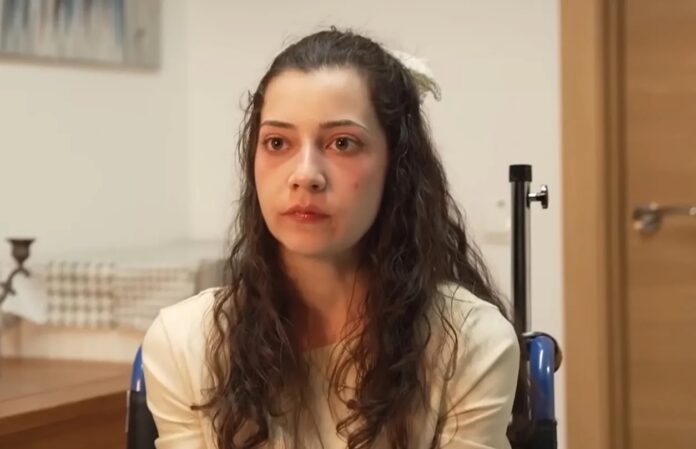
Noelia Castillo Ramos, a 25-year-old woman from Barcelona who was left paraplegic after a failed suicide attempt following a gang rape, is scheduled to undergo euthanasia at an assisted-living facility in Spain on Thursday, March 26, 2026.
The procedure, approved under Spain’s 2021 euthanasia law, will proceed despite repeated legal challenges and opposition from both parents, who have fought for more than a year and a half to prevent their daughter’s death. Court officials, including rulings that reached the European Court of Human Rights, have consistently upheld Castillo’s right to die, overruling the family’s final appeals.
Castillo became paraplegic in 2022 after jumping from the fifth floor of a building in a suicide attempt triggered by the trauma of being gang-raped. She is paralysed only from the waist down and suffers chronic pain, but she is fully conscious, lucid, and capable of making her own decisions. She is not in a vegetative state.
In a recent television interview with Antena 3’s “Y Ahora Sonsoles,” she spoke clearly and calmly about her choice, stating: “I’m having euthanasia on the 26th. No one in my family is in favor, but a parent’s happiness shouldn’t come before a daughter’s life. I simply want to go in peace and stop suffering.”
The case has sparked intense debate in Spain and internationally, as it appears to be one of the first instances in which euthanasia has been granted primarily on the basis of severe, treatment-resistant depression combined with physical suffering from irreversible paraplegia.
Castillo’s mother, Yolanda, made a public, emotional last-ditch appeal to her daughter in recent days, while her father, supported by Christian lawyers’ groups, filed multiple court injunctions claiming she did not meet the legal criteria for “intolerable suffering.” All appeals were rejected.
In her final public statements, Castillo emphasised her autonomy: “The happiness of a father, a mother, or a sister cannot take precedence over the happiness of a daughter.” She has reportedly spent much of her life in care due to family difficulties and described euthanasia as the end of years of unrelenting physical and psychological pain.
Spain legalised euthanasia and medically assisted dying in 2021, making it one of the few European countries to do so. The law requires patients to be of legal age, fully informed, and suffering from a “serious and incurable condition” or “severe, chronic, and incapacitating” illness causing “intolerable suffering.” Castillo’s request was approved by the regional Guarantee and Evaluation Commission in July 2024, but the family’s legal campaign delayed the process until today.
The procedure is expected to take place this evening at the Sant Camil Hospital in Barcelona.
