

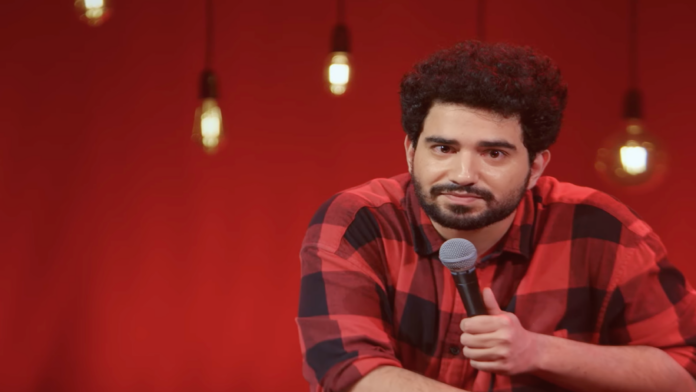
The Supreme Court on Tuesday came down heavily on comedian Samay Raina, accusing him of flouting its directions and attempting to “take the court for a ride”. Warning that repeated disregard for judicial orders would invite serious consequences, the bench initially imposed a ₹10 lakh fine before reducing it to ₹3 lakh after Raina’s counsel sought one final opportunity to comply.
“If you don’t know how to mend your ways or respect the sentiments of society, then you have to face consequences,” the court observed, cautioning that the penalty would be increased to ₹30 lakh at the next hearing if it remained dissatisfied with his compliance. The bench also rejected the claim that a compliance affidavit had been filed, noting that no such affidavit was on record.
Expressing strong displeasure, the Chief Justice remarked that some people believe they are beyond the reach of Indian courts simply because they are abroad. “Let them suffer now. If this is not arrogance, then we have to change the Oxford dictionary also,” the Chief Justice said.
The case stems from a petition filed by Cure SMA India Foundation, which alleged that Raina made insensitive remarks about the exorbitant cost of treating Spinal Muscular Atrophy (SMA) and mocked a person living with the disability. The plea also named fellow comedians and influencers Vipun Goyal, Balraj Paramjeet Singh Ghai, Sonali Thakkar and Nishant Jagdish Tanwar over similar content aired on India’s Got Latent.
During earlier proceedings, the Supreme Court had directed Raina and the other comedians to use their public platforms to host monthly fundraising events featuring specially abled individuals with inspiring stories. At the time, Chief Justice Surya Kant had clarified that the direction was intended as a social responsibility rather than a punishment, observing, “If you have become too popular, then share it with others.”
Appearing for Cure SMA India Foundation, advocate Aparajita Singh informed the court that although some events had been organised for persons with disabilities, the Foundation itself had never been contacted despite explicit directions. She also questioned Raina’s conduct, stating that there was a “genuine lack of apology” and adding, “I don’t know what kind of youth icon he is… I shudder to think.”
Raina’s counsel responded that they did not have the Foundation’s address, which is why it had not been approached. The lawyer maintained that specially abled individuals had participated in the events and photographs were available, while assuring the bench that the Foundation would now be contacted and the court’s directions fully complied with.
